
FOR MY FIRST CHAPTER ON CHARLEMAGNE’S PALADINS CLICK HERE
 MAUGRIS (AKA MALAGIGI) THE ENCHANTER, freed from his undersea prison by Princess Angelica of Cathay, arrived back in Paris to rejoin Charlemagne’s court. Angelica had liberated him only on the condition that he trick Reinold, the Paladin she loved under magic compulsion, into visiting her enchanted island so she could continue wooing him.
Within a few days, Maugris engaged Reinold in conversation about some of the Paladin’s past adventures and upon Reinold confessing that he longed for even more daring escapades the enchanter asked if he was sure that was what he wanted. Reinold replied in the affirmative and Maugris asked him a second time. Again the answer was yes, so Maugris asked a third time and no sooner had the Paladin again said yes than the enchanter cast a spell on the warrior.
Reinold was teleported on board a magical ship which sailed along with no crew. After a search of the vessel had convinced Reinold that he was the only person on board, the Paladin noted that the ship was putting in at an island before it. Continue reading
 AFTER FERRAU THE MUSLIM HAD BEHEADED THE SLEEPING PRINCE ARGALIA, he once again mounted his horse and rode off eastward through the Forest of Arden, continuing his search for the fleeing Princess Angelica. Roland the Paladin was likewise scouring the forest for this woman who had bewitched so many men back at the court of Charlemagne.
 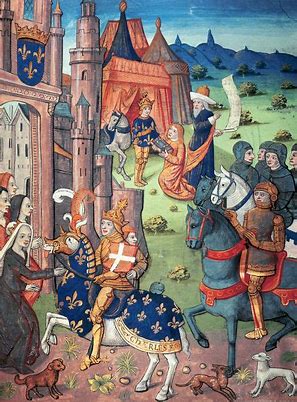 THE NEXT MORNING, the 31 warriors who wanted to joust for the possession of Princess Angelica of Cathay donned their armor and rode together to the Fountain of the Pine. Angelica’s brother Argalia was awaiting them there.
  Christmas time through Twelfth Night is the time of year that Balladeer’s Blog covers tales of Charlemagne and his Paladins. These tales are the legends, not the historical accounts of the real Emperor Charlemagne and his court. FOR MY FIRST CHAPTER ON CHARLEMAGNE’S PALADINS CLICK
  THE PRINCESS OF CATHAY – The previous installment’s reference to a tournament prompted a lot of readers to ask for a full-blown tournament story from the tales of Charlemagne. As always, I listen to you readers, so here we go.
  The woman’s black hair was adorned with jewels and her clothing was of the finest kind. She and her Paladin were permitted to approach Charlemagne’s throne and present themselves. The woman identified herself as Princess Angelica of Cathay. The man in armor was her brother, Prince Umberto.
 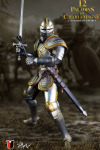 LOTHAIR AND BENES – This story takes place much earlier than most of my previously covered Tales of Charlemagne. Lothair (in real life the grandson of Charlemagne) was, according to legend, the Emperor’s oldest son. Lothair was brave and virtuous, unlike Charlemagne’s scheming and treacherous son Charlot.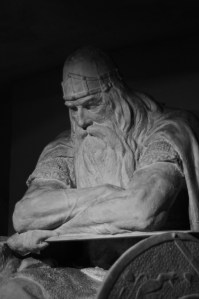
 Though Charlemagne was a real historical figure, a body of folkore has risen around him and his Paladins (knights). Part of that folklore was that the Pope crowned Charlemagne as the new Holy Roman Emperor on Christmas Day, even though the crowning really took place the following February. Since the story of Charlemagne’s crowning as Emperor was told as a Christmas story for centuries I always use Christmas time to examine him and his Paladins.
 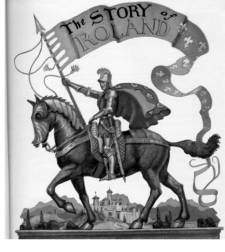 HOW ROLAND AND OGIER BECAME PALADINS – The Emperor could not expect his nephew to immediately step into service as a Paladin, since he had a great deal to learn. Charlemagne placed him as a Page in the household of Duke Namo of Bavaria, where Roland began his career alongside many other young nobles.
  Yes, it’s round two of this Christmas-time tradition of examining the folklore surrounding Charlemagne and his Paladins (Knights). For the first installment click
 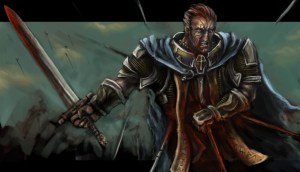 ARCHBISHOP TURPIN OF RHEIMS – This Paladin was the legendary “Battling Bishop” who fought alongside Charlemagne and his other men in the field.
  The sixth and youngest maiden was Morgana le Fey, who has a much different history in the legends of Charlemagne than in Arthurian lore. Morgana told the baby Ogier that she claimed him for her own (“imprinted” on him, you Twilight fans might say). She decreed that he would never die until he had come to visit her on the Isle of Avalon.
  Balladeer's Blog