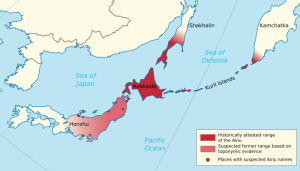
 The Ainu people of Japan suffered oppression at the hands of the Japanese which was similar to that suffered by various conquered peoples around the world at the hands of the Western World, Russia, China and the Muslim World.
The Ainu migrated south to the Japanese islands from the northern lands of the Inuit. Regular readers of Balladeer’s Blog will recognize the similarities between the Ainu and Inuit belief systems and methods of worship. In addition certain linguistic similarities will be noted between the Ainu and the Japanese. The Shinto “kami” becomes the Ainu “kamui”, to cite the most prominent example.
As with the Inuit, exact names and aspects of the following deities can vary, with the most pronounced differences being in Saghalien.
- NOTE: I am still working out my entry on the Ainu bear god. If you know the Ainu then you know that that entry alone may double the size of this article. And as always, anyone curious about my source books can just ask.
RUKORO – The Ainu god of the male privy. No, I’m not kidding. The powerful stench from his domain serves the useful purpose of fending off evil spirits. Because of his association with evacuation and expulsion of things unclean he is regarded as a powerful exorcist. There is no corresponding goddess of the female privy, owing to primitive taboos about menstruation.
CHUP – The sun god of the Ainu. His wife is Tombe, the moon goddess. Ainu homes orient their sacred window toward the east to greet the rising sun. Until recent decades it was customary to salute the sun upon exposure to its rays, similar to the practice of genuflecting to the center of an altar, but done without kneeling.
It was considered disrespectful to bodily cross the rays of sunlight striking the hearth through the sacred window. It was better to wait until the position of the sun changed. An inau, one of the idols or totems of the Ainu people, would be set up to honor the sun. That inau bears an incised outline of the orb of the sun and during rituals libations and praise are offered up to Chup. Continue reading →

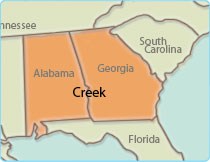 YAHOLA and HAYUYA – These two gods resided in the air and the clouds. They were the guardians of Muscogee people being given training in mysticism and the medical arts. Yahola and Hayuya were the two most prominent of the four Hiyouyulgee, divinities who tutored the ancient Muscogee about the use of fire and various plants, medicinal and otherwise. Yahola and his brother Hayuya endowed people with strength, creative inspiration and magical abilities.
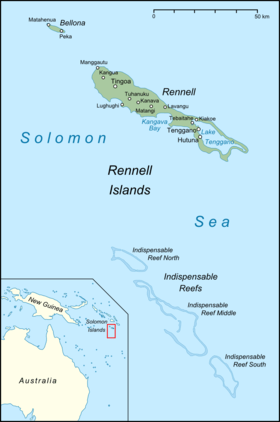 EKEITEHUA – (Also called Singano) This major deity was the god of the northwest wind and was also the main district deity of the Iho (Taupongi) Clan, the archrivals of the Kaitu’u Clan since those two clans are the last survivors of the original eight traditional clans.
 ARKOANYO – The bird-creating deity who often protected his fellow divinities, especially from the storm god Valedjad. That god often grew so angry with his fellow deities that he unleashed powerful storms on them, sometimes destroying lesser deities who dared to oppose him.
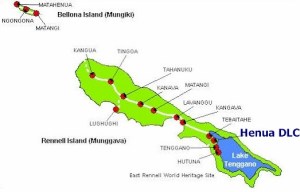 Balladeer’s Blog’s recent examination of the myths of Bellona Island and Rennell Island has been pretty popular. Here is an extended look at Mautikitiki, the Bel-Ren equivalent of Maui. FOR THE FULL LIST OF BEL-REN GODS CLICK
 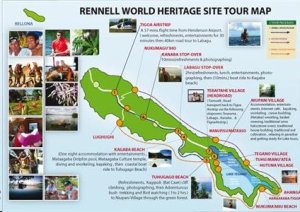 MAHUIKE – The earthquake god of Bellona and Rennell Islands (henceforth Bel-Ren). Like his counterparts in Hawaii and Samoa, Mahuike lived far underground and caused earthquakes by pushing at the earth with both of his arms.
 GNA – This neglected Norse goddess was one of the Asynjur (female Aesir) and served as the messenger of the female nature deity Frigga. Gna was as swift as Hermes from Greek myths and rode a horse named Hofvarpnir, a steed capable of galloping across the sky and the seas in addition to land. Gna wielded a spear and could travel as quickly as the breeze when she was astride Hofvarpnir.
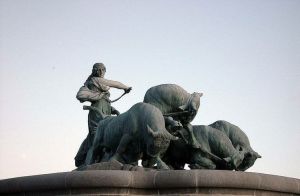 Balladeer’s Blog’s previous looks at neglected deities from the Norse pantheon of gods have been pretty popular, so here’s another one.
 Balladeer's Blog