
For more Inuit deities click here: https://glitternight.com/inuit-myth/
ISITOQ – This god was depicted as a giant winged eye, constantly flying through the sky and observing every violation of a Continue reading
For more Inuit deities click here: https://glitternight.com/inuit-myth/
ISITOQ – This god was depicted as a giant winged eye, constantly flying through the sky and observing every violation of a Continue reading
Filed under Mythology
An extended entry on the salmon-creating god. For more gods and goddesses from Inuit mythology click here: https://glitternight.com/inuit-myth/
EQATLEJOQ – The salmon god. He dwelt in the supercelestial land of Udlormiut which was also inhabited by Tatqim, Seqinek and Tapasuma. Eqatlejoq was depicted creating salmon by Continue reading
Filed under Mythology
 When it comes to Hindu mythology, it seems like even non-lovers of the subject can at least name the Trimurti of Brahma the Creator, Vishnu the Preserver and Shiva the Destroyer (all seen seated to the left, having a kaffeeklatsch) but the other gods and goddesses of the Hindu pantheon get short shrift. So, in the spirit of my look at the Eleven Most Neglected Deities in Teutono- Norse Mythology comes this examination of some of the Hindu deities that I feel deserve more attention than they seem to get. For other pantheons I’ve dealt with see the following links:
KOREAN MYTH – https://glitternight.com/2011/03/24/the-top-11-deities-in-korean-mythology/
SHINTO MYTH –https://glitternight.com/shinto-myth/
HAWAIIAN MYTH – https://glitternight.com/2011/02/20/the-top-eleven-deities-in-hawaiian-mythology/
HAWAIIAN MYTH PART 2 – https://glitternight.com/2011/03/02/eleven-more-deities-from-hawaiian-mythology-2/
NORSE MYTHS – https://glitternight.com/2011/04/10/the-eleven-most-neglected-deities-in-teutono-norse-mythology/
AZTEC MYTHS – https://glitternight.com/2011/05/10/the-top-eleven-deities-in-aztec-mythology/
NEW!!!!! INUIT MYTHS – https://glitternight.com/2011/06/06/the-top-12-deities-from-inuit-mythology-2/
Plus see my pages on Navajo, Vietnamese, Inuit and Bunyoro myth.
11. YAMA – The god who ruled over the land of the dead. He and his sister Yami were the first mortals on Earth and were children of the sun god Surya (or in some traditions he simply created them). Since they were the first mortals they were also the first human beings to die and the two became the Continue reading
Filed under Mythology
Detailed entry on the father of the sea goddess Sedna. For more entries on the gods and goddesses of Inuit mythology click here: https://glitternight.com/inuit-myth/
ANGUTA – This father of the sea goddess Sedna was originally the god who ruled over Pugtulik Island. He was responsible for inflicting punishments on deserving souls when they reached Sedna’s subaquatic realm of the dead. At the dawn of time, after his Continue reading
Filed under Mythology
I just added an expanded entry on the disemboweling goddess. For more entries on the gods and goddesses of Inuit mythology click here: https://glitternight.com/inuit-myth/
ULULIJARNAQ – The disemboweling goddess who lived in Udlormiut, the supercelestial afterlife. Originally Ululijarnaq roamed the Earth in Continue reading
Filed under Mythology
Just a heads-up that my entire page on Inuit myths is up now, so anybody who enjoyed my list of the Top 12 Deities From Inuit Mythology may well enjoy getting to read about many additional deities. Here is the link: https://glitternight.com/inuit-myth/
Filed under Mythology
 Inuit mythology is almost criminally neglected. Personally I find it fascinating and there is a wealth of underappreciated information to be passed along. Inuit is the term used now, largely replacing ”eskimo” which was a pejorative term coined by the Algonquin Indians long ago. The geographical area of the Inuit myths ranges from Siberia across the Bering Strait through Alaska, Canada and Greenland. Names used for the following deities vary across that vast area. Some Inuit settlements like Ayaatayat (near present- day Cape Denbigh) date back 10,000 years. The Inuit were often at war with various Native American tribes and, as a testament to the fighting ability of the ancient Inuits they drove the Vikings themselves out of part of Greenland. The Inuit deities are as fascinating as the figures in any other pantheon. And for other mythology articles I’ve written see the following links:
KOREAN MYTH – https://glitternight.com/2011/03/24/the-top-11-deities-in-korean-mythology/
SHINTO MYTH – https://glitternight.com/shinto-myth/
HAWAIIAN MYTH – https://glitternight.com/2011/02/20/the-top-eleven-deities-in-hawaiian-mythology/
HAWAIIAN MYTH PART 2 – https://glitternight.com/2011/03/02/eleven-more-deities-from-hawaiian-mythology-2/
NORSE MYTHS – https://glitternight.com/2011/04/10/the-eleven-most-neglected-deities-in-teutono-norse-mythology/
AZTEC MYTHS – https://glitternight.com/2011/05/10/the-top-eleven-deities-in-aztec-mythology/
NEW!!!!!!!!! CHOCTAW MYTHS – https://glitternight.com/2012/06/03/the-top-twelve-deities-in-choctaw-mythology/
12. NARSSUK – The god of the west wind and a son of the god Sila. Narssuk was depicted as an enormous infant whose winds were generated by the flapping of his caribou- skin diaper. In some versions the goddess Pukimna made the diaper for him. Narssuk supposedly would Continue reading
Filed under Mythology
A while back I wrote an item on Shinto deities. Some e-mailers have wanted me to add more of them to my “deity of the day” feature, so here we go! For my initial bit on Shinto gods and goddesses click here: http://www.makethelist.net/the-top-10-deities-in-shinto-mythology/
OMITSUNO – The god who ruled over the western land near Izumo. This area was where all the deities in the Shinto pantheon would gather once a year for the Assembly of the Gods, during which they would Continue reading
Filed under Mythology
 With the Thor movie coming out this year I figured my next Top 11 list might as well cover Teutono-Norse mythology. I’ll stick to my usual emphasis on out- of the-way subject matter by avoiding the well-known figures like Thor, Odin, Loki, Tyr, Sif and Baldur. Let’s take a look at the eleven most underappreciated gods and goddesses from this fascinating pantheon. For other pantheons I’ve addressed see these links:
KOREAN MYTH – https://glitternight.com/2011/03/24/the-top-11-deities-in-korean-mythology/
SHINTO MYTH – https://glitternight.com/shinto-myth/
HAWAIIAN MYTH – https://glitternight.com/2011/02/20/the-top-eleven-deities-in-hawaiian-mythology/
HAWAIIAN MYTH PART 2 – https://glitternight.com/2011/03/02/eleven-more-deities-from-hawaiian-mythology-2/
AZTEC MYTHS – https://glitternight.com/2011/05/10/the-top-eleven-deities-in-aztec-mythology/#comment-4442#comment-4438#comment-4446
NEW!!!! INUIT DEITIES – https://glitternight.com/2011/06/06/the-top-12-deities-from-inuit-mythology-2/
Plus see my pages on Navajo, Vietnamese and Bunyoro myth.
THIS CATEGORY HAS PROVEN SO POPULAR HERE’S A BONUS 12th DEITY – THE GODDESS GEFJUN.
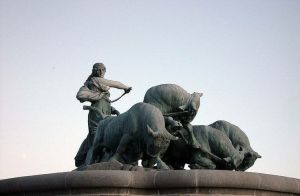
Gefjun
GEFJUN – This fertility deity is one of the most misunderstood goddesses from Norse myths and that’s saying something. Gefjun is sometimes referred to as a virgin, but her four sons might disagree with that notion. (Most likely it’s another misunderstanding about how ancient goddesses were often called “virgins” simply because they weren’t married, not because they were celibate.) Those sons were the product of Gefjun mating with Jotuns (Giants).
In the same way that the Korean goddess Halmang was a localized “Mother Earth” for just Jeju Island, Gefjun filled a similar role for Zealand, the largest island in Denmark. By one account Gefjun convinced (or tricked) the Swedish King Gylfi into granting her as much land as she could plow and cultivate for herself.
Continue reading
Filed under Mythology
The final chapter of the epic myth A War Between Gods.
For the earlier chapters and more Vietnamese myths click here: https://glitternight.com/vietnamese-myth-2/
Canto VII – For months the conflict lasted in this manner, until finally the period of the year when Thuy Tinh was in charge of shepherding the rain clouds came to an end and one of the sea god Long Vuong’s daughters or granddaughters (accounts vary) began shepherding her clouds in for her designated part of the year. She had no quarrel with Tan Vien or Mi Nuong and so the rains returned to a milder state, allowing the flood waters to subside. Interestingly, that is similar to Native American myths in which hard rains are called “male rains” and soft rains are called “female rains”.
The carnage was incredible, with the remains of buildings and the corpses of land and sea animals who had died in the fighting scattered plentifully about the landscape. In some versions this war between gods brought on the end of mythical creatures like the lans (a mythical tiger/giraffe/saola/ lizard hybrid creature) ,the makaras and the tiger-headed elephants and sometimes others.
The creatures and mythical relics lost in the war varies and is sometimes used as a virtual catch- all for explaining the disappearance of items and beasts. It reminds me of how The Churning of the Ocean in Hindu mythology was at first used simply to explain how the gods produced Soma for their own consumption but then gradually more and more items were added to the list of things spawned by that event including Airavata, the elephant the storm god Indra rides and the love and beauty goddess Lakshmi herself (shades of Aphrodite being born of the sea foam caused by the severed genitals of Chronos. And for my British readers wouldn’t ”The Severed Genitals” make a great name for a pub? Okay, forget it.)
Tan Vien and Chua Con ho helped Hung Vuong XVIII and his people recover from the flood and Tan Vien also taught them ways of trying to safeguard against future deluges. Inevitably, each year, the period when Thuy Tinh would shepherd in the rain clouds he was in charge of returned and his attempt to take Mi Nuong from Tan Vien Mountain by force resumed. Thuy Tinh became known as the god of the monsoon rains and was dreaded because of the harm he might cause on each of his returns. All friendship between him and Tan Vien was forgotten and the two remain bitter enemies to this day.
© Edward Wozniak and Balladeer’s Blog, 2010 and 2011. Unauthorized use and/or duplication of this material without express and written permission from this blog’s author and/or owner is strictly prohibited. Excerpts and links may be used, provided that full and clear credit is given to Edward Wozniak and Balladeer’s Blog with appropriate and specific direction to the original content.
Filed under Mythology

