Tag Archives: Memorial Day

THE MICHIGAN BRIGADE: U.S. CIVIL WAR

HAPPY MEMORIAL DAY! Balladeer’s Blog takes a look at the Union Army’s Michigan Brigade of Volunteers – nicknamed the Wolverines – from the U.S. Civil War. I’m focusing on them because, though not unknown, increasing numbers of people have taken to ignoring their contributions to the Union victory just because of the post-Civil War career of the Brigade’s commander – General George Armstrong Custer. 

I’m no Custer fan myself, but the men who served under him in the Civil War don’t deserve to be thrown a figurative cold shoulder because of the ugliness later associated with the man leading them. The soldiers of the 1st, 5th, 6th and 7th Michigan Cavalry plus Artillery Battery M, the units in the  Michigan Brigade, were crucial to victory.
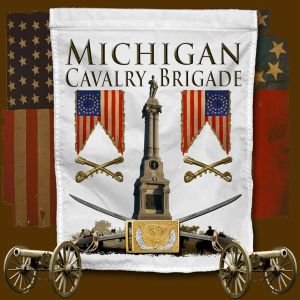
The brigade was first being formed in December, 1862 and on June 29th, 1863 newly promoted General Custer assumed command.

BATTLE OF HANOVER – On June 30th the Michigan Brigade took part in this battle set in Hanover, PA. It was part of the leadup to the Battle of Gettysburg. The Union thwarted Confederate Cavalry General J.E.B. Stuart’s attempt to link up with the main Confederate Army under Robert E. Lee.   

HUNTERSTOWN – With the Battle of Gettysburg having started the previous day, the Brigade fought in this July 2nd, 1863 clash along Beaverdam Creek near Hunterstown, PA. They forced Confederate General Wade Hampton’s cavalry to withdraw. Continue reading
6 Comments

Filed under Neglected History

MEMORIAL DAY POSTS FROM BALLADEER’S BLOG

Balladeer’s Blog hopes all of you are having a respectful Memorial Day weekend. I’ll have a brand new Memorial Day blog post tomorrow, but for another seasonal post here are some of my Memorial Day offerings from years past.

I’ve always looked at neglected conflicts or battles. The military members who died in those actions are sometimes overlooked in the big picture.

2012 – THE TOP FOUR FORGOTTEN CONFLICTS IN U.S. HISTORY – A look at the forgotten Revolutionary War battles after Yorktown (1781-1782), the Mexican War (1846-1848), the Nicaraguan Conflict (1926-1928), and the Philippine War (1899-1902).

2013 – FORGOTTEN U.S. NAVAL BATTLES OF WORLD WAR ONE – There were clashes between German U-Boats and the U.S. Navy ships transporting the American Expeditionary Force to Europe, the years-long underwater mining campaign, the German attack on Orleans, MA, the attack on Austria-Hungary’s naval base at Durazzo, Albania and much more.

2013 – THE TOP FOUR FORGOTTEN MILITARY UNITS FROM AMERICAN WARS – Looking at the Oneida Indians First Allies Unit from the Revolutionary War, Doniphan’s Thousand from the Mexican War, the “Yankee Samurai” (Nissei Battalion of 2,000 Japanese-Americans) from World War 2, and the racially integrated 1st Rhode Island Regiment from the Revolutionary War. 

2014 – SOME MEDAL OF HONOR RECIPIENTS FROM THE PHILIPPINE WAR OF 1899-1902 – Servicemen from various branches of the armed forces were honored for their heroism during this conflict, including some from Young’s Scouts. Medals were issued for actions at the Sohotan River, Samar, Bayong, San Ysidro, Loac and Catubig. Continue reading

10 Comments

Filed under Neglected History

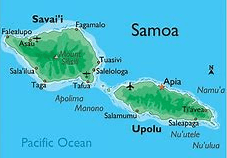
MEDAL OF HONOR WINNERS FOR AMERICA’S INVOLVEMENT IN THE SECOND SAMOAN CIVIL WAR (1898-1899)

HAVE A RESPECTFUL MEMORIAL DAY, EVERYONE! I like to honor American veterans from some of our nation’s overlooked military actions since their service often seems forgotten. This year it’s the Second Samoan Civil War (1898-1899).

american samoaTHE CONFLICT – On August 22nd, 1898 Malietoa Laupepa passed away. He had been the ruling King of Samoa by agreements among the German Empire, Great Britain and the United States. With his passing, the U.S. and Great Britain supported the ascension of his son Malietoa Tanumafili to the throne. The Germans supported Mata’afa Iosefo, a former rival of the late king who returned from exile.
Neither side would yield, and the three nations began reinforcing their military positions in the Samoan Islands to fight the imminent war. By January of 1899 Malietoa Tanumafili had been driven into exile by the Germans and their Samoan allies. The German-Mata’afan forces began forcibly removing Americans and Europeans from their homes.   Continue reading

17 Comments

Filed under Neglected History, opinion

16 MEDAL OF HONOR RECIPIENTS FROM THE SPANISH-AMERICAN WAR (1898)

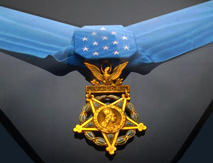
Medal of HonorHAVE A RESPECTFUL MEMORIAL DAY, EVERYONE! Two years ago I marked the holiday with a look at the U.S. forces who fought in Russia from 1918-1920. Last year I examined American forces during the Boxer conflict. For this Memorial Day let’s look at some Congressional Medal of Honor recipients from the Spanish-American War.
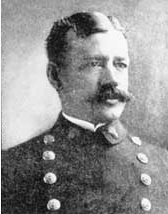
charretteGEORGE CHARRETTE

Branch of Service: Navy

Rank: Gunner’s Mate 3rd Class

Citation: “In connection with the sinking of the U.S.S. Merrimac at the entrance to the harbor of Santiago de Cuba, 2 June 1898. Despite heavy fire from the Spanish batteries, Charrette displayed extraordinary heroism throughout this operation.”

          The Merrimac was being intentionally sunk to try blocking the Spanish ships from being able to come out to fight the U.S. fleet. Charrette was taken prisoner and later exchanged on July 6th, 1898. NOTE: Charrette subsequently served in World War One. 

edward l bakerEDWARD LEE BAKER JR.

Branch of Service: Army

Rank: Sergeant-Major

Citation: “For extraordinary heroism on 1 July 1898, while serving with the 10th U.S. Cavalry, in action at Santiago, Cuba. Sergeant-Major Baker left cover and, under fire, rescued a wounded comrade from drowning.”

NOTE: This African-American had served in the storied Buffalo Soldiers during campaigns against the Native Americans in the west prior to the Spanish-American War. After that conflict, Baker served in the Philippine War (1899-1902) and the subsequent campaigns against the Moros and others.  Continue reading

53 Comments

Filed under Neglected History

MEDAL OF HONOR RECIPIENTS FROM THE BOXER “REBELLION” EXPEDITION

titusHAVE A RESPECTFUL MEMORIAL DAY! Balladeer’s Blog once again takes a look at a currently neglected conflict and some of the military personnel who served in it. Last year I examined the American troops who served on Russian soil from 1918-1920, this year I look at some of the Congressional Medal of Honor recipients from the Relief Expedition during the Boxer Massacres in China (1900).
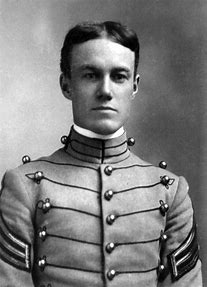
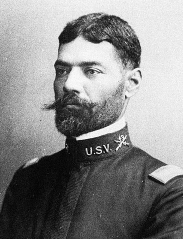
corporal titusCALVIN P. TITUS

Branch of Service: Army

Rank: Standard Bearer/ Musician

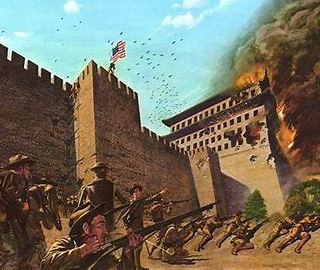
Citation: “For gallant and daring conduct in the presence of his colonel and other officers and enlisted men of his regiment on 14 August 1900, while serving with Company E, 14th Infantry, at Peking, China. Musician Titus was first to scale the wall of the city.” He raised the American Flag from the top of that wall. (Pictured above.) NOTE: Titus previously served in the Philippine War (1899-1902) and subsequently in the Mexican Expedition (1916-1917) and Occupied Germany after World War One. 

Peter StewartPETER STEWART

Branch of Service: Marine Corps

Rank: Gunnery Sergeant

Citation: “For extraordinary heroism while serving with the Marine Guard, Captain Newt Hall’s Marine Detachment, 1st Regiment (Marines), U.S.S. Newark in action with the relief expedition of the Allied forces in China during the battles of 13, 20, 21, and 22 June 1900. Throughout this period and in the presence of the enemy, Stewart distinguished himself by meritorious conduct.”   Continue reading

13 Comments

Filed under Neglected History

TWENTY COLD WAR ERA ATTACKS ON AIRCRAFT

Mascot new look With Memorial Day coming up tomorrow Balladeer’s Blog takes a look at some servicemembers who died in assorted neglected Cold War clashes.
APRIL 8th, 1950 – A U.S. Navy Privateer Electronic Intelligence aircraft was shot down by Soviet Union fighter planes over the Baltic Sea. All 10 crew members were either killed or captured by the Soviets with no further information ever becoming available.

NOVEMBER 6th, 1951 – A U.S. Navy Neptune patrol aircraft was fired upon by Soviet fighters off the coast of Siberia. The plane disappeared along with all 10 crew members.

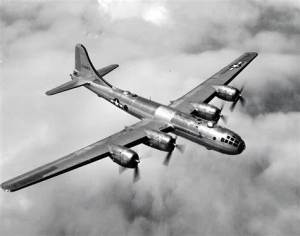
JUNE 13th, 1952 – A U.S. Air Force Superfortress on a reconnaissance mission was reportedly attacked by Soviet fighters over the Sea of Japan and disappeared without a trace along with all 12 crew members.

SuperfortressOCTOBER 7th, 1952 – Another U.S. Air Force Superfortress encountered Soviet fighters off the coast of Japan and was presumed to have been shot down with 8 crewmen losing their lives.

NOVEMBER 29th, 1952 – A U.S. cargo plane was shot down over northeast China. Two crewmen died in the crash and were buried near the craft. The surviving pair – John Downey and Richard Fectau – were captured and imprisoned. Fectau was not returned to the U.S. until 1971 and Downey in 1973.

JANUARY 18th, 1953 – A U.S. Navy Neptune plane was shot down by Chinese anti-aircraft guns over the Formosa Strait off Swatow, China. It ditched, with 2 crew members presumed captured by the Chinese and 5 presumed dead. A U.S. Coast Guard “flying boat” crashed during the search for the downed crew, leaving 4 more men dead.    Continue reading

45 Comments

Filed under Neglected History

AMERICAN FORCES FIGHTING IN RUSSIA: SEPTEMBER 1918 TO JANUARY 1920

memorial day rememberHAPPY MEMORIAL DAY! As usual, Balladeer’s Blog marks the occasion with a look at a neglected aspect of American military history. Spare some thoughts today for the men who perished in this action.
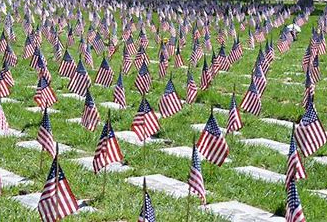
AMERICAN EXPEDITIONARY FORCES IN RUSSIA – The battles fought by these Americans carried over from the end of World War One into the early stages of the Russian Civil War. The Allied Nations of the First World War were fighting alongside the White (anti-Bolshevik) Russian Forces for a time.

Like any of my fellow World War One geeks I could drone on about it for hours, but I’ll try to keep this brief and on-point. The Red (Communist) Russians had taken Russia out of the war by signing a treaty with Germany. This had left German forces free to reinforce their armies on the Western Front, had jeopardized a large amount of Allied supplies which were already in the Russian port city of Archangel (Arkangelsk in Russian) on the White Sea AND jeopardized the safety of the Czech Legion along the Trans-Siberian Railroad.

memorial day pictureWith the World War still raging, the other Allied Nations prevailed on President Woodrow Wilson to divert some American forces intended for the Western Front to Archangel and beyond, joining a combined army of Brits, Poles and White Russians. The fighting in North Russia dragged on past the end of the global conflict in November of 1918 into June of 1919. The fighting in Eastern Russia dragged on until January of 1920. In other words, if the Americans sent to Russia had instead gone to their original destination of France, their combat operations would have ended on November 11th, rather than continuing for more than a year of further bloodshed and loss of limbs from frostbite. All the more reason to remember the often-neglected troops who served there. 

On July 17th, 1918, American General John J “Black Jack” Pershing ordered 5,000 soldiers drawn from the 339th Infantry Regiment, the 1st Battalion of the 310th Engineers and assorted other units from the 85th Division to re-train for new battle conditions and head for Archangel. Those Americans became known as the Polar Bear Expedition. Meanwhile, 8,000 American soldiers were sent to Vladivostok, Russia as the American Expeditionary Force in Siberia. Continue reading

18 Comments

Filed under Neglected History

11 MEMORIAL DAY ARTICLES ABOUT NEGLECTED CONFLICTS AND UNITS

mascot sword and gun pic

BALLADEER’S BLOG

With Memorial Day Weekend fast upon us, Balladeer’s Blog has been getting requests for readers’ favorite holiday-themed blog posts from the past. I want to post some new ones, too, so let me first post this item synopsizing items from the past complete with links if you want to read the entire article.

THE TOP FOUR FORGOTTEN CONFLICTS IN U.S. HISTORY – A brief look at 1781-1782, the neglected final year of fighting in the Revolutionary War, plus takes on the Mexican War (1846-1848), the Nicaragua Conflict (1926-1928) and the Philippine War (1899-1902). Click HERE.

AMERICA’S NAVAL WAR WITH FRANCE (1798-1801) – Often called a “Quasi-War” because of how few land battles there were and because no formal declaration of war was made, this conflict featured a lot of fascinating action on the high seas. The men who died fighting in it deserve to be remembered just as much as those who died in more high-profile wars. PART ONEPART TWO.

TWENTY COLD WAR ATTACKS ON AIRCRAFT – Throughout the Cold War, soldiers, sailors and pilots faced danger and even death in multiple clashes which were downplayed at the time to avoid an escalation of hostilities. Click HERE.

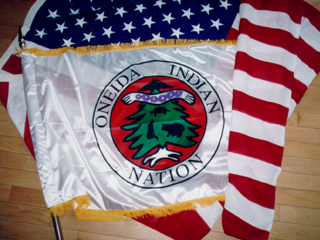
Oneida Nation flag

Oneida Nation’s First Allies Unit

TOP FOUR FORGOTTEN UNITS IN AMERICAN MILITARY HISTORY – A look at Doniphan’s Thousand from the Mexican War, the Oneida Nation’s First Allies Unit from the Revolutionary War, the Yankee Samurai Unit from World War Two and the country’s very first racially integrated army unit, the First Rhode Island Regiment in the Revolutionary War. Click HERE.

THE TEXAS NAVY – A very neglected aspect of the Texas War of Independence from Mexico. Click HERE. Continue reading

7 Comments

Filed under Neglected History, opinion

MEDALS OF HONOR FOR THE 1871 KOREAN EXPEDITION

Medal of HonorHAPPY MEMORIAL DAY! As always Balladeer’s Blog marks the event with a few looks at neglected conflicts from America’s past. The servicemen who fought in those actions are just as deserving of being memorialized as those who fought in more familiar wars.  
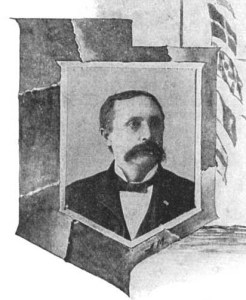
KOREAN EXPEDITION OF 1871 – A Diplomatic Mission was sent to Korea that year, with the time period’s usual military escort of war ships on such ventures. The U.S. expedition was snubbed on the diplomatic side and then Korean shore batteries opened fire upon the military escort. The Americans launched reprisal raids for a few days then departed, leaving U.S. – Korean relations somewhat cold for years afterward. Medal of Honor Winners:

William F LukesWILLIAM F LUKES

Navy Rank: Landsman 

Citation: June 9th – 10th, 1871 – During the assault on the Han River Forts on Ganghwa Island, Lukes came to the assistance of injured Lieutenant Hugh McKee. The Landsman fought his way through heavy resistance to the fallen McKee’s location and refused to abandon his comrade.

Through swordplay, bayonet charges and hand-to-hand combat William received a severe sword cut to the head, a wound which would cause him to suffer convulsions for the rest of his life from the brain damage. When American reinforcements arrived they found the unconscious Lukes had suffered 18 bayonet wounds in the fighting.   

JOHN ANDREWS Continue reading

8 Comments

Filed under Neglected History

CONCLUSION: AMERICA’S QUASI-NAVAL WAR WITH FRANCE (1798-1801)

It’s Memorial Day Weekend! Continuing this holiday weekend’s dose of seasonal posts is this concluding part of Balladeer’s Blog’s look at America’s undeclared naval war with France from 1798 to 1801. FOR PART ONE CLICK HERE  . 

Enterprise

MAY ?, 1800: (Some sources place this action in late April) The USS Boston, commanded by “the American Horatio Nelson” himself, Captain George Little, was in the Bight of Leogane, where it fought and sank a force of six French-allied ships in the navy of Hyacinth Rigaud. (Rigaud’s infamy was covered in Part One)

MAY ??, 1800: The Adams recaptured an unidentified vessel which had previously been taken by the French and converted for its navy’s use.

MAY ??, 1800: The Insurgent and the Adams teamed up to liberate an unidentified British privateer ship from the French craft which had captured it.

MAY ??, 1800: The Adams recaptured the Nancy (one of many vessels with that name), a ship previously seized by the French for their own navy.

Mascot sword and pistolMAY ??, 1800: The Adams defeated and captured the French ship Grinder

MAY ??, 1800: A very busy month for the Adams came to an end as the feisty vessel overcame three to one odds to defeat and capture the French ships the Dove, the Renommee and a third ship whose name has not come down to us.   

MAY 31st, 1800: The John Adams (separate vessel from the Adams) recaptured the American brig Olive from the French.  

JUNE 6th, 1800: The Merrimack battled the French vessel L’Hazard in order to free the French ship’s latest capture – the American Ceres.  The Merrimack succeeded in liberating the Ceres. Continue reading

18 Comments

Filed under Neglected History