Tag Archives: Gothic horror

MONSTER RALLY

HAPPY HALLOWEEN FROM BALLADEER’S BLOG! Here’s a look at some of the neglected monsters I’ve covered over the years. These horrific figures deserve as much love as the better known characters like Dracula, Frankenstein, the Crying Woman and many others.

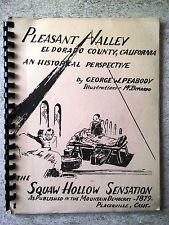
Squaw Hollow SensationSETHOS

First Appearance: The Squaw Hollow Sensation (1879)

Cryptid Category: Aztec mummy

Lore: Around the year 800 AD an Aztec scholar named Sethos drank the Draught of the Everlasting Covenant and went into a state of suspended animation. In 1879 mining operations uncovered the tomb where he was hidden away.

A scientist of the era mastered the technique of reviving Sethos and successfully restored him to full life. Sethos’ body was hideously mummified but intact except for a gaping hole in his skull in the middle of his forehead from the experiment to revive him. Continue reading

18 Comments

Filed under Halloween Season

THE MAN WHO LAUGHS (1869): GOTHIC HORROR

If you love Gothic Horror be sure to check out my October 1st review of the obscure Gothic novella Isabella of Egypt (1812) 

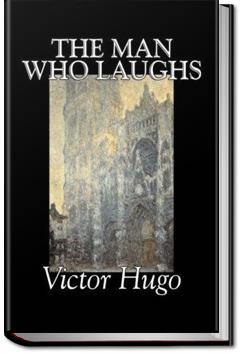
THE MAN WHO LAUGHS

Man who laughs book coverI always commit the literary blasphemy of saying that I don’t consider Victor Hugo’s The Hunchback of Notre Dame to be very much of a horror story. I will forever maintain that Hugo’s overlooked novel The Man Who Laughs features all the virtues of Quasimodo’s tale AND presents them all in a superior fashion.

In addition The Man Who Laughs contains many more elements that lend themselves to pure horror than does The Hunchback of Notre Dame. In the past I’ve examined elements of the film adaptations of The Man Who Laughs (including the fact that the physical appearance of Batman’s foe the Joker was inspired by Conrad Veidt’s 1928 portrayal of the title figure.)

Here’s a breakdown of why I prefer TMWL, with Hugo’s tragic monster Gwynplaine to THOND, with his tragic hunchback Quasimodo: Continue reading

12 Comments

Filed under Halloween Season

HUGUES THE WEREWOLF (1838): GOTHIC HORROR

If you love Gothic Horror be sure to check out my October 1st review of the obscure Gothic novella Isabella of Egypt (1812)

HUGUES THE WEREWOLF (1838)

Hugues the WerewolfHugues the Wer-Wolf to give it its original spelling, is a very enjoyable 1800s horror story written by Sutherland Menzies. The Wulfric family are from old Norman stock and live between Ashford and Canterbury.

The Wulfrics are largely shunned because of the belief that for several generations lycanthropy has run through their family. Since this is a horror story we know it’s the truth and that the Wulfric werewolves are responsible for bloody deaths of livestock and human beings as well as the digging up of freshly buried corpses when other game is scarce.   Continue reading

16 Comments

Filed under Halloween Season

THE STRANGE ORMONDS (1833): GOTHIC HORROR

THE STRANGE ORMONDS (1833) – By Leitch Ritchie

Ormond HouseHalloween Month continues! The last neglected Gothic Horror tale I examined was Isabella of Egypt back on the first of October. Let’s dive back into them with this 1833 story set in England.  

The reader is informed right off the top that the Ormond family (no, not the same Ormonds who are beloved by all of us bad movie fans) lived in the north of England and were objects of mingled fear, suspicion, derision and horror. The story is narrated in the first person and the author pretends that he is concealing some info to protect the innocent. An unnamed doctor from an unnamed town was called in to attend the oldest living Ormond in his last days.

The doctor took his daughter with him to witness the death of one head of the Ormond family and the accession of another. The huge mansion of the Ormonds was as odd as the family itself. The building seemed to be composed mostly of additions added on during different decades – even centuries – and if not for the obvious wealth of the family would have been deemed ramshackle. Continue reading

14 Comments

Filed under Halloween Season

GOTHIC HORROR: ISABELLA OF EGYPT (1812)

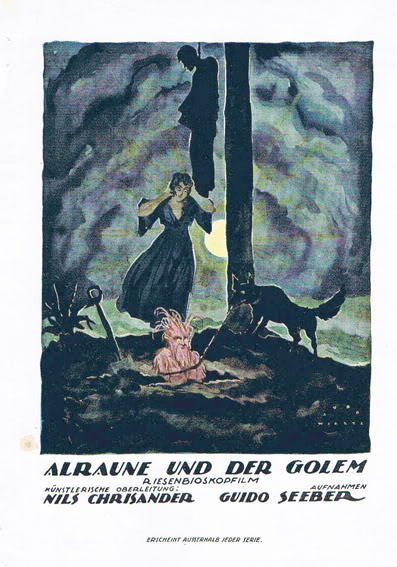
Isabella of Egypt Alraune and the GolemHalloween Month begins! In addition to covering all of my usual topics I spend each October sprinkling in neglected horror movies, stories and novels.

Isabella of Egypt is a very obscure 1812 Gothic Horror novella by Ludwig Achim Von Arnim. Under the more evocative title Alraune and the Golem it was to be filmed as a silent movie in 1919 but unfortunately it was never completed or is one of the countless silent films that have not survived to the present day (sources vary). 

The story is set in the 16th Century and features the real-life Holy Roman Emperor Charles V, but in his teen years, right before he assumed the throne first of Spain and later of the H.R. Empire. The novella is not a horror classic per se, but is very eerie and features an odd variety of horrific supernatural figures in Monster Rally fashion.  Continue reading

185 Comments

Filed under Halloween Season

MALDOROR: THE FINALE

Balladeer’s Blog concludes its examination of the macabre 1868 French language work The Songs of Maldoror. (“Mal d’Auror”, meaning Evil’s Dawn or The Dawn of Evil.)

CANTO SIX: STANZA TEN

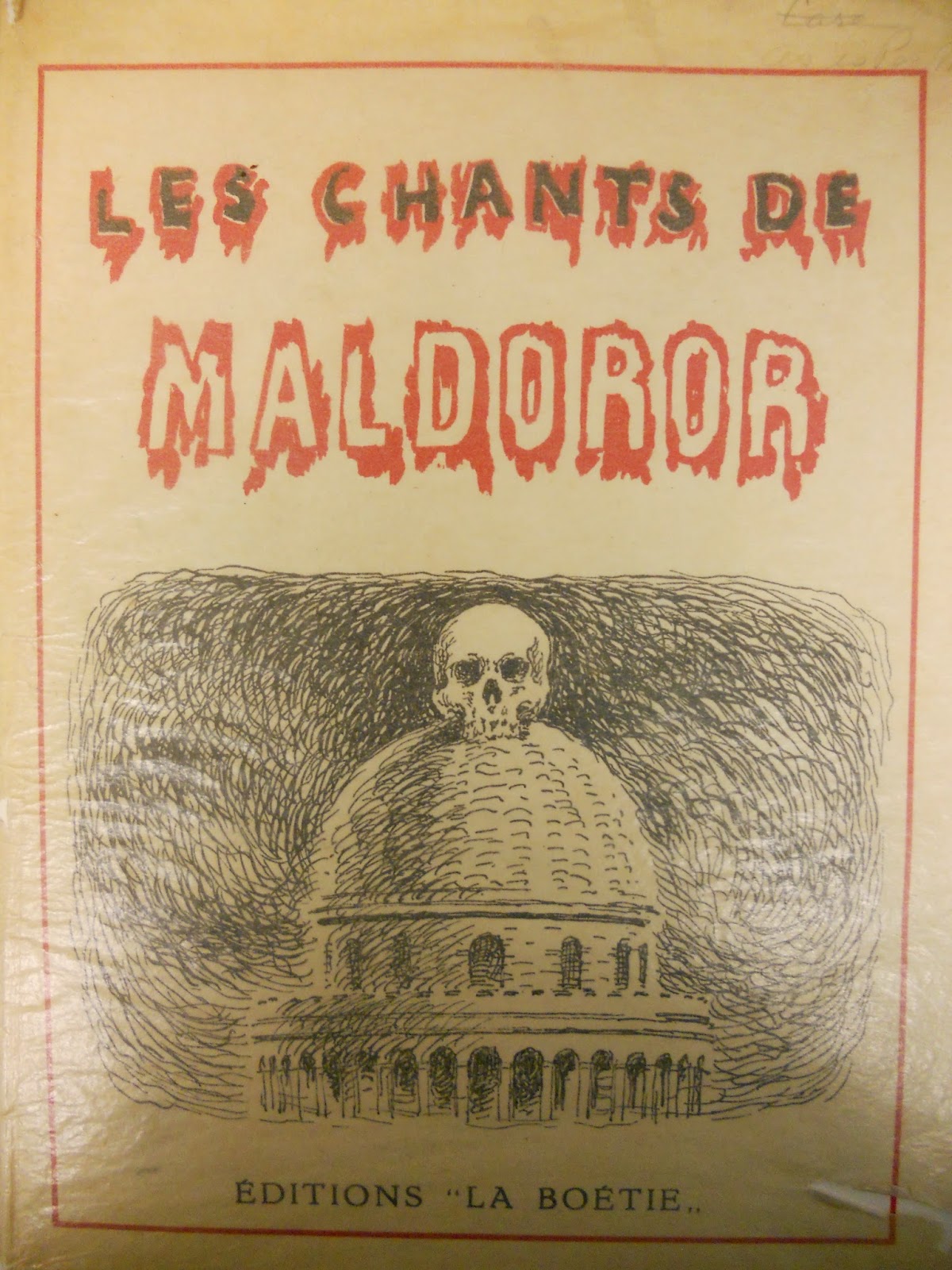
The best cover depiction of the message of this final Stanza

The best cover depiction of  Maldoror’s message.

Today it ends. A moral, ontological and supernatural battle that has raged since the dawn of creation comes to a close in the heart of Paris.

God – be he Creator or Demiurge, compassionate deity or power-crazed sadist – meets for the last time in combat with Maldoror.

When this day is over one of these two beings will never again walk the Earth. Continue reading

24 Comments

Filed under Maldoror

MALDOROR 6:8 AND 6:9

Balladeer’s Blog resumes its examination of the macabre 1868 French language work The Songs of Maldoror. This is the NEXT TO LAST installment.

CANTO SIX: STANZA EIGHT
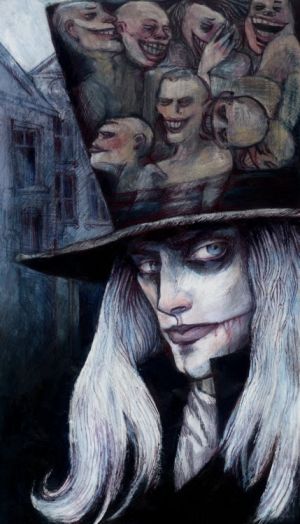
"Maldoror and His Smile" by Lord Orlando

“Maldoror and His Smile” by Lord Orlando

God has sent down an Archangel from Heaven to try to protect sixteen year old Mervyn from Maldoror’s sinister designs on him. The Archangel has assumed the form of a hermit crab in order to sneak into France unobserved by Maldoror. However, our supernatural main character has sensed the Archangel’s arrival anyway and stands along the shore where the being is trying to pass itself off as a mere hermit crab.

With a club in hand instead of one of his usual knives Maldoror watches the disguised Archangel pause on a reef before heading to shore. The figure sent from Heaven is fearful regarding its impending confrontation with Maldoror, whom the Angelic Armies concede to be a greater threat than Satan himself. For his part our vile protagonist observes that the Archangel is not very comfortable in the terrestrial sphere and plans to make quick work of him, planning to thus provoke God into engaging him in personal combat once again.   

The Archangel realizes it has been spotted and transforms from a crab into its full angelic form: Mario, the one-time Angel of the Sea who was in love with Maldoror. Way back in The Mysterious Riders this relationship was dealt with but Maldoror never revealed what happened to Mario, he simply vanished from the narrative. Now we learn why – Mario repented and returned to God, which must have been a particularly potent blow to Maldoror, which is why his ego would not permit him to recount that part of the tale. Now elevated to Archangel status Mario announces that God has given him a portion of his own power to make up for his inexperience in his new incarnation and to help him subdue our narrator.  Continue reading

22 Comments

Filed under Maldoror

MALDOROR 6:6 AND 6:7

Balladeer’s Blog resumes its examination of the macabre 1868 French language work The Songs of Maldoror.

CANTO SIX: STANZA SIX

Maldoror 6 6Maldoror is in his lair in Paris, observing himself in a mirror. He recalls how he used to have a third eye in the center of his forehead but ages ago a female cat pounced on him and chewed it out. This was done as revenge on Maldoror for the way he boiled the cat’s litter of kittens to death in a pot full of alcohol. (What kind of wine goes with cat meat?)

Maldoror then ponders the rest of his heavily scarred face and body, reflecting on the damage he and God have inflicted on each other in their long war against each other. In his usual insane way the supernatural being considers himself as “beautiful” as congenital birth defects are beautiful; as “beautiful” as genitals ravaged by venereal disease. Continue reading

6 Comments

Filed under Maldoror

MALDOROR 6:4 AND 6:5

Balladeer’s Blog resumes its examination of the macabre 1868 French language work The Songs of Maldoror.

CANTO SIX: STANZA FOUR

Maldoror and Mervyn, drawn by Monsieur Le Six.

Maldoror and Mervyn, drawn by Monsieur Le Six.

I’ve decided the Stanzas of this final Canto don’t merit individual titles. Too little happens in each as the story of Maldoror preying on the 16 year old youth named Mervyn proceeds incrementally.

The previous episode ended with Maldoror tracking Mervyn to his home on the Rue Lafayette. The young man now flees inside, fearful of the unknown presence he felt following him through the gaslit streets of Paris (left deserted after dark by Maldoror’s ongoing reign of terror). Continue reading

10 Comments

Filed under Maldoror

MALDOROR 6:2 AND 6:3

Balladeer’s Blog resumes its examination of the macabre 1868 French language work The Songs of Maldoror.

CANTO SIX: STANZA TWO

Did I mention that I think Death-Stalker would make a good Maldoror?

Did I mention that I think Death-Stalker would make a good Maldoror?

This 6th and final Canto of The Songs of Maldoror is entirely different from all the previous Cantos. Instead of being self-contained episodes that jump around to different periods in the long life of the supernatural main character these closing Stanzas form an extended narrative set entirely in late 1860s Paris.

The story details Maldoror’s efforts to seduce a 16 year old youth named Mervyn into abandoning his family and becoming his latest lover and traveling companion as well as the attempts by Mervyn’s family and the forces of God to save the young man. This sudden change of approach as well as the author Isidore Ducasse’s obsession with precise movements through the streets of Paris in this section has spawned a conspiracy theory of sorts among some circles of Maldoror readers.

For those readers Ducasse is using Maldoror as a fictional stand-in for himself as he relates a real-life seduction and murder of a young man at his own hands. In the eyes of those readers these final Stanzas even include coded directions to the location in Paris where Ducasse supposedly hid the body.  Continue reading

14 Comments

Filed under Maldoror