Tag Archives: Gothic horror

MALDOROR: A NEGLECTED MASTERPIECE OF SURREAL HORROR

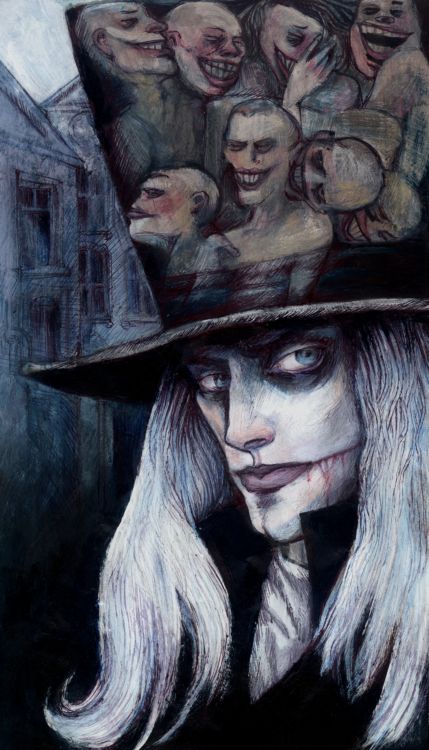
“Maldoror and His Smile” by Lord Orlando

Balladeer’s Blog has done a comprehensive examination of The Songs of Maldoror, often referred to as just Maldoror. The original 1868 French language work by the self-designated Count de Lautreamont (real name Isidore Ducasse) was in verse form, which is great for poetry geeks like me but if you prefer prose there are plenty of prose translations available. 

This work of surreal horror was so far ahead of its time that the author himself, in one of the few existing copies of his correspondence, expressed fears that he might be jailed or thrown into an insane asylum and requested that the publisher literally “stop the presses.” Just 88 copies of the book were completed in that initial run and for a few decades The Songs of Maldoror languished in obscurity.  

By the 1890s those few copies of Maldoror had been circulating among the more adventurous literati of the time period and the work began to be hailed as a forgotten masterpiece by Maeterlink, Bloy, Huysmans and de Gourmont. This new acclaim ultimately resulted in a new run of copies – this time in the thousands instead of dozens like the first run. This also accounts for why some reviewers mistakenly refer to The Songs of Maldoror as an 1890s work, despite its original publication date of 1868. Continue reading

2 Comments

Filed under Halloween Season, Maldoror

ASK BALLADEER: DARK SHADOWS (1966-1971)

Dark ShadowsQUESTION: Recently you recapped the saga of Laura Collins the Phoenix from the old Gothic Soap Opera Dark Shadows (1966-1971). Do you plan to review any of the other story arcs from the show?

ANSWER: At this time I don’t but I would emphasize that the original series is always fun to watch for people who like horror, sci-fi and fantasy. Like early Doctor Who episodes, part of the charm comes from the unrefined, seat-of-their-pants, low budget nature of the 5 day a week Dark Shadows.

Even people who aren’t fans of the show seem aware that it featured a vampire, a witch, ghosts and a werewolf. There were also warlocks, a Dorian Gray figure, mad scientists, zombies, an artist whose works came to life because his canvases were made from enchanted wood, plus lots and lots of time travel.

In addition to the aforementioned Phoenix and other tales, Dark Shadows featured two other fun storylines which I’ll summarize briefly:

masc graveyard newThe Leviathan Cult: The supernatural Collins family clashed with what was basically an imitation Cult of Cthulhu. Dan Curtis (creator and guiding creative force behind Dark Shadows) made the undersea entity worshiped by the cult be Leviathan from the Bible. (“Try suing us NOW, Arkham House!” I’m kidding.) Other serpentine figures from world mythology were tied to the Leviathans, too, like Nagas. 

You know the drill: the Leviathans ruled the world long before the dawn of humanity and wanted to rule it again with the help of their human cultists. The thwarted Leviathans punished Barnabas Collins by returning the curse of the vampire upon him. (In a disastrous move that was up there with New Coke, the show’s creative team had actually had Barnabas cured for a while, but babes just didn’t go for the less-than-smoldering Jonathan Frid without his fangs.)

Even the witch Angelique had given up her evil pursuit of Barnabas for a time and had settled down with wealthy publisher Sky Rumson (Geoffrey Scott of First and Ten). When it turned out Sky was really one of the Leviathan worshipers, the heart-broken Angelique was once again free to stalk the re-fanged Barnabas. 

The second of the two storylines came by way of Mary Shelley Continue reading

16 Comments

Filed under Forgotten Television, Halloween Season

DARK (SHADOWS) PHOENIX

masc graveyard newThe latest attempt at cramming the X-Men’s lengthy, years-long Dark Phoenix storyline into one movie is now in theaters. With everybody reviewing that cram course Balladeer’s Blog will instead take a look at the female Phoenix character from the original 1966-1971 run of Dark Shadows.

Amazingly enough, I often encounter people who claim to have never heard of the Gothic Horror soap opera Dark Shadows. Not the original 5-day a week cult series (still available in reruns), not the movies, not the attempted reboot in 1991 and not the ongoing series of audio plays set in the 1970s onward. If anything they’ve heard of the incredibly lame Tim Burton comedy version of the show starring Johnny Depp.

Laura the Phoenix paintingDecades before Bella Swan was torn between a supposedly hunky vampire and a supposedly hunky werewolf in the Twilight novels, female readers of Tiger Beat magazine were torn between Dark Shadows‘ horror heart-throbs. Jonathan Frid’s vampire Barnabas Collins was one and David Selby’s werewolf/ warlock/ Dorian Gray-figure Quentin Collins was the other.  

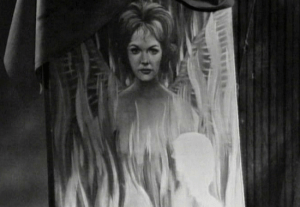
Diana MillayIn terms of female horror heart-throbs from Dark Shadows, Lara Parker’s evil witch Angelique is the best known, but obviously this post will address the unusual supernatural menace the Phoenix, aka Laura Collins, played by Diana Millay (right) on the original Dark Shadows.      

In Dark Shadows lore Laura Collins was sold to a Phoenix Cult in Egypt in the 1700s by her evil lover, for whom she had abandoned her husband back in America. The cult used Laura as an offering/ guinea pig, transforming her into a supernatural figure called the Phoenix. Continue reading

22 Comments

Filed under Forgotten Television, Halloween Season

1899 MUMMY STORY: PHAROS THE EGYPTIAN

Balladeer’s Blog celebrates Halloween all month long. For today here’s a look at an 1899 mummy tale.

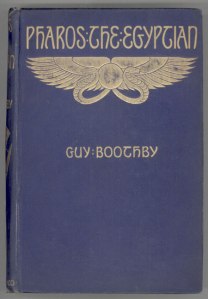
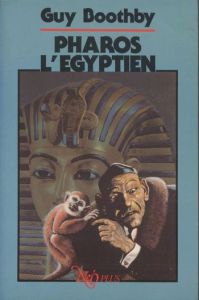
Pharos the EgyptianPHAROS THE EGYPTIAN (1899) – Written by Guy Boothby, who was better known for his Doctor Nikola stories about an evil genius in the mold of Dr Mabuse and Fu Manchu.

Cyril Forrester, a successful British artist, is approached by an enigmatic and sinister-seeming old Egyptian named Pharos. This figure tells Cyril that a mummy he (Cyril) inherited from his Egyptologist father is the dead body of Pharos’ ancestor from over 3,000 years ago. 

Pharos 2That ancestor was Ptahmes, whom we’re told served as a magician for the Pharaoh Ramses during the mythical Exodus. Pharos is angry over the desecration of his ancestor’s remains so Forrester obligingly returns the mummy to the old man.

And so begins a danger-filled supernatural adventure to return the mummy of Ptahmes to his tomb. Cyril is suckered along into following Pharos because he is attracted to – or as we’re supposed to pretend in fiction, he is “in love with” Valerie, a beautiful Hungarian violinist who is in thrall to the old Egyptian. Continue reading

14 Comments

Filed under Halloween Season

THE ENSOULED VIOLIN (1880): GOTHIC HORROR

Halloween Month continues as Balladeer’s Blog takes a look at another tale of Gothic Horror which, like The Lost Stradivarius, centers around a violin player.

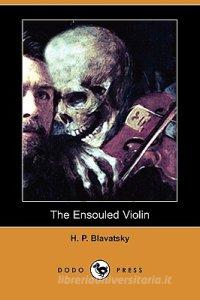
ensouled violinTHE ENSOULED VIOLIN (1880) Written by Helena Blavatsky, aka Madame Blavatsky, famous for the Theosophy Movement and its premier work Isis Unveiled. Later she wrote The Secret Doctrine, another milestone theosophical opus.

This tale of Gothic Horror is set in the 1820s. The main character is a young violin virtuoso named Franz Stenio from Styria in Austria. Though studying the occult arts and alchemy while away at college his central passion had remained music.

Franz’s skill was extraordinary but eventually his widowed mother ran short of money, ending his studies. He left university and moved back home. Franz devoted his every waking moment to his violin and he refused even to go to church with his mother when she begged him.

The youth’s occult studies had filled him with contempt for Christianity and he preferred to think of himself as a pagan. Franz’s mother worried herself sick over the potential fate of her son’s soul and eventually she put such a strain on herself that she died. Some dark whispers hinted that her son had killed her. Continue reading

8 Comments

Filed under Halloween Season

HALLOWEEN BOOK: ISABELLA OF EGYPT (1812)

Isabella of Egypt Alraune and the GolemHalloween Month continues here at Balladeer’s Blog! In addition to covering all of my usual topics I spend each October sprinkling in neglected horror movies, stories and novels.

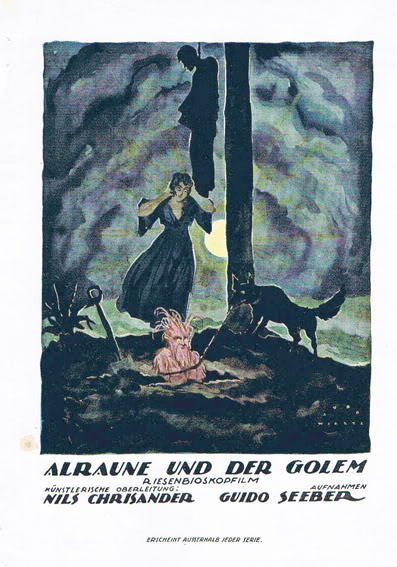
Isabella of Egypt is a very obscure 1812 Gothic Horror novella by Ludwig Achim Von Arnim. Under the more evocative title Alraune and the Golem it was to be filmed as a silent movie in 1919 but unfortunately it was never completed or is one of the countless silent films that have not survived to the present day (sources vary). 

The story is set in the 16th Century and features the real-life Holy Roman Emperor Charles V, but in his teen years, right before he assumed the throne first of Spain and later of the H.R. Empire. The novella is not a horror classic per se, but is very eerie and features an odd variety of horrific supernatural figures in Monster Rally fashion.  The story takes a variety of twists and turns too detailed for a quick synopsis but here is a look at the main characters:

ISABELLA – The main character, a teenage Gypsy girl whose father was Gypsy royalty and after he is hanged she becomes Queen of all the Gypsies. (This novel adheres to the version of Gypsy mythology which states that they were descendants of the ancient Egyptians, hence the title Isabella of Egypt even though the story takes place in various German locations.)

Isabella’s beauty spellbinds various men including the youthful Charles. The monstrous Mandragore lusts after her as well and plans to force her into an unholy union.  Continue reading

18 Comments

Filed under Halloween Season

THE BLACK ABBOT (1897): GOTHIC HORROR

messenger-or-black-priestTHE BLACK ABBOT (1897) – Balladeer’s Blog’s month-long celebration of Halloween continues with another neglected work of horror – this one penned by Robert W Chambers, author of The King in Yellow, which I reviewed HERE 

The story – also known as The Black Priest or The Messenger – is set in 1896 in the mysterious Brittany region of northwest France. Richard Darrel, a wealthy American knickerbocker (upstate New York gentry) has bought a Breton estate with assorted household staff. He lives there with his beautiful (of course) wife Lys, a native of Brittany.  

Landscaping work near Richard’s estate has uncovered thirty-eight skeletons: men killed in a battle between English invaders and Breton defenders back in 1760. A bronze cylinder in the mass grave holds a delicate parchment with a message written in human blood at the time of the burial. The writing is in the ancient language of Brittany, which only the clergy of the 1760 time period were literate in.  

Our American hero senses that the local authorities are withholding vital information from him. He is also intrigued by the revelation that there were thirty-nine men buried in the pit but only thirty-eight skeletons have been found.

The story gets even more intriguing from there, in typical R.W. Chambers style. The skull of the missing dead man is found. It belonged to Abbe Sorgue, a Breton priest who supposedly betrayed the nearby fort to the British attackers. Legend held that for his treachery the priest was branded on the forehead all the way through to his skull. A skull has been found with an arrow-shaped burn on the forehead, obviously the dead traitor.  

That skull keeps mysteriously showing up, no matter how many times it seems to have been disposed of. Eventually the Mayor of Saint Gildas confides in Richard that part of the scroll made reference to a link between the Black Abbot and the American’s wife.

Very soon the workmen involved in disturbing the Black Abbot’s remains start turning up dead and Richard finds a superabundance of coincidences tying his wife’s Breton family to the Black Abbot. When that undead villain begins terrorizing the American’s now-pregnant wife he researches what history can be learned about Abbe Sorgue, the Black Abbot himself. Continue reading

10 Comments

Filed under Halloween Season

ROSAURA (1817): NEGLECTED HORROR

Friedrich FouqueROSAURA (1817) – Written by Friedrich Fouque. Halloween Month 2017 is dying quickly. Here is another neglected story from the late Gothic Horror period. Rosaura has a fairly unique supernatural premise so that alone should have earned it a wider following by now.

No vampires or ghosts or werewolves feature in this tale, but instead a more offbeat kind of supernatural horror. Count von Wildeck packs up his guns and wears his finest clothing for a visit to the castle of Colonel von Haldenbach, whose niece Rosaura he wants to romance.

After an amiable first day of the visit, Count von Wildeck is warned by his host the Colonel to lock himself very securely in his bedroom. The Colonel seems tempted to explain things more clearly to Von Wildeck but is too frightened. Continue reading

6 Comments

Filed under Halloween Season

THE CENTENARIAN (1822): GOTHIC HORROR

CentenarianTHE CENTENARIAN (1822) – Written by THE Honore de Balzac. Thirty-one days of Halloween continue here at Balladeer’s Blog! The Centenarian or The Two Beringhelds was one of the “quickie” novels that Balzac wrote in his early career, this one under the pseudonym Horace de Saint-Aubin.  

Balzac himself looked down on The Centenarian and other early works that he churned out for quick money like the Pulp writers of a century later. Still, this work has value, just like the early Pulp stories from writers like Tennessee Williams, Dashiell Hammett and others. Plus I’m a Napoleon geek so I love immersing myself in the time period in which the novel is set.

The title character is really Count Maxime Beringheld Sculdans. The Centenarian was born in 1470 and led an adventurous life, supposedly even serving as a ship’s doctor when Columbus visited the New World. During his wanderings across the globe Count Maxime studied all the medicine and related sciences that he could.

Under the Rosicrucians the Centenarian learned various secrets of alchemy, including universal healing powers and immortality. Those last two secrets often worked hand in hand: Maxime would use his powers to mystically withdraw the illness or injury out of a sufferer but his “fee” was the draining of the life essence of another person in return. 
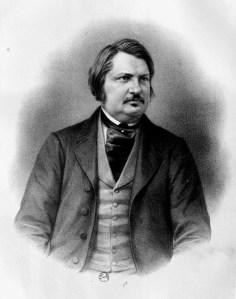
Honore de BalzacThe Centenarian leeches out the vitality of his victims but NOT by sucking out blood like a vampire. He drains their life force via alchemical means with his “medical” equipment. By the time of the French Revolution and the Napoleonic Wars, Count Maxime has grown a bit weary of his eternal life in typical Gothic style.  

In recent centuries our title character has devoted himself to secretly watching over his family line, mysteriously saving their lives or killing off their enemies at crucial periods. The Centenarian has most recently intervened in Spain during the Wars of the French Revolution, saving the life of his descendant General Tullius Beringheld.

Intrigued, Tullius seeks out information on his enigmatic savior and eventually learns the Centenarian’s true identity and about his supernatural nature. By this point (the 1790s) Maxime’s body is misshapen. His arms are emaciated but his torso and legs are thick and muscular.

He is unusually tall but the skin on his head is so thin that his  scalp and facial features resemble a living skull. He smells of the grave but his powers of healing make others treat him with fear and respect despite the awful fee he demands.  

The Centenarian’s additional powers include immunity to hanging and other forms of mortal injury. He has superhuman strength and his fiery eyes can induce fear, paralysis or death. He can read minds and teleport as well.   Continue reading

10 Comments

Filed under Halloween Season

THE BLACK REAPER (1899): GOTHIC HORROR

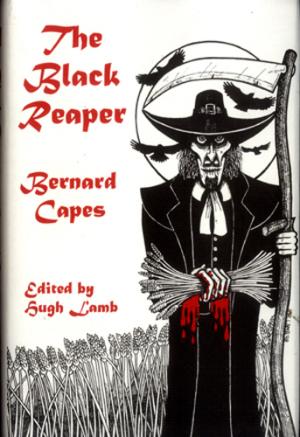
Black ReaperTHE BLACK REAPER (1899) – By Bernard Capes. Balladeer’s Blog’s month-long celebration of Halloween continues with this neglected horror tale. The story takes place in 1665 in a secluded British farming town called Anathoth.

The Black Reaper of the title is an interesting humanoid monster. Religious superstition and human evil mingle in this tale, just like in so many other great horror stories. And it seems Stephen King must have been, uh … “inspired” by The Black Reaper.

The citizens of Anathoth are described in the narrative as the kind of religious people who merely pay lip service to their beliefs but don’t live by them. They even treated their previous Vicar like a joke.

Now the plague is once more at large in the land and a new fire-and- brimstone preacher has replaced the disrespected man in Anathoth. The new “holy” man  frequently rails at the citizens, telling them that they are all horrible sinners and that God will one day mow them down like ripe corn.

All of them, that is, except the children. Continue reading

11 Comments

Filed under Halloween Season