
Last week’s look at some posters from the silent movie era inspired me to go ahead with this list of what I consider to be the top Douglas Fairbanks films prior to sound. (Talkies are just a fad, I’m tellin’ ya!)
 THE MARK OF ZORRO (1920) – Douglas Fairbanks digs into his comedic AND acrobatic skills in this first screen adaptation of Johnston McCully’s masked hero of 1820s California (The Curse of Capistrano had just been published the year before and Fairbanks bought the film rights for United Artists.)
In my opinion no actor has ever done a better job of drawing such a pronounced distinction between the foppish and timid Don Diego de Vega and his dashing alter ego, the swordsman Zorro. This movie showed all subsequent swashbuckler movies how it’s done and proved that its star could do more than just comedy.
 Excellent fight choreography, heroic opposition to tyranny and the rousing, marathon chase and fight scene near the film’s finale make The Mark of Zorro an absolute must-see for anyone curious about silent movies. Nearly every frame of the film is a portrait.
Marguerite De La Motte played the love interest Lolita Pulido, Tote Du Crow portrayed Don Diego’s mute manservant Bernardo, Robert McKim was the villainous Captain Ramon and Walt “Not the Poet” Whitman played Fray Felipe to round out the core characters from the many Zorro tales. Continue reading
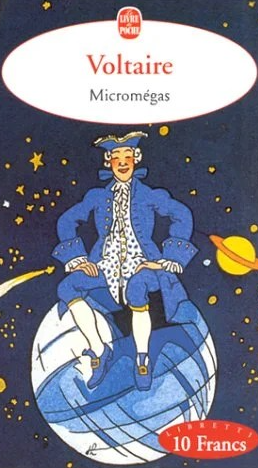 MICROMEGAS (1752) – Written by Voltaire. The famed philosopher’s contribution to the nascent science fiction genre dealt with one of the earliest known instances of beings from other planets depicted visiting the Earth. Amid the fantastic elements of the story Voltaire fits in examinations of the philosophies of Aristotle, Locke, Descartes and others.
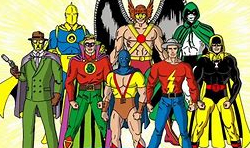 For this weekend’s light-hearted, escapist blog post about superheroes, Balladeer’s Blog goes back to the Justice Society of America, this country’s very first superteam. Years ago, I covered the early years of the JSA, from their first appearance in
 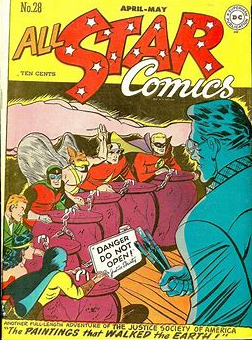 ALL-STAR COMICS Vol 1 #28 (April 1946)
  Regular readers of Balladeer’s Blog may remember that I’m a Silent Movie geek. Last time around I took a look at the magnificent film poster for Douglas Fairbanks’ Thief of Bagdad. This time around it’s posters for one of my favorite underrated Fairbanks flicks, Don Q: Son of Zorro.
 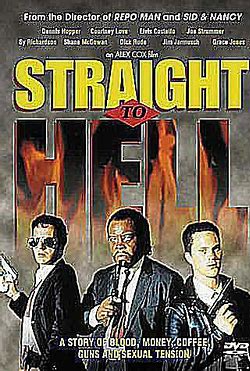 STRAIGHT TO HELL (1987) – For a glib, one sentence review of this movie, how about “Quentin Tarantino minus Quentin Tarantino equals Straight to Hell?” Though this flick came out years before Tarantino’s films it clearly influenced him and to this day it feels like a lost, inferior effort by Quentin.
 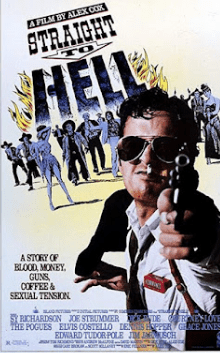 Alex threw in some of his stable of regulars from his two earlier films, slapped together a script in three days (co-written by Dick Rude) and used a mere few weeks to make this oddball genre-bender in Spain.
 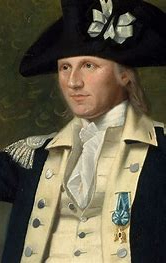 THE SIXTH OF JUNE – Many sites are marking the larger event of the D-Day Invasion during World War Two on this date, but in keeping with Balladeer’s Blog’s theme of neglected and obscure items I’ll take a look at a forgotten action from America’s Revolutionary War. With the 4th of July less than a month away, similar seasonal posts will follow in the weeks ahead.
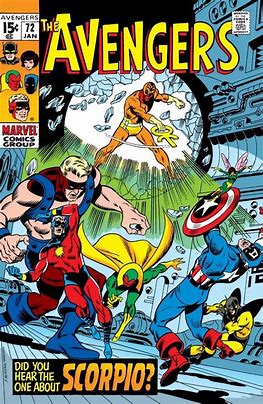 AVENGERS Vol 1 #72 (January 1970)
 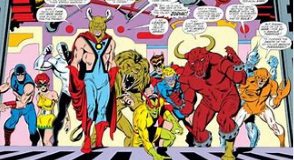 This leads to the Avengers learning that Scorpio is not alone – he is a member of
  JACK LONG or The Shot in the Eye (1844) – With the Frontierado Holiday coming up in early August, Balladeer’s Blog takes a look at this Charles Wilkins Webber short story from 1844.
  In 1853, the author added his original, official version of the story to his collection Tales of the Southern Border. It may be impossible to overstate the legacy of Jack Long. This Texas-set story presented virtually Biblical levels of violence during the Shelby County War (1839-1844) and set the standard for tales of gunslinging revenge quests down to the present day.
 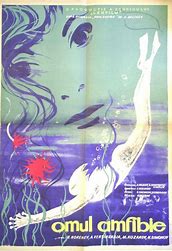 AMPHIBIAN MAN (1962) – This “mad scientist creates a man capable of living underwater” movie was made in the Soviet Union but frequently appeared in dubbed English on American television decades ago.
 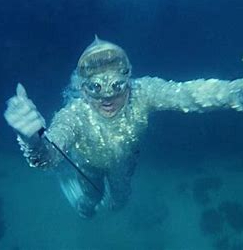 Many online reviewers accuse the makers of The Shape of Water of ripping off this 1962 movie that is based on a 1928 novel. Arguments can be made for that, but it’s important to remember that all sci-fi stories draw from the same general inheritance of tropes.
 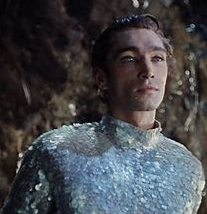 ICHTYANDR SALVATOR (Vladimir Korenev) – A young Argentinean man whose scientist father prevented him from dying of a lung disease in childhood by grafting shark gills on to his body. Ichtyandr has been raised and educated in isolation and his father even designed a comical looking underwater suit for our hero to wear, complete with a shark fin.
  Balladeer's Blog