
Balladeer’s Blog continues its examination of the many facets of Fool Killer lore. FOR PART ONE, INCLUDING THE HISTORICAL CONTEXT IN THE 1850s, CLICK HERE
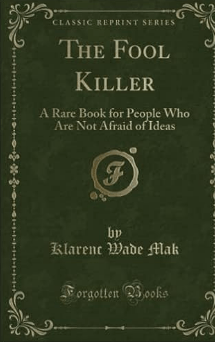 THE FOOL KILLER (1918) – The 1918 one-shot publication called The Fool Killer collected written works by Dr Klarenc Wade Mak, poet, author and socialist political candidate for mayoral office in Kansas City, MO around 1918. Mak had also written Ekkoes (sic) from the Hart (sic) and Mental Dinamite (sic).
Mak’s Fool Killer was yet another of the many incarnations of this fictional, quasi-supernatural vigilante featured in folk tales and political satires from the 19th Century through today. The Fool Killer possibly originated among the “Hill Portugee” (Hill Portuguese) of the American south.
Those oral traditions of this deadly character may date back to the 1830s as Melungeons melded the Portuguese folk hero Longstaff with Tennessee traditions about a supernatural figure who killed any non-Melungeon “fools” who tried stealing their legendary gold.
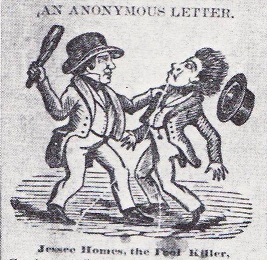 During the 1850s Fool Killer tales were fused with political satire and commentary as Charles Napoleon Bonaparte Evans launched his series of Fool Killer Letters. Those fictional epistles, penned by Evans himself, were presented as tongue-in-cheek confessions from the Fool Killer about the political and social menaces he murdered to make the world a better place.
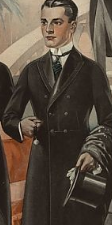
Evans added another element to Fool Killer lore at the start of the U.S. Civil War, as the vigilante grew disgusted with both the North and the South and hibernated in a cave for years. By 1870 Evans revived the character and his “letters” by saying the Fool Killer had emerged from hibernation dressed in the latest men’s fashions and ready to start killing fools once more. Continue reading
 PART 66 – Some of the Fool Killer’s targets on both sides of the aisle in the July of 1913 edition of James Larkin Pearson’s version of the folk figure:
 PART 65 – Some of the Fool Killer’s targets in the June of 1913 edition of James Larkin Pearson’s version of the figure:
  64. The May of 1913 edition of James Larkin Pearson’s Fool-Killer was lacking in urgency and satirical bite, but I found it to have a certain slice of life feel to it that captured its era yet also underlined certain tableaus that are seemingly eternal.
  63. Some of the Fool Killer’s targets in the April of 1913 edition of James Larkin Pearson’s Fool-Killer:
  Those were the days when not even the elected officials owned by wealthy families like the Morgans accumulated anywhere near as much money as those who owned them. Think of today’s abusive and repulsive families like the Bidens, Cheneys, Pelosis, Bushes, Clintons, Romneys and so many others from both political parties who have COMBINED obscene wealth with political influence to be sold. They plunder the public treasury while making shady money on the side and breaking laws that the rest of us are expected to abide by.
  *** Forever chaotic Mexico. The Revolution of 1910 led to the final downfall of decades-long dictator Porfirio Diaz in 1911. Diaz’s reform replacement, Francisco Madero, was overthrown and arrested by Victoriano Huerta, who had just had Madero killed in 1913. The Fool-Killer bitingly observed “They sure don’t waste any time in Mexico deliberating over what to do with their ex-presidents.”
  Some of the Fool Killer’s targets from the January of 1913 edition of James Larkin Pearson’s Fool-Killer –
  Balladeer's Blog