Balladeer’s Blog continues its examination of the many facets of Fool Killer lore. FOR PART ONE, INCLUDING THE HISTORICAL CONTEXT, CLICK HERE
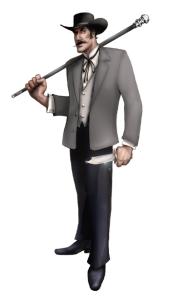 PART TWENTY-ONE: I’ll return to my look at the 1910-1917 and 1919-1929 version of the Fool Killer next time around. For this segment I’ll conclude the new Fool Killer Letter received here at Balladeer’s Blog from THE actual, supernatural entity himself. (SEE HERE ) This second part of that letter clarifies some of the Fool Killer’s hibernation periods AND details a heretofore UNKNOWN 1899 escapade of the supernatural vigilante.
(cont’d) Anyway, Mr Wozniak or Eddie or Balladeer or whatever you prefer to go by, that was how I came to be. And like I said, you’re no Charles Napoleon Bonaparte Evans or James Larkin Pearson but I’ve been a mighty long time without a confidant so you’ll do.
As you guessed, my ability to hibernate for years in my hidden cavern home, then emerge dressed in up to date men’s fashions is another unearthly characteristic I inherited from my Daddy, whatever he may really have been, damn him. While I sleep it’s like the changes in the world come to me as dreams, so I’m always aware of the alterations in the zeitgeist.
You probably noticed I never need to eat and the only thing I ever drink is alcohol. I don’t NEED to drink, but maybe my Mama’s heritage shines through with that, because one thing I truly love to slam down is good old American liquor. Preferably bourbon.
I had to smile at your feeble speculations regarding when exactly I returned to my cave to hibernate over the decades. Since you’re so all-fired obsessed with whens and wheres and hows, I’ll throw you a few crumbs here.
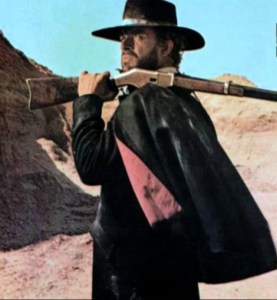 After I drove my Daddy out of the Tennessee Hills I spent the rest of the 1830s and the early 1840s killing off any fools who tried mining or stealing the hidden gold of the Melungeons. During that same period the fools in Washington, DC started sending men into the mountains of Tennsessee, Kentucky, Virginia and North Carolina to stop the Melungeons from minting their own gold coins, so I took to exterminating those federal agents, too. “Counterfeiting” my ass!
But times changed, and the feds persevered in claiming the government in Washington were the only ones who could mint coins. I saw I’d only be bringing a war down on the heads of my Mama’s people the Melungeons if I kept killing federales so I let up on that.
By the late 1840s I had decided to make a home out of the remote, now-abandoned cave where my Daddy used to ply his blacksmithing and other mystic trades. I moved in and settled down for my very first period of hibernation. I woke up just a bit short of 1850 and befriended Mr Charles Napoleon Bonaparte Evans at the Milton Chronicle in North Carolina.
After corresponding with him about my fool-killing vocation for over a decade I took my second nap in the summer of 1861 after telling Evans that I damned the fools of both the North and the South for bringing on that Civil War. As you know from the surviving letters I sent to Mr Evans I emerged from that hibernation in the late 1860s.
For several years I kept busy slaying, among others, Ku Klux Klan fools AND the Carpetbaggers from the North during Reconstruction. My walking stick – forged in my Daddy’s eldritch smithy and with its grinning skull headpiece made of fine Melungeon gold – killed plenty and my set of Bowie Knives drank the blood of many a fool as well.
 Anyway, you don’t need every damn detail, boy. Suffice it to say that around 1880 or ’81 I hibernated again, then pursued my new mission among the Melungeons, this time adding guns and rifles to my arsenal. After several years of that I slept again, then upon awakening I was drawn westward.
One day I’ll tell you all about the many fools I snuffed out in the old west. It’s a wonder I didn’t depopulate the entire region. For right now, however, I’ll recount an adventure that happened right before my next period of slumber.
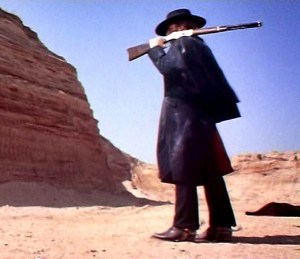 In late December of 1899 I was traveling through west Texas, riding along in that wagon I had taken to using during my 1880s activities back among the Melungeons. In the summer of ’99 I had taken a brief return trip to the East and on my way back out west I had that run-in with the sinister, Infernal fair along the Old Pike Road in Alabama. The tale that George Ade wrote about.
My destination was Folly, Texas. You can’t find it or what’s left of it now but back then it was southwest of Lubbock and almost right at the border of Texas and New Mexico. Texans of the time said nothing thrived in that part of the Lone Star State except cacti. Continue reading →

 PART TWENTY-EIGHT – Here is a look at some of the Fool Killer’s targets from James L Pearson’s January of 1921 issue of The Fool-Killer. New imagery invoked was of the Fool Killer sitting on a high hill picking off fools as the world revolved around him. (A very odd quasi-Axis Mundi)
  PART TWENTY-SEVEN: Here is a look at some of the Fool Killer’s targets from James L Pearson’s April of 1920 issue. As always we find an intriguing mix of attitudes, some of which would please us today or anger us today.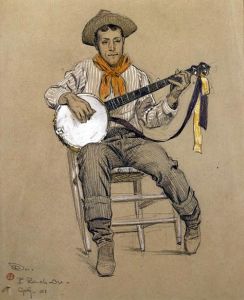
 Not that our folk figure’s targets don’t deserve to be opposed. This Fool Killer battles the abomination of Child Labor, the profit-mongers who sponsor it AND the Judges who perpetuate it through their decisions striking down attempts to eliminate the ugly practice.
  Balladeer’s Blog continues its examination of the many facets of Fool Killer lore.
 Per the surviving correspondence of Eugene V Debs, Dr Mak once invited Debs to speak in Kansas City, MO at an event where Mak and other socialist candidates would be appearing.
 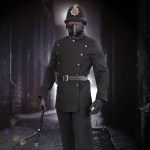 PART TWENTY-FOUR: October, 1900. I just received another emailed Fool Killer Letter from the actual supernatural figure himself.
  Anyway, since you and I are agreed that both Democrats and Republicans are criminals and worse I got to thinking about my last missive to you. That communication ended with me entering another period of hibernation on New Year’s Day 1900 after dealing with the town of Folly, Texas.
 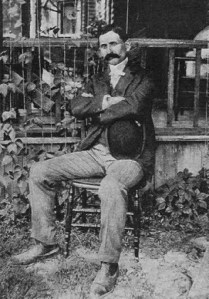 By mid-October, mostly using trains, my favorite means of travel, I arrived at Niagara Falls just as that Peter Nissen character made his final voyage in the custom boat he had named The Fool Killer. He and his First Mate were forced to abandon it in the dark and neither they nor any search parties ever found it.
  PART TWENTY: I need to interrupt my look at the 1910-1917 and 1919-1922 Fool Killer items for this time around. In a surprising development Balladeer’s Blog was contacted by THE actual Fool Killer. Using Jimmy Neutron-level science I determined that this correspondent was indeed the actual supernatural figure who had been at large in America since the 1830s.
 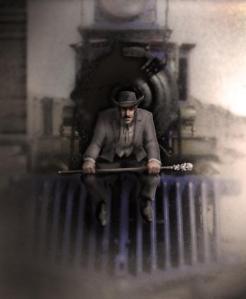 PART NINETEEN: James Larkin Pearson, creator of this new Fool Killer, featured a complaint that I can relate to, since I go through the same thing here at Balladeer’s Blog – “Democrats write and ask me to lambaste the Republicans and Republicans write and suggest that I cuss out the Democrats. All right, boys, I am going to comply with both requests, and then you will both be mad.”
  *** Equally sleazy, money-hungry “spiritualists” – nicknamed “Boogers” in the slang of the time. Arthur Conan Doyle was still alive in 1919 and, as usual, that otherwise rational man willingly served as a public cheerleader for those con artists who claimed to be able to contact one’s dead loved ones.
