
Balladeer’s Blog continues its examination of the many facets of Fool Killer lore. FOR PART ONE, INCLUDING THE HISTORICAL CONTEXT, CLICK HERE
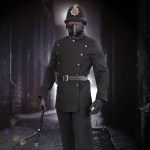 PART FOURTEEN: FACTS FOR THE FOOL-KILLER (1909) by Ridgway Hill.
This rendition of the Fool Killer (I prefer no hyphen) is virtually a reinvention. It not only revises his garb and approach to his mission but it marks the first time the figure is depicted in action outside of the South.
Before I address Facts For The Fool-Killer I want to clarify something. I know that the Joel Chandler Harris tale Flingin’ Jim and His Fool-Killer was published in 1902 as part of The Making of a Statesman and Other Stories. However, that story – set in 1872 Georgia – does not feature the folk figure called the Fool Killer. The title refers to a piece of old grapeshot that Flingin’ Jim throws at people to kill them.
The victims of that “Fool-Killer” are a) William Dukes, an evil former plantation owner spitefully keeping a pair of young lovers separated and b) An unnamed black man who was trying to criminally assault Ann Briscoe, the heroine of the story. William Dukes’ brother receives a non-fatal beating from a hickory walking stick.
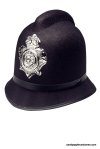 Facts For The Fool-Killer finds the fictional character operating from Buffalo, NY and vicinity. The Fool Killer now wears the blue uniform and tall helmet of a turn-of-the-century policeman and wields a police officer’s billy-club in lieu of his usual club/ walking stick/ cudgel. Continue reading
 PART THIRTEEN: FABLES IN SLANG (1899)
  “The written word equivalent of political cartoons” might be another way of describing the fables. In any event Ade did accompany the fables with assorted illustrations.
  PART TWELVE
 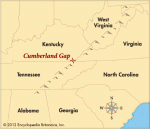 Now we’re in the 1880s and 1890s. The Fool Killer lore of the Melungeon people was absorbing traces of Mormon influence from the wider culture. The Melungeons were NOT Mormons but their Fool Killer tales took on pseudo-religious elements from Mormon lore, like the notion that the Melungeons may be even older than the previously held legends about pre-Columbian Portuguese explorers or ancient Phoenicians.
  Balladeer’s Blog continues its examination of the many facets of Fool Killer lore. FOR PART ONE, INCLUDING THE HISTORICAL CONTEXT, CLICK
 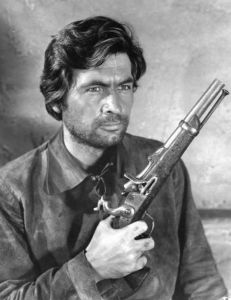 PART ELEVEN: MORE MELUNGEON VARIATIONS
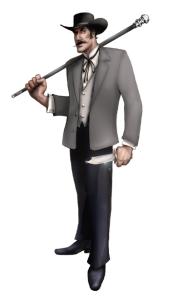
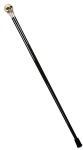
 The area covered was still Eastern Tennessee, Kentucky, Virginia and North Carolina. The Fool Killer roamed those regions, wielding his iron club/ walking stick/ cudgel topped with a skull crafted from Melungeon gold.
  PART TEN: MELUNGEON VARIATIONS
 If he had, one possible source would be the Fool Killer figure from Melungeon folklore in East Tennessee and other Appalachian areas. Or, since we have no way of checking exact dates, Evans’ darkly satirical tales may have influenced the existing Melungeon lore since Melungeons at the time were scattered from Tennessee to North Carolina, Kentucky and Virginia.
 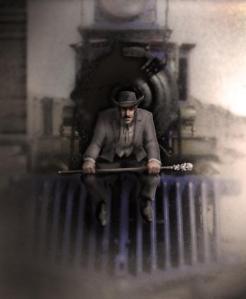 PART NINE: This installment draws to a close the opening era of Fool Killer lore but we have much, much more to go after this. (At left is the figure riding a train’s cowcatcher like he often did to get around.)
 PART EIGHT: The previous installment dealt with the last surviving Fool Killer Letter by Charles Napoleon Bonaparte Evans, Editor of the Milton Chronicle. That letter was from February of 1879.
  In 1862 the Southern Literary Messenger quoted from a Milton Chronicle Fool Killer Letter, but without an exact date and without the whole context it’s not sufficient to count it as an 8th surviving letter.
  PART SEVEN: The seventh surviving Fool Killer Letter. (See Part One for an explanation.)
  Holmes then set out to snuff the devious old bachelor and also came across another young man who had been played false by the same woman who victimized the wagon driver. This suitor had swum the Hyco River in North Carolina, risking pneumonia at that time of year, just to see the girl. The Fool Killer advised him about the belle’s true nature and gave him a token swat for being suckered in by that designing woman and risking his life for her.
  The trio tried to persuade Butts into joining them in a suicide pact to show their faith before the imminent end. When Charles refused, the three drunken apocalypticists grew hostile and implied they might take him with them against his will. The Fool Killer intervened with his club/ walking stick/cudgel and his set of Bowie knives and slew the three loons.
  PART SIX: The sixth surviving Fool Killer Letter. (See Part One for an explanation.)
 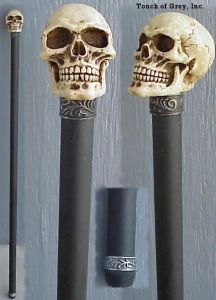 The Fool Killer complained that for every fool he slew with his club/ walking stick/ cudgel or his set of Bowie knives (each blade inscribed with the words “Fool Killer”) three more fools sprang up to take their place. He said that fools were as plentiful as grains of sand on the beach.
  Holmes’ body count in this letter started off with assorted nouveau riche snobs of the Gilded Age, whom he condemned as would-be aristocrats. The Fool Killer struck down these formerly poor people who became wealthy and then put on airs, snubbing friends and relations who were not as well off and forbidding their daughters to even be seen dancing with “mechanics” (the term used in the actual 1877 letter).
  PART FIVE: The fifth surviving Fool Killer Letter. (See Part One for an explanation.)
  We’ll probably never know and may be giving it more thought than Charles Evans himself did. So, on to the murders that the Fool Killer confesses to in this letter.
  Balladeer's Blog