
This weekend’s light-hearted and escapist superhero post from Balladeer’s Blog takes a look at the 1960s and 1970s Flash stories in which several of his recurring villains would team up against him.
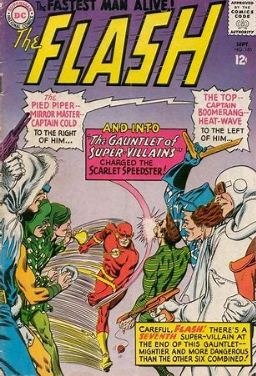 FLASH Vol 1 #155 (September 1965)
Title: The Gauntlet of Supervillains
Villain Roster: Captain Cold, the Top, Mirror Master, Heat Wave, Pied Piper, Captain Boomerang and Gorilla Grodd
Synopsis: Gorilla Grodd (the mysterious villain referred to on the cover) engineers prison breakouts for the six other Flash foes mentioned above. Grodd uses the other villains to wear down the Flash and erode his powers, hoping to then kill the hero himself.
NOTE: The semi-annual team up of Flash villains soon becomes referred to as his Rogues Gallery Convention and/ or “Convention of Flash Villains.” For a time the event was almost as frequent as the annual Justice Society/ Justice League get-togethers. Continue reading

 If you enjoy serious analog horror like
  Around 2012 Richard Littler began mocking up some fake 1970s public health posters and government pamphlets for schools and general consumption. He presented them with an enjoyably twisted slant that perfectly captured the vaguely menacing, often insulting approach of such material.
 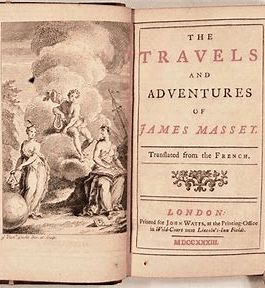 TRAVELS AND ADVENTURES OF JAMES MASSEY (1714) – By Simon Tyssot de Patot. Supposedly written in 1710 but not published until 1714, this novel dealt with the travels of the title character to exotic lands.
 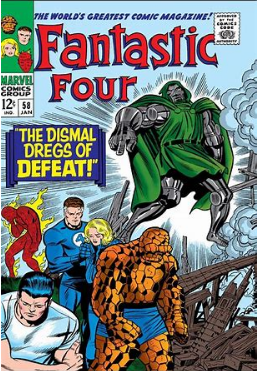 FANTASTIC FOUR Vol 1 #58 (January 1967)
 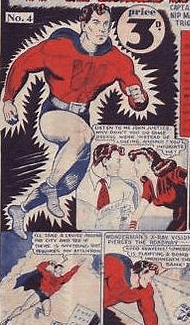 WONDERMAN
 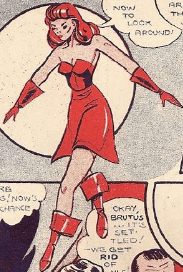 ACROMAID
 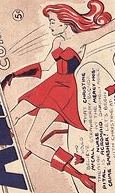 Powers: Acromaid was in peak physical condition and excelled at unarmed combat. She was as agile as an acrobat and was also very skilled at knife-throwing. In addition, Acromaid carried vials of truth serum with her so she could inject it into criminals she was interrogating.
 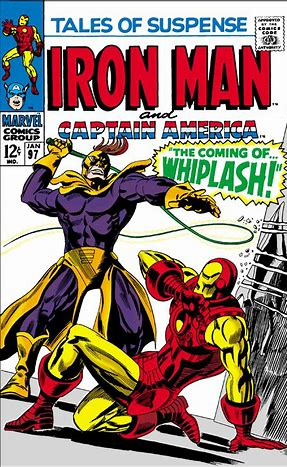 TALES OF SUSPENSE Vol 1 #97 (January 1968)
 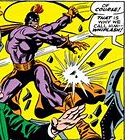 Jasper Sitwell, S.H.I.E.L.D. liaison to Stark Industries, tries to revive the fallen hero while a crowd gathers. Iron Man (believed back then to simply be “Tony Stark’s high-tech bodyguard”) has a sleazy cousin named Morgan Stark. Morgan ran up a huge gambling debt with the Maggia (Marvel Comics’ version of the Mafia) and, to save himself from harm at the hands of their thugs, betrays Iron Man into their clutches by transporting the nearly motionless hero to where he told Sitwell that Tony Stark was waiting to repair the armor.
 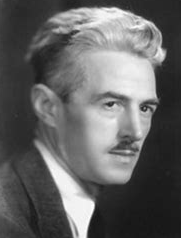 In the past I’ve covered my fondness for Dashiell Hammett’s mysteries. Given my whole theme here at Balladeer’s Blog, this time I’ll take a look at Hammett’s often overlooked Sam Spade short stories that followed a few years after the novel The Maltese Falcon.
 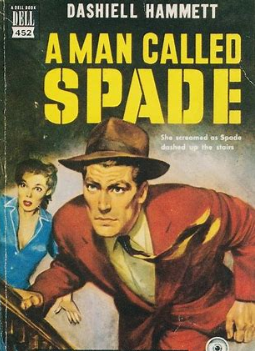 A MAN CALLED SPADE – Published in the July 1932 issue of The American Magazine.
 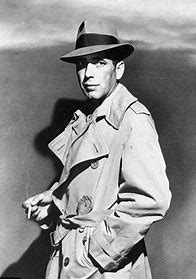 Max lies on the floor, partially undressed. A five-pointed star has been drawn on his bare chest in black ink and with a Greek letter tau in the center. Spade, hoping Max’s daughter will pay him the fee that her father now cannot, tries selling her on the notion that he’s now working for her late father’s estate, and her.
 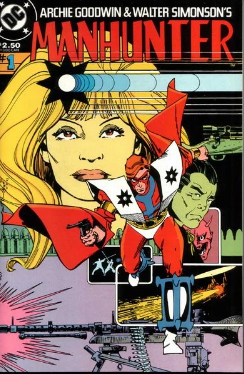 DETECTIVE COMICS Vol 1 #437 (November 1973) Later reprinted multiple times in Trade Paperback collections of the entire new Manhunter saga.
 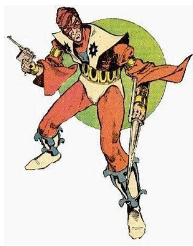 Christine travels to Nepal to investigate this new Manhunter’s recent actions which saved the life of a wealthy philanthropist. Via flashbacks from her informant, she learns that the new Manhunter has been battling an organization which made several clones of Paul Kirk and has been using them to carry out the assassinations that Manhunter is blamed for because the clones wear blue costumes like his red one.
 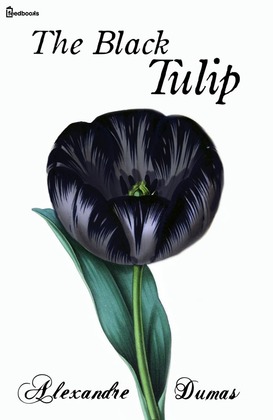 Regular readers of Balladeer’s Blog will remember my review of three neglected swashbuckler novels by Alexandre Dumas. (For those three – Georges, Captain Pamphile and La Dame de Monsoreau click
  When I was a little boy thrilled with the Musketeers, Monte Cristo and Iron Mask I excitedly grabbed The Black Tulip to read, assuming it, too would feature derring-do and swordplay. Much to my disappointment the novel instead dealt with attempts to cultivate a black tulip, the mob-slaying of Netherlands politicians Johann and Cornelius de Witt, romance and the redemption of personal honor.
  Balladeer's Blog