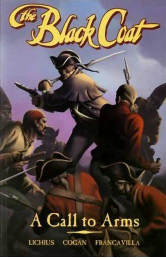
 This weekend’s light-hearted, escapist superhero post from Balladeer’s Blog looks at the independent comic book character the Black Coat, a masked hero in 1770s New York City.
This hero’s stories begin in March 1775, just a month before the Battles of Concord & Lexington will kick off America’s Revolutionary War. He has subsequent adventures set during the war itself.
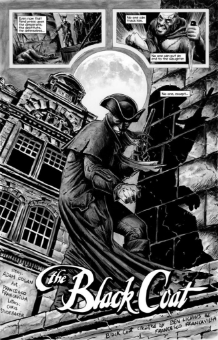 The Black Coat is really Nathaniel Finch, brilliant young scientist and friend of Ben Franklin himself. Our costumed hero runs his own covert network of rebels called the Knights of Liberty, men and women who risk everything to fight against tyranny. His coal-black horse Phobos stands ever-ready as well.
Part Zorro, part Dr. Syn the Scarecrow and part Shadow, the Black Coat uses his sword, pistols and steampunk (well, actually sailpunk) inventions to preserve the emerging United States of America. His right-hand lady Ursula Morgan runs the covert outfit’s day to day operations, with the Black Coat going into action against Great Britain, Tory Loyalists and assorted products of Britain’s weird science & occult arts.
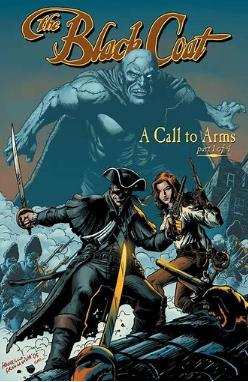 THE BLACK COAT Vol 1 #1 (2006)
Title: A Call to Arms, Part One
Villains: General Savidge, the Butcher and the League
Synopsis: This tale gets off to an interesting start as the Black Coat and some of his Knights of Liberty pilot his submersible proto-submarine the Scylla in their raid of a secret British ship trying to assassinate Ben Franklin under the guise of a pirate attack.
NOTE: It’s a nod to the real-life affair of the VERY primitive submarine the Turtle from the Revolutionary War. Except the Black Coat’s sub succeeds in its mission.
 The saved Franklin visits with our hero in his civilian Nathaniel Finch identity at the New York Sentinel, Finch’s patriot newspaper. Rumors of war breaking out at any moment are everywhere. British General Savidge has secretly allied himself with shadowy conspirators called the League – an evil version of the Founding Fathers’ Masonic Lodges. Continue reading →

 THE TOUCH OF BREEZE (2023) – Last year Balladeer’s Blog reviewed Love of Rain, Indian authoress Pritilata Nandi’s brilliant and moving collection of short stories about Indian life. Nandi has followed that up with a novel about emotional upheaval and eventual atonement … to whatever degree is possible in life.
  THE FORGOTTEN LAND (1917) – Written by H. H. Knibbs. This writer was much better known for his poems about the American West. The Forgotten Land ventured into science fiction and “future history.”
 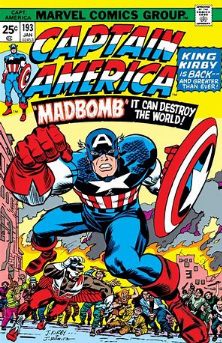 CAPTAIN AMERICA Vol 1 #193 (January 1976)
  Konstantin Eduardovich Tsiolkovsky did real-life work crucial to space-flight and is one of the neglected pioneers of Science Fiction. Balladeer’s Blog takes a look at a few of his works.
  These flying plant-people from the Asteroid Belt obtain nourishment through chlorophyll and solar radiation. They also have advanced technology like the harnessing of dismantled asteroids into rings, resulting in lower gravity for manufacturing work.
  OUT OF THE EARTH (1920) – Set in the year 2017 A.D. this tale features what readers are told is the first manned flight to the moon, some 48 years AFTER it happened in real life.
 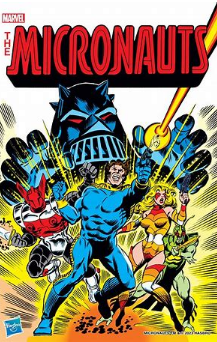 This weekend’s escapist, light-hearted superhero post from Balladeer’s Blog will look at some of the stories Marvel Comics created around the licensed I.P. of Micronauts toys.
 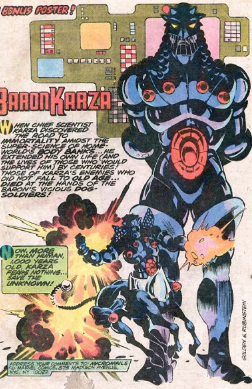 BARON KARZA – The evil, black-armored Baron Karza was a very impressive villain, despite being one of the most blatant Darth Vader ripoffs this side of Japan’s Swords of the Space Ark movies.
 SPACE GLIDER ARCTURUS RANN – The leader of the Micronauts. Rann was the very first Micronaut (the Microverse’s version of Astronauts), who was placed in suspended animation and sent out in a spaceship called The Endeavor on a 1,000-year mission of exploration throughout the Microverse.
  PART FIVE – Horn recounted an incredible event he attended in Angola, which was not yet the name of the country, just a populated region. He and his subordinate Trade Agents were guests at a conjo – a performance of traveling entertainers called the Akowas.
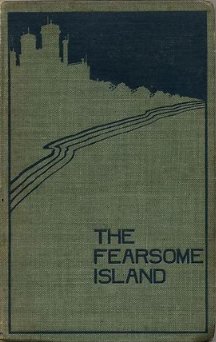 THE FEARSOME ISLAND (1896) – Written by British author Albert Kinross. An unusual work with a multi-layered narrative. The entire novel was penned by Kinross, but it is one of the countless works of fiction presented as if it is a rediscovered manuscript relating the “true” adventures of Silas Fordred from the 1500s. Kinross adds another layer by explaining the sci-fi devices that Fordred could not comprehend and put down to sorcery and the supernatural.
 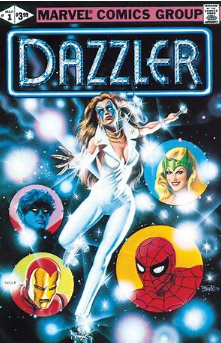 DAZZLER Vol 1 #1 (March 1981)
  AFTER LONDON aka WILD ENGLAND (1885) – Written by Richard Jefferies. A post-apocalypse saga in which the shifting of the Earth’s axis has reduced the British Isles to a medieval level with feral animals and pockets of toxic wasteland. There are scattered “kingdoms” and roving bands of marauders but no contact with the world outside the area.
  The Thames and Severn Rivers have backed up, forming a large central lake in England. What was once London is a toxic marsh so deadly to human life that its gases and vapors, when carried by the winds, kill or drive mad humans exposed to them.
