
 THE INCUBATED GIRL (1896) – Written by F.T. Jane, as in THE Jane who originated the Jane’s Guides.
It would be overly glib to describe this novel as just a sci-fi version of Alraune because it definitely goes in some unexpected directions. Plus Alraune itself borrowed heavily from Homunculus, Mandrake and Mandragore folklore. There’s a touch of The Great God Pan as well.
The Incubated Girl begins with British Egyptologist Blackburn Zadara discovering an ancient coffin of a Priest of Isis. There is no corpse inside but rather a manuscript and assorted chemical concoctions. Zadara returns to England with the discovery and translates the manuscript – it is a guide to creating human life by using the chemical substances that were buried with the manuscript.
Blackburn closely follows the instructions and months later he invites his friend Meredyth Wilson Sr over to witness the initial results of the experiment. Wilson watches as Zadara opens a large egg-shaped pod from which he removes a little baby girl.
Blackburn Zadara names the child Stella and tells Meredyth that according to the Egyptian manuscript Stella will be supernaturally healthy and will never experience death as long as she never drinks human milk nor eats any meat.
Over the years as Stella grows, Zadara tries to create additional humanoids but those efforts always fail. The Egyptologist has been using specifically deaf-mute servants to attend to Stella to limit involved interaction with other humans.
By her 18th year Stella is beautiful and highly intelligent but is as selfish as a newborn and enjoys enacting revenge against anyone who gets on her bad side. Blackburn takes the incubated girl to London with him, but she abandons him there, since she finds him ugly and unpleasant. Continue reading
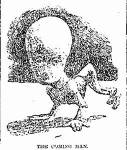 THE ARTIFICIAL MAN: A SEMI-SCIENTIFIC STORY (1884) – Written by an unknown figure under the pseudonym Don Quichotte.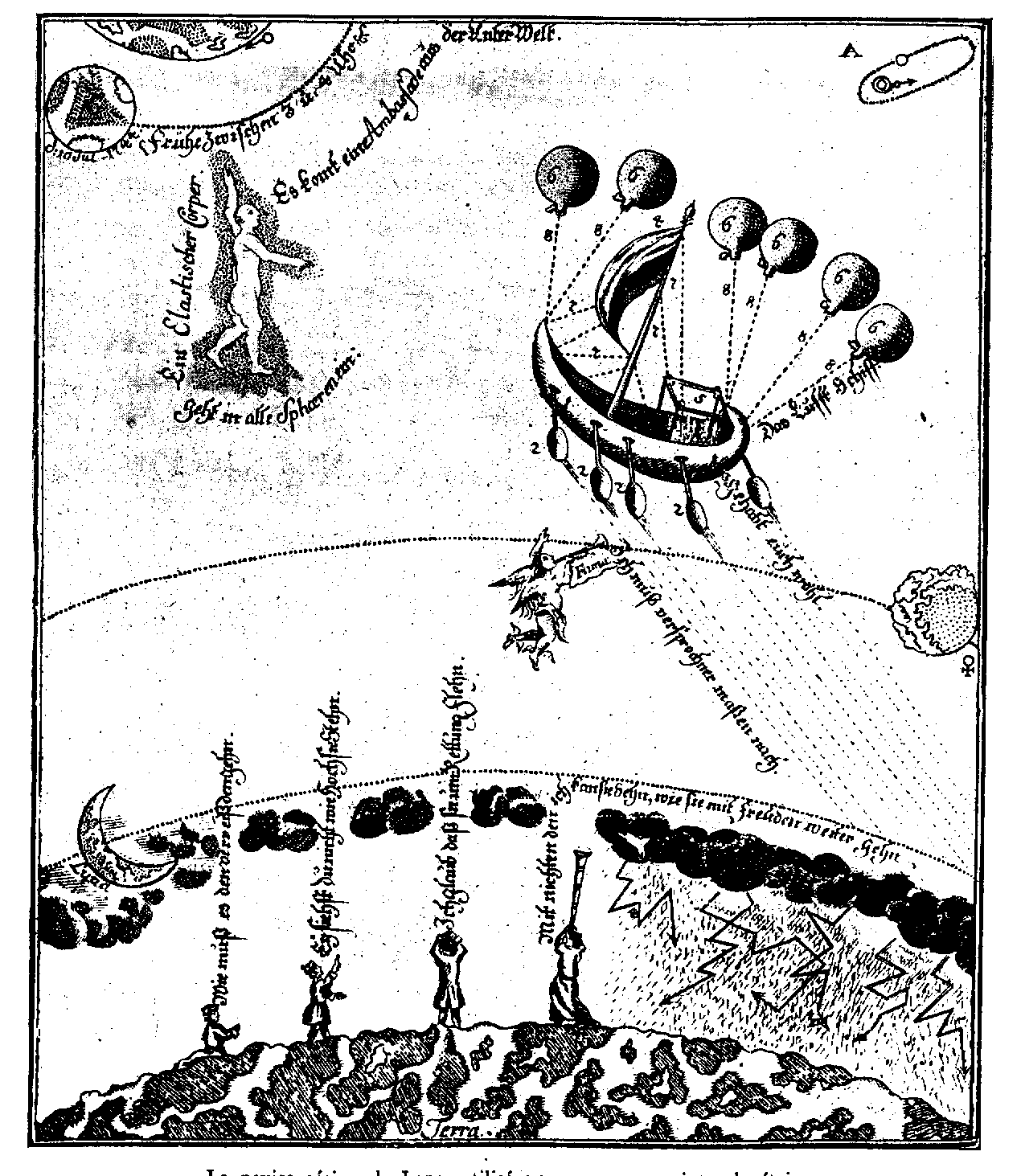
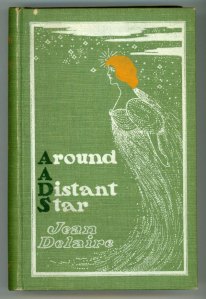 AROUND A DISTANT STAR (1904) – Written by Mrs Muirson Blake under the alias Jean Delaire.
 THE DEATH-TRAP (1908) – Written by George Daulton, this story was published in the March, 1908 issue of Pearson’s Magazine. It’s once again Ancient Creature Feature time with this story about a monster from Lake Michigan which sometimes enters the Chicago sewer system to prey on unsuspecting denizens of the Windy City.
  He comes to regret that decision when, on a poorly-lit street, he sees a drunken sailor get dragged down into the sewer and devoured by a slimy, half-glimpsed creature. Our hero flees for his life and doesn’t stop running until he’s reached one of Chicago’s bridges.
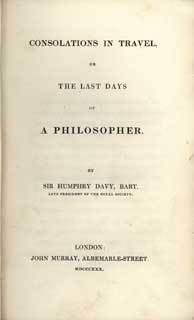 CONSOLATIONS IN TRAVEL or THE LAST DAYS OF A PHILOSOPHER (1830) – Written by THE Sir Humphrey Davy, this is largely a work of philosophical discourse but with one section devoted to a science fiction tale: The Vision.
  The first planet they travel to is Saturn, where Davy is awestruck by the alien landscape. Strange clouds fill the skies and among the oddest planetary features are large columns of liquid which flow from the ground upward. Saturn is inhabited by intelligent beings with three pairs of wings and organs like elephant trunks dangling from their bodies.
  THE Nth MAN (1920?)
  A MEXICAN MYSTERY (1888)
  THE MONSTER OF LAKE LA METRIE (1899) – This short story was written by Wardon Allan Curtis and was first published in the August of 1899 issue of Pearson’s Magazine.
  The pair of researchers begin to theorize that the lake reaches down to the Earth’s “hollow interior.” (Yes, it’s one of THOSE notions again.) They suspect that plant and animal species long extinct on the surface are still alive deep within the planet and occasionally wash up in the lake’s waters.
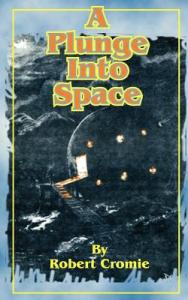
 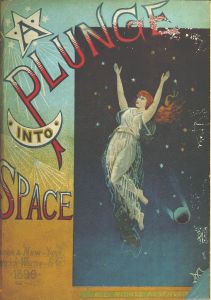 A PLUNGE INTO SPACE (1890) – Written by THE Robert Cromie, later editions of this novel came with a preface by Jules Verne himself. Scientist Henry Barnett, after 20 years of labor, has mastered “the ethereal force which permeates all things,” a combination of electricity and gravity. This mastery will allow for interplanetary space travel.
  In anticipation of encounters with hostile life-forms on other planets, the clique has also manufactured disintegrator weapons, with which they fight off curious parties of indigenous tribes in order to preserve their secret.
  UTOPIA or THE HISTORY OF AN EXTINCT PLANET, PSYCHOMETRICALLY OBTAINED (1884) – Written by Alfred Denton Cridge. An unnamed narrator comes across the remains of a meteor that entered Earth’s atmosphere. This narrator has the gift of psychometry (the author’s uncle was THE William Denton) and after he picks up the tangerine-sized chunk of black rock from another planet he begins getting impressions from it.
  The planet was just 2,500 miles across and was home to a race of roughly 5 1/2 feet tall humanoids, some with yellow skin, some with brown skin and others with gray skin. All the races had long, black hair. Utopia sported Earthlike plains, mountains, lakes and rivers with just one huge ocean.
