Balladeer’s Blog’s end of year retrospective resumes with this look at September’s best:
 AMERICA: PART OF THE DUNE FRANCHISE – America’s equivalents of the Harkonnens and other Houses. Click HERE.
TWENTY MORE SENSATIONAL FAILED PREDICTIONS – The latest list of predictions which failed big-time. Click HERE.
DEMOCRAT SLOGANS – A humorous look at the attitudes and policies of Democrats. Click HERE.
THE FIRST TWENTY HULK STORIES FROM THE 1960s – The Hulk takes on the Leader, the Gargoyle, the Circus of Crime and more. Click HERE.
FOOL KILLER: JULY 1911 – The Fool Killer whacks bloated rich pigs like J.P. Morgan, William A Clark, astrologers and others. Click HERE.
DEMOCRATS AND CORPORATE FASCISM – A look at the Democrats and their embrace of corporate fascism. Click HERE.
 SUPERHERO PANTHEON OF NOVELTY PRESS – Forgotten 1940s superheroes like the White Streak, Twister, Sub-Zero Man and the Green Sorceress. Click HERE.
CIVIL RIGHTS ICON CLARENCE HENDERSON SAYS TRUMP DID MORE FOR PEOPLE OF COLOR IN FOUR YEARS THAN BIDEN DID IN NEARLY FIFTY. The title says it all. Click HERE.
VENUS IN FURS: AN OPERA VERSION OF THE 1870 NOVEL – Another look at an opera adaptation of an unexpected work. Click HERE. Continue reading
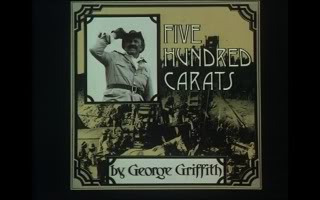 INSPECTOR LIPINZKI: RIVALS OF SHERLOCK HOLMES (1973) – The best episode of Season Two involved this detective investigating the spectacular theft of a huge diamond. Click
  THE FIRST TWENTY CAPTAIN AMERICA STORIES OF THE 1940s – The Golden Age adventures of the red white and blue superhero. Click
 VICTIMS OF THE DEMOCRAT RIOTERS SPEAK OUT – The victims of color who suffered through the Democrat riots this year were ignored by the Democrats’ media outlets. Click
  LADY MOLLY: DETECTIVE – Baroness Orczy’s female detective from 1910, solving a murder mystery involving a woman in a “big hat.” Click
  TWIN PEAKS IN POLAND: THE MAGICAL WORLD OF ANIA – The disappearance of a troubled young woman leads to a series of nightmarish goings-on. Click
  CONSOLATIONS IN TRAVEL (1830) ANCIENT SCIENCE FICTION – A trip to assorted planets in our solar system. Click
  MARS MEN (1976) MOVIE REVIEW – My review of the Thailand/ Japan/ Taiwan monster movie mashup. Click
  GEORGES (1843): Alexandre Dumas’ novel about a swashbuckling swordsman fighting slavery. Click
  TOOMORROW (1970) – My movie review of Olivia Newton John’s deep dark secret. Click
  DOCTOR THORNDYKE – A rival of Sherlock Holmes in a great mystery adapted for television. Click
  MANDY (2018): NICOLAS CAGE IN THE ROLE HE WAS BORN TO PLAY – Cage always brings the crazy and this wild, hyper-stylized and ultra-violent horror film showcases him at his psychotic best. Click
  ROBERT LUDLUM EXPANDED UNIVERSE – Television series like Beowulf Agate, Operation: Medusa and one set in the dystopian future from the end of The Holcroft Covenant. Click
  TWENTY JAMES GARNER MOVIES: Some of the underrated actor’s best work: movies
  UP IN THE AIR AND DOWN IN THE SEA (1863): ANCIENT SCIENCE FICTION – Scientific experimenter Victor Volans devises a passenger balloon which lets him explore two Lost Worlds on islands in the Pacific Ocean. Next he devises underwater exploration techniques which let him recover sunken treasures off Australia and Ceylon (Sri Lanka) while fighting off deep sea monsters. Click
  CASABLANCA: A Valentine’s Day review of the classic movie from Balladeer’s Blog. Click
  2020 TEXAS GLADIATORS – January 1st of this year saw the publication of the movie review I’d been planning since I started Balladeer’s Blog back in 2010! My favorite bad/ weird post-apocalypse movie reviewed on New Year’s Day of the year in which it was set. How close to reality were its predictions for the future? Nowhere NEAR close but that’s part of the fun of course.
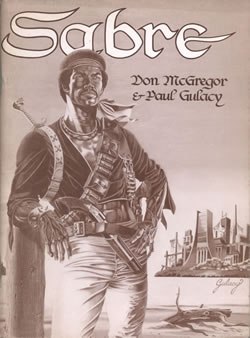 KILLRAVEN, SABRE AND THE SLOW FADE OF AN ENDANGERED SPECIES – My review of the post-apocalyptic adventures of Killraven and Sabre in the year 2020 as told from the 1970s.
  THE LOG OF THE FLYING FISH (1887): ANCIENT SCIENCE FICTION – My review of the 1887 novel about The Flying Fish, a craft capable of flying and serving as a submarine.
 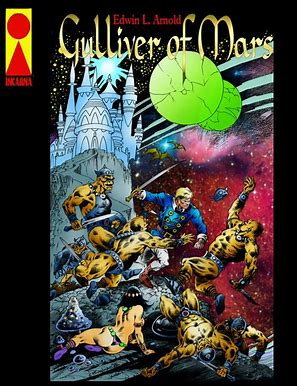 GULLIVAR JONES ON MARS (1905) – Written by Edwin L Arnold. In
 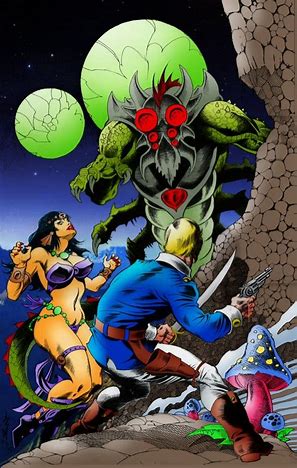 Gullivar Jones on Mars starts out in the late 1860s or early 1870s with U.S. Navy Lieutenant Gullivar Jones, a veteran of the Union forces in the Civil War, in New York City on shore leave. He comes into possession of a Turkish rug with unexplained mystical powers. While standing on the unrolled rug he wishes he was on Mars and the flying carpet transports him there. (?)
  GULLIVAR JONES ON MARS (1905) – Written by Edwin L Arnold, this novel was originally published under the title Lieut. Gullivar Jones: His Vacation. Years later, with the spelling of the lead character’s first name altered, it was published as Gulliver of Mars. Over the years it was revived under a variety of titles. I’m using the title that I prefer – Gullivar Jones On Mars.
  If Arnold had written this story decades later it could have been said that he was intentionally subverting the tropes of heroic sword & science epics. Unfortunately, this novel instead seems to be the victim of ineptitude on the author’s part.