
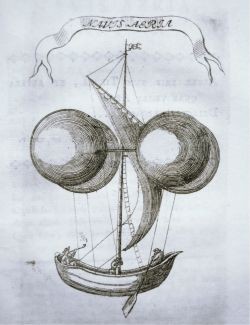
 NAVIS AERIA (1768) – By Bernardo Zamagna. Written in 1768 Navis Aeria (“Ship of the Air”) was the Italian Zamagna’s attempt to take concepts we of today would associate with science fiction and present them in the old, quaint format of Epic Poetry.
The verse story detailed a flight around the world in a flying machine which was basically a sailing ship with four huge balloons around the sails and connected to a main mast. Zamagna presciently observed that one day aircraft would constitute “other Argos to carry chosen heroes” on their adventures.
The entire First Canto (Or “Canto the First” as some of the more pompous translations put it) is a poetic glorification of science, mathematics and what we now call aeronautics. As poetry it’s as lame as poetry by the Wright Brothers might have been but as a very early work of science fiction that opening Canto is very moving and ground-breaking, especially the end which excitedly predicts vessels that will one day take human beings to the moon.
Continue reading
 THE INCUBATED GIRL (1896) – Written by F.T. Jane, as in THE Jane who originated the Jane’s Guides.
  THE ARTIFICIAL MAN: A SEMI-SCIENTIFIC STORY (1884) – Written by an unknown figure under the pseudonym Don Quichotte.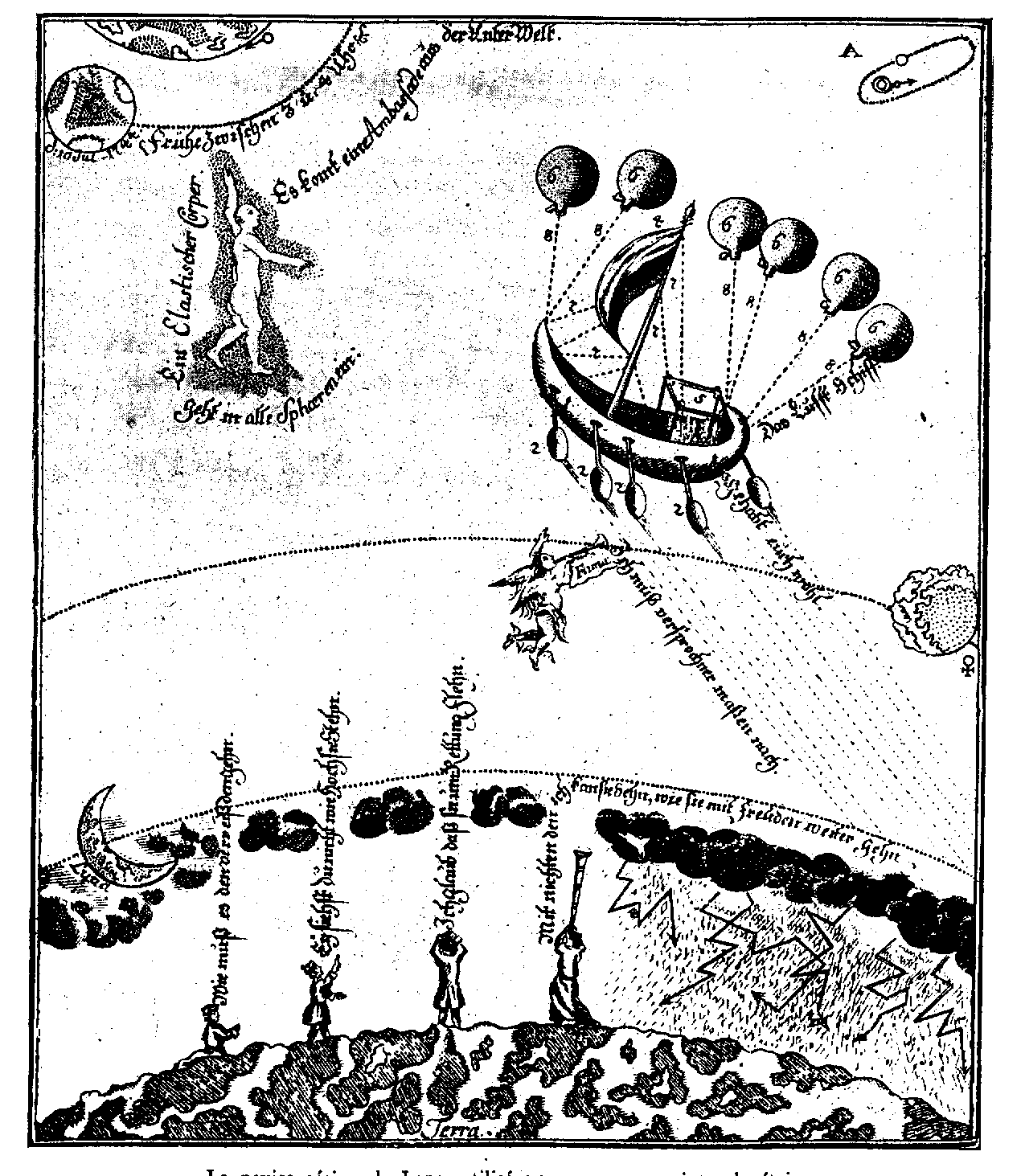
 AROUND A DISTANT STAR (1904) – Written by Mrs Muirson Blake under the alias Jean Delaire.
 THE DEATH-TRAP (1908) – Written by George Daulton, this story was published in the March, 1908 issue of Pearson’s Magazine. It’s once again Ancient Creature Feature time with this story about a monster from Lake Michigan which sometimes enters the Chicago sewer system to prey on unsuspecting denizens of the Windy City.
  He comes to regret that decision when, on a poorly-lit street, he sees a drunken sailor get dragged down into the sewer and devoured by a slimy, half-glimpsed creature. Our hero flees for his life and doesn’t stop running until he’s reached one of Chicago’s bridges.
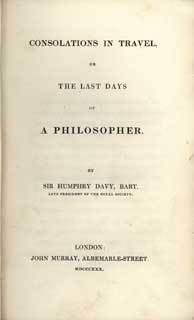 CONSOLATIONS IN TRAVEL or THE LAST DAYS OF A PHILOSOPHER (1830) – Written by THE Sir Humphrey Davy, this is largely a work of philosophical discourse but with one section devoted to a science fiction tale: The Vision.
  The first planet they travel to is Saturn, where Davy is awestruck by the alien landscape. Strange clouds fill the skies and among the oddest planetary features are large columns of liquid which flow from the ground upward. Saturn is inhabited by intelligent beings with three pairs of wings and organs like elephant trunks dangling from their bodies.
  THE Nth MAN (1920?)
  A MEXICAN MYSTERY (1888)
  THE MONSTER OF LAKE LA METRIE (1899) – This short story was written by Wardon Allan Curtis and was first published in the August of 1899 issue of Pearson’s Magazine.
  The pair of researchers begin to theorize that the lake reaches down to the Earth’s “hollow interior.” (Yes, it’s one of THOSE notions again.) They suspect that plant and animal species long extinct on the surface are still alive deep within the planet and occasionally wash up in the lake’s waters.
 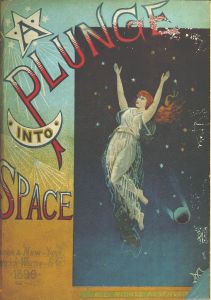 A PLUNGE INTO SPACE (1890) – Written by THE Robert Cromie, later editions of this novel came with a preface by Jules Verne himself. Scientist Henry Barnett, after 20 years of labor, has mastered “the ethereal force which permeates all things,” a combination of electricity and gravity. This mastery will allow for interplanetary space travel.
 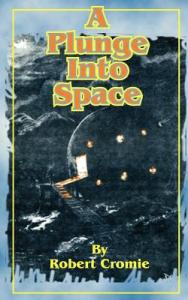 In anticipation of encounters with hostile life-forms on other planets, the clique has also manufactured disintegrator weapons, with which they fight off curious parties of indigenous tribes in order to preserve their secret.
  Balladeer's Blog