
This weekend’s light-hearted, escapist superhero post from Balladeer’s Blog looks at Sun Girl, a Marvel character from back when the company was called Timely Comics.
 SUN GIRL
Secret Identity: Mary Mitchell, secretary for the Daily Views newspaper
Origin: Never revealed. Her very first story made it apparent that she had already been active for years.
Powers: Sun Girl was much stronger than any adult male. She was extraordinarily skilled at unarmed combat and was more agile than an acrobat.
Sun Girl wielded a Sunbeam Ray Gun (also a Sunbeam Wristlet-Ray) which shot solar light and heat.
Her emergency pouch contained a “super-sensitized tracer” and the cable/ lariat which she used to swing around the city like Spider-Man or Daredevil.
Comment: Marvel still hasn’t clarified if Sun Girl was a human or was an alien using the name Mary Mitchell as an alias. I would have made it that she was a human granted her powers and weapons by the Master of the Sun, who decades later gave Peter Quill his powers and weapons to become Star-Lord.
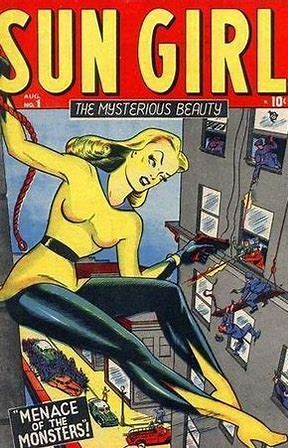 SUN GIRL Vol 1 #1 (August 1948)
Title: Flying Fists and Glamour
Villains: Gangs of bank robbers
Synopsis: A gang of armed robbers arrive in their getaway car at their hideout with their latest robbery proceeds.
Sun Girl emerges from hiding and reveals that she was surreptitiously clinging to their vehicle.
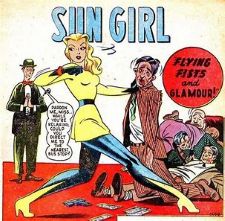 Our heroine outfights and outshoots the entire gang and hauls them into a police station. Expository dialogue reveals this is the latest in a rash of bank robberies and Sun Girl vows to lure out the secret leader of the gangs.
That leader turns out to be the crooked police chief, and she takes down him and his underlings. Continue reading
 SPIDER-MAN Vol 1 #36 (May 1966)
 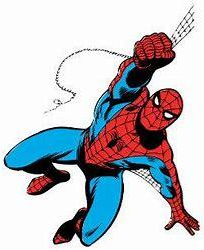 She makes a point of showing up at an astro-science exhibit that Peter is visiting and is exasperated once again as the fragments of meteorites and other displays capture Peter’s attention instead of her blonde hotness. (Save your own life and just walk away, Gwen!)
 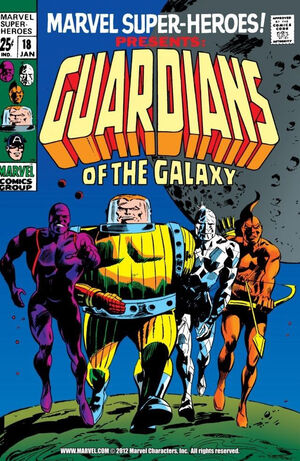 GUARDIANS OF THE GALAXY
  THE DEFENDERS
 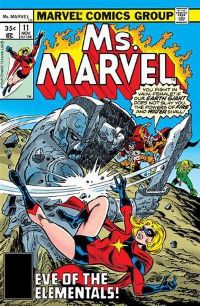 MS. MARVEL Vol 1 #11 (Nov 1977)
 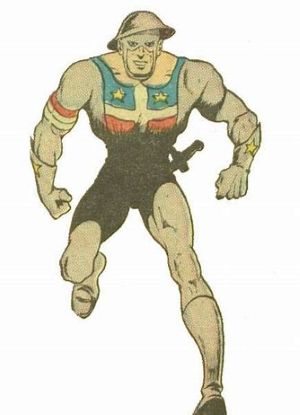 GHOST OF FLANDERS
  In reality the young man was in a Prisoner of War camp until being released after the war ended on November 11th, 1918.
 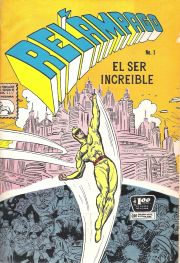 RELAMPAGO (Lightning)
  LLANERA VENGADORA (Plains Avenger)
 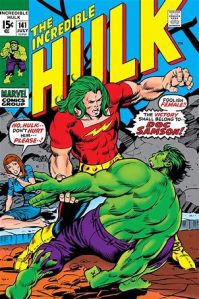 DOC SAMSON – Leonard Samson, MD and PhD, used tightly focused Gamma Radiation drained from the Hulk himself to gain superpowers.
  FAULADI (Ironclad)
  KANGA
KANGA 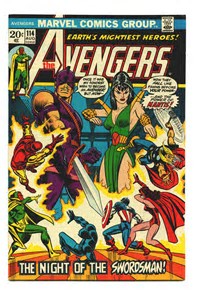 AVENGERS Vol 1 #114 (August 1973)
  Synopsis: The villainous Swordsman rejoins the Avengers with a pardon and alongside his mysterious romantic partner Mantis, making her very first full appearance. Mantis is part Vietnamese and part unknown at this point.
  THE CAT – Greer Nelson caught on to a conspiracy to take over the world via armies of women clad in superpower-granting costumes. She donned the prototype and called herself the Cat before taking down the entire sinister organization.
 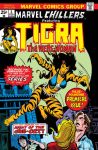 TIGRA THE WERE-WOMAN – After the Cat’s series got canceled from low sales Marvel added Greer Nelson to their 1970s horror characters as Tigra. The Cat was mortally wounded in a battle with Hydra, but Marvel’s race of cat-people saved her life by granting her an amulet that turned her into Tigra the Were-Woman.
  Balladeer's Blog