
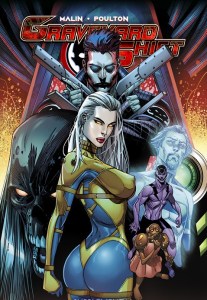
 Halloween month continues here at Balladeer’s Blog with a look at the first two volumes of Graveyard Shift, the “monsters as superheroes” sensation drawn by THE Jon Malin and written by Mark Poulton.
The introductory Graveyard Shift graphic novel presented the team’s “senses-shattering origin.” To quote the creators: “Scientists Vladimir Blud, Lillith Mayhew and her husband, head of security Mick Mayhew are working on advance human regeneration for the mysterious ATLANTIS CORPORATION. Betrayed, murdered and put into their own experiments they are reborn with super human abilities, they are the GRAVEYARD SHIFT and they are all that can stop a rising supernatural evil from taking over the world!”
 Graveyard Shift Volume Two featured the team taking on the reborn menace of Dracula himself and his legions. The first two installments raised six figures each on Indiegogo and it is presumed that the third volume, expected in 2020, will continue that trend.
Malin is one of the comic book “Outlaws” going their own way to pursue their vision free of the corporate influence of the Big Two publishers. He has also worked with fellow Outlaw Richard Meyer on his indy superhero team called Jawbreakers. Continue reading
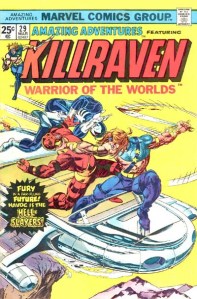 AMAZING ADVENTURES Vol 2 #29 (March 1975)
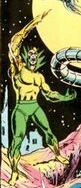 The other quisling is known only as the Sacrificer, clad in green and gold. Like Atalon he is ugly but his ugliness is amplified by his metal cybernetic jaw with jagged steel teeth. His amputated right arm has been outfitted with assorted cybernetic blades which can be used as weapons or as surgical tools in the perverse “operations” he performs.
 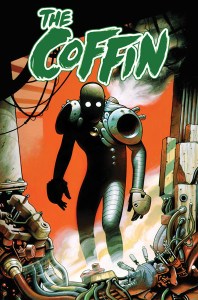 THE COFFIN (2000) – Written by Phil Hester and drawn by Mike Huddleston, The Coffin was originally a four-part serial before being collected into graphic novel format. I’ll provide details below but right up front let me point out that the horrific but intriguing premise is that the Coffin is a dead scientist whose soul is trapped within a polymer techno-suit of his own creation.
 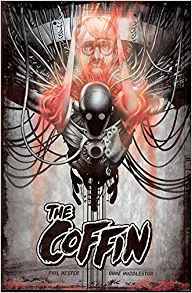 And so Heller Technologies recruited Dr Ahmad to devise strong, lightweight polymers for medical purposes. To that end Ashar has developed polymers that can be used to form an artificial membrane that is perfectly impermeable and incredibly durable.
 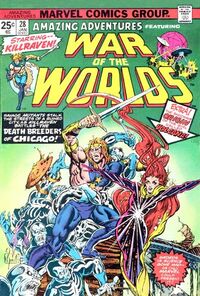 AMAZING ADVENTURES Vol 2 #28 (January 1975)
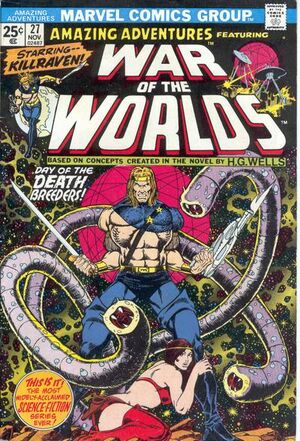 AMAZING ADVENTURES Vol 2 #27 (November 1974)
 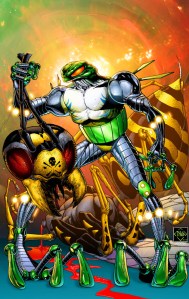 Cyberfrog and Heather Swain are back in action! In the tradition of other great duos like Rocket Raccoon and Groot, Howard the Duck and Beverly Switzler, Rocky and Bullwinkle or Crusader Rabbit and Rags the Tiger, everyone’s favorite frog/ full-grown woman pair have returned in their first new adventure since the 1990s.
  Van Sciver, after legendary runs at Marvel and DC, is the leader of the comic book “outlaws” pursuing their own projects free from the corporate influence of the Big Two publishers.
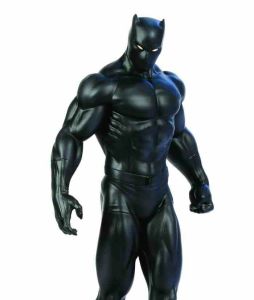 Here’s Balladeer’s Blog’s examination of Don McGregor’s 1973-1975 Black Panther story Panther’s Rage. I’m no comic book expert but in my opinion Panther’s Rage surpasses much of the work done by the overrated and overpraised Alan Moore.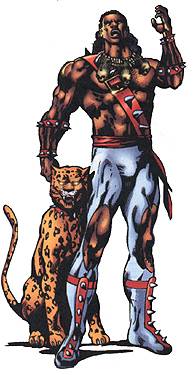
 Labor Day weekend is the appropriate time to post this look at neglected working class folk hero Joe Magarac. This figure was the Steel Mill equivalent of Paul Bunyan and John Henry.
  As a lame play on words since this is Labor Day season I’ll present Joe Magarac’s origin and then depict his tales as “Labors” like in The Labors of Hercules.
 Balladeer's Blog