
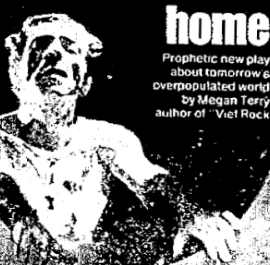
 HOME aka Future Soap (1968) – This science fiction drama set hundreds of years in the future first aired on January 19th, 1968 on American Public Broadcasting’s N.E.T. Playhouse. Home is a 90-minute piece about the threat of overpopulation – and the excuses that threat gives the government to impose authoritarian conditions on the populace – set among a honeycomb of claustrophobic rooms in which citizens of the future must spend their lives due to the dictates of the government.
They are born in, live in and work in these small chambers, own nothing and are forbidden to travel.
 Food is in pill form, rituals praising the government are required and “happy drugs” must be consumed daily in order to keep the populace in line. When a couple is able to obtain permission to have a child they must wait until someone in their communal room dies.
The work was written by Megan Terry (at right), a founding member of the Open Theater in 1963, who was also noted for her 1966 anti-war musical Viet Rock. That production is by many considered to be the first true rock musical made for the stage. Continue reading
 CITY BENEATH THE SEA (1962) – For starters, this is NOT the 1970s movie nor the 1950s movie of this title. This City Beneath the Sea is a seven-part television serial from Great Britain. In the past Balladeer’s Blog has covered similar British tv serials like the original Quatermass adventures, Pathfinders in Space and its sequels, in addition to The Trollenberg Terror, plus Object Z and Object Z Returns.
 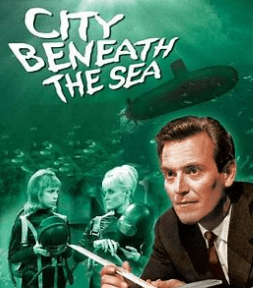 City Beneath the Sea stars Gerald Flood as reporter Mark Bannerman and Stewart Guidotti as his photographer Peter Blake. The villains are led by Germans who served in World War Two, like Denis Goacher as former U-Boat commander Kurt Swendler and Aubrey Morris as mad scientist Professor Ludwig Ziebrecken.
 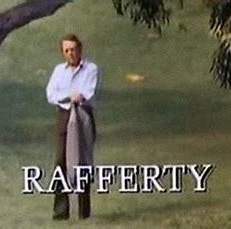 RAFFERTY (1977) – Before House there was Rafferty! The great Patrick McGoohan, still praised for his multiple creative contributions to the 1967 series
 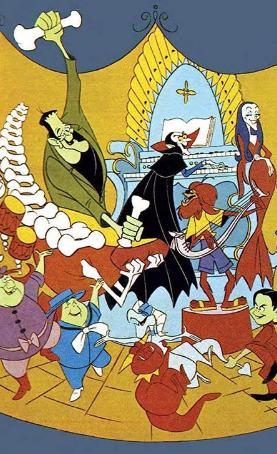 THE GROOVIE GOOLIES (1970) – This 16-episode cartoon series seemed like an appropriate subject for Halloween Month. In previous years, Balladeer’s Blog reviewed
 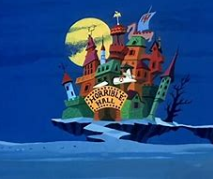 Other supporting characters at the castle called Horrible Hall were Mummy the mummy, plus Bone-Apart, the living skeleton in a Napoleon hat and epaulettes. Additional monsters and living pieces of furniture added to the cast and appeared intermittently.
  The Rivals of Sherlock Holmes was a 1971-1973 British television series about London by Gaslight detectives from both the Victorian and Edwardian Ages.
  Episode: FIVE HUNDRED CARATS (February 5th, 1973)
 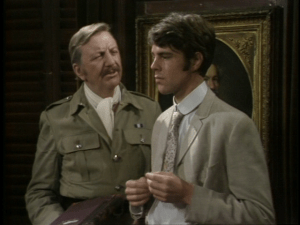 For the first time in this series we have a story set outside Great Britain, which I found to be a welcome change of pace. Leo Lipinzki (Barry Keegan) works as a Detective Inspector for the Cape Police, but technically the already wealthy and powerful De Beers Diamond Corporation is who he really answers to.
  THIRTEEN AGAINST FATE (1966) – Based on thirteen stand-alone crime stories by Georges Simenon, the creator of Jules Maigret, this BBC series was long thought lost except for three episodes which had gone unwiped by the penny-wise and pound-foolish broadcasters. In September of 2010, the entire series was discovered in America’s Library of Congress, finally making all thirteen episodes available.
 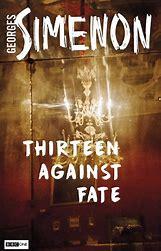 TRAPPED (June 26th) – Louis Bert, a carpenter turned petty criminal, lives in Nice with Constance, a wealthy woman he is conning. On the side he romances Lulu, a prostitute whom he passes off as his sister to the wealthy Constance.
 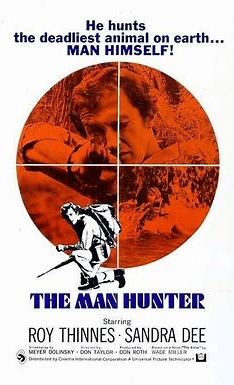 THE MAN HUNTER (1972) – This made for tv movie should not be confused with the later Ken Howard series of the same name about a 1930s bounty hunter. This telefilm starred Roy Thinnes as David Farrow, a Big Game hunter who plies his trade in jungle locations around the world. Farrow is hired to track down a deadly Cajun criminal who has fled into the Louisiana bayous.
 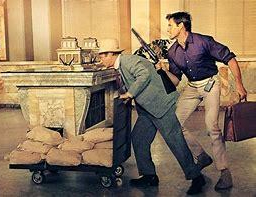 The Man Hunter opens with Clel and his boys pulling off a bank robbery which misfires, with Clel killing the son of the bank owner in the resulting violence. When the cops lose Bocock in the swampland the bank owner, Walter Sinclair (David Brian), seeks outside help.
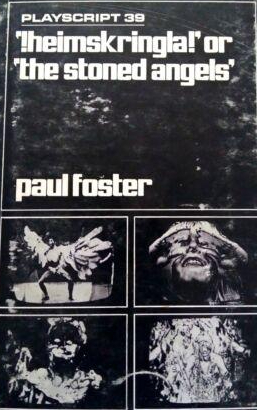 HEIMSKRINGLA! OR THE STONED ANGELS – This was a pioneering presentation from WNET and first aired on November 6th, 1969.
 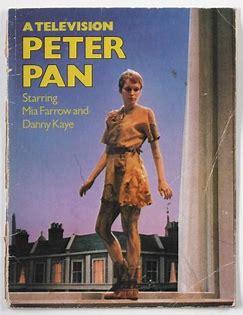 PETER PAN (1976) – This Hallmark/ ITV joint venture is not as good as the Mary Martin or Sandy Duncan versions or the original Disney animated movie, but its obscurity made it a “must review” item for Balladeer’s Blog. Dwight Hemion directed this telefilm with Andrew Birkin and American comedian Jack Burns (of Burns and Schreiber fame) adapting the screenplay.
 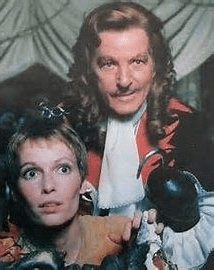 MIA FARROW, in her Rosemary’s Baby hairdo, portrays the title character with an accent on the little boy aspect of “the boy who wouldn’t grow up”. It’s interesting to watch her depict Peter’s cockiness as more like bravado to cover up how frightened he is. Not brilliant, but interesting. Her singing is okay.
 RIVERBOAT (1959-1961) – We are less than a week away from Frontierado 2023, observed on Friday August 4th this year. For a combination Frontierado and Forgotten Television post Balladeer’s Blog takes a look at some of the best episodes of the old western series Riverboat.
  Grey Holden captained the Enterprise, but the more experienced Chief Pilot was Ben Frazer, played by the one and only Burt Reynolds. Riverboat was, for a television western, atypically set during the 1830s and 1840s. Some of my favorite episodes are historical fiction, featuring our heroes aiding Texas rebels during the Texas Revolution, clashing with river pirates, or encountering young Abraham Lincoln and a few other historical figures here and there.
  Balladeer's Blog