
Nobody doesn’t like Ricardo Montalban. From Mr. Rourke to his memorable villain roles, his suave charm and magnetic charisma kept him a star for decades. Here’s a look at his swashbuckler movies.
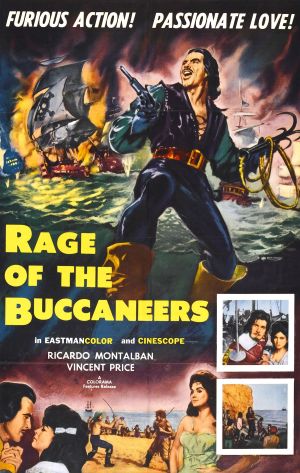 RAGE OF THE BUCCANEERS (1961) – Montalban stars as 1600s buccaneer Captain Gordon aka the Black Pirate (no relation to the Douglas Fairbanks silent film). He’s a former slave turned pirate and his favorite targets for plunder are slave ships.
Gordon liberates all the slaves on such vessels and loots all valuables. His suffering when he was a slave drives him still and he has a “secret identity” of sorts as a wealthy landowner in San Salvador. Through that identity he covertly keeps abreast of ships with valuable cargos as well as the actions of slave merchants trying to avoid his pirate attacks.
Ricardo has two ladies vying for his love – stowaway Luanal (Liana Orfei) and the governor’s daughter Manuela (Giulia Rubini). Vincent Price himself plays Romero, an evil politician and slave trader plotting to overthrow the governor and take his place. He also wants Manuela for himself.
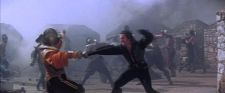 Romero’s most dangerous ally is Captain Tortuga (Jose Jaspe), a ruthless slaver who has clashed with Captain Gordon over the years. Montalban shines as the hero viewers can’t help but cheer for, especially when he thwarts the efforts of slavers to dump their chained human “cargo” overboard to drown rather than have our pirate captain liberate them.
This movie should have been remade in recent decades. I know studios consider pirate movies to be risky ventures but this one seems like it couldn’t miss. 88 minutes. Continue reading
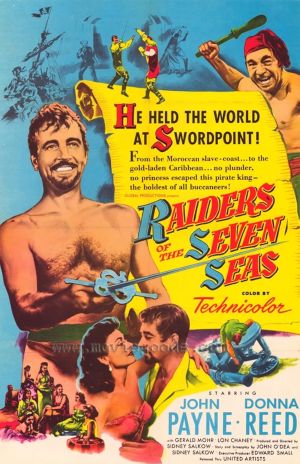 RAIDERS OF THE SEVEN SEAS (1953) – John Payne plays the real-life 1500s pirate Barbarossa (Redbeard) in this fictional version of his exploits. While working as a corsair for the Sultans of the Middle East, the daring and accomplished seadog spends a little too much time with a Sultan’s harem and is sentenced to death.
 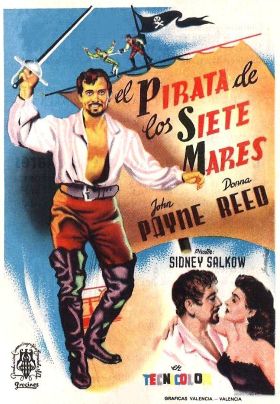 Eventually, during a raid of Tortuga, our hero seizes the incumbent Spanish governor Alida – played by Donna Reed in uncharacteristic spitfire mode – and holds her for ransom. Barbarossa and his crew take on Spanish galleons and Alida’s treacherous betrothed Captain Salcedo (1950s smug jackass Gerald Mohr).
 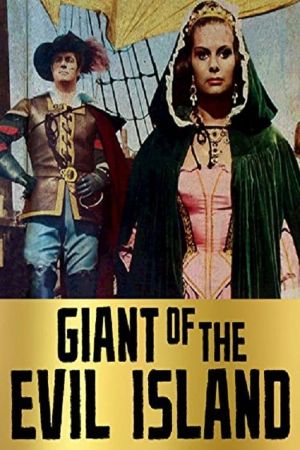 GIANT OF THE EVIL ISLAND (1965) – Also released as The Mystery of the Evil Island, this film starred Mission: Impossible‘s Peter Lupus going by the name Rock Stevens. After mild success in a few Italian peplums, Lupus got his one and only swashbuckler movie with this little honey.
 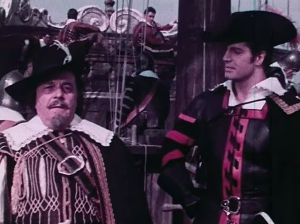 Pedro’s predecessor as captain of his ship has retired after a career of fruitlessly trying to nab the pirate Moloch. Newly arrived Captain Valverde meets cute with the local governor’s daughter Bianca (Dina DeSantis) and the two fall in “love.”
 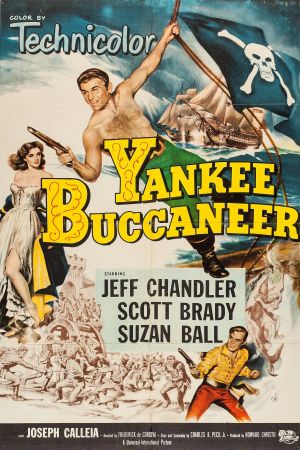 YANKEE BUCCANEER (1952) – An enjoyable movie but one which throws history out the window in the mind-boggling way that only Hollywood could manage! The real-life American naval heroes David Porter (Jeff Chandler) and David Farragut (Scott Brady) are presented fighting Caribbean pirates during the early 1820s.
 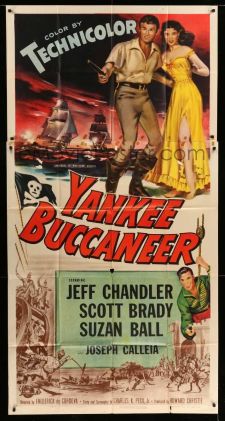 Our heroes become romantic rivals for Countess Margarita La Raguna (Suzan Ball, Lucille’s cousin) as the movie ignores the fascinating REAL relationships between the Porter and Farragut families. Still, Yankee Buccaneer is fun, and naturally the good guys win. David Janssen, Michael Ansara and Tonto himself, Jay Silverheels, co-star. 86 minutes.
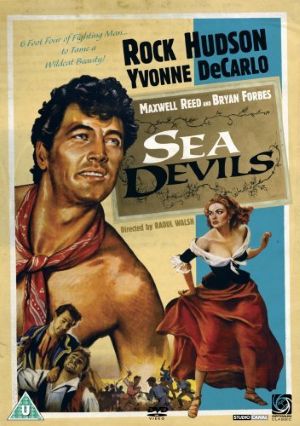 SEA DEVILS (1953) – As England and other nations battle France in 1800, English Captain Gilliatt (Rock Hudson) has abandoned his career as a fisherman to become a smuggler. He excels at the task and over the past few years he and his ship the Sea Devil have gained quite a reputation.
 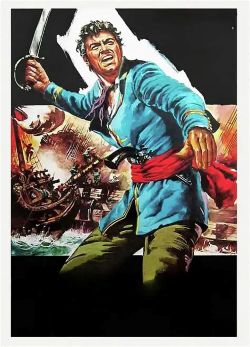 Amid much swordplay and other action during frequent trips across the Channel, Gilliatt struggles to keep her alive and understand the motives of this beautiful woman with whom he has fallen in love.
 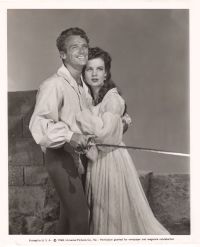 “See how he apes his father” was a saying long associated with contemporary enemies of John Quincy Adams as a complaint about how the younger Adams was as stubborn and single-minded as his father John Adams. He pursued his own ends regardless of political consequences.
 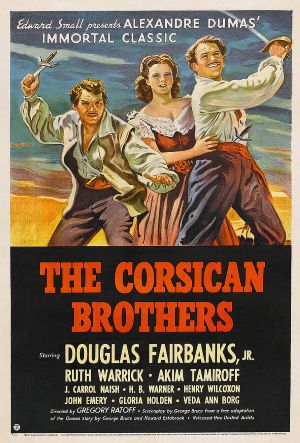 THE CORSICAN BROTHERS (1941) – Another of the many adaptations of the Alexandre Dumas novel that have very little to do with the original storyline. In this case the tale was transformed into an action-packed sword-fighting, gun blazing, hell-for-leather chase vehicle for Doug Jr.
  Each grows into a man of action, Lucien as a bandit chief and Mario as a dueling, gambling ladies’ man. When they are reunited they set out to bring down the man who massacred their family – Baron Colonna (Akim Tamiroff), now the tyrannical ruler of Corsica.
 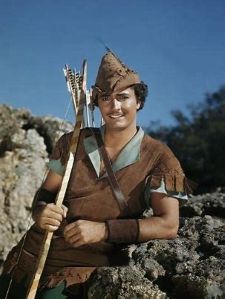 Today, actor and director John Derek is remembered mostly because of his wives – Bo Derek, Ursula Andress, Linda Evans and Pati Behrs.
 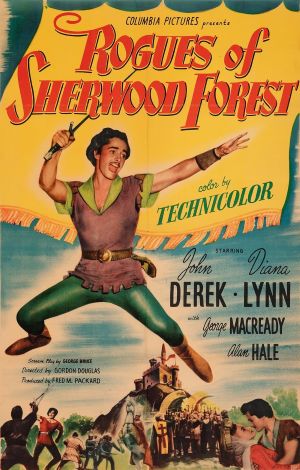 ROGUES OF SHERWOOD FOREST (1950) – John starred as Robin, Earl of Huntington, the son of Robin Hood. When Richard the Lionheart passes away in 1199 A.D. King John (George Macready) returns to his old ways of oppressing and heavily taxing the citizens. He also imports an army of foreign mercenaries faithful only to him, not England.
 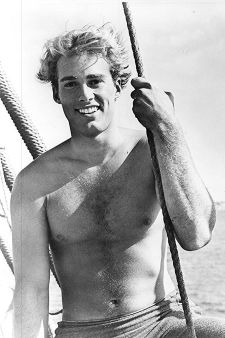 Balladeer’s Blog takes a look at the film appearances of Errol Flynn’s son Sean. The two did not get along, unfortunately, largely because of Errol only caring about Sean when the mood struck him according to Sean.
 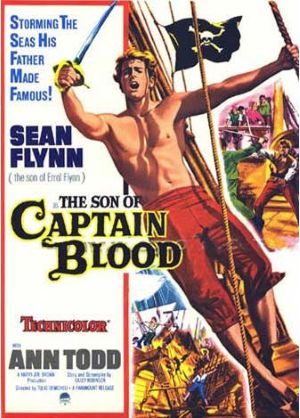 THE SON OF CAPTAIN BLOOD (1962) – Since the 1935 swashbuckler Captain Blood propelled Errol Flynn to stardom, the studio was hoping a Son of Captain Blood flick would do the same for Sean. Jock Mahoney, a former Tarzan and stunt man for Errol trained Sean in fencing and acrobatics to prepare for the role.
 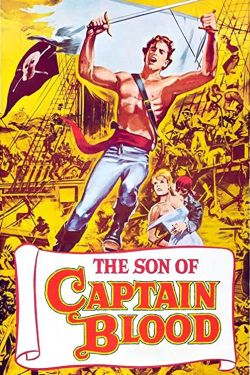 The ship Robert commands has among its passengers a handful of giggling young ladies being transported to England along with their stern lady chaperone. This new Captain Blood turns their heads and ultimately Abigail McBride (Alessandra Panaro) beats out the others for his heart.
 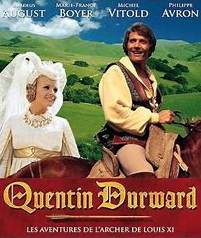 QUENTIN DURWARD (1971) – This French-German television series ran for 13 half-hour episodes in Germany but just 7 52-minute episodes during its initial French run.
  Amadeus August stars as Quentin Durward, a fighting young Scotsman who is the sole surviving male from his Scottish clan after a brutal clan war wiped out the rest of his family. At present he is being sheltered in a monastery where the monks have told him the only way to stop the enemy clansmen from killing him to blot out his entire bloodline is to become a monk under a vow of celibacy.
 DESERT CRUSADER (1968-1969) – This French television series is also known as Thibaud, ou les Croisades, Thibaud, il Cavaliere Bianco, Thibaud, der Weisse Ritter and other variations of those titles. The color series ran two seasons of 13 episodes each, with those episodes lasting around 26 minutes apiece.
 Thibaud and his sidekick Blanchot (Raymond Meunier) are part of the knightly efforts to safeguard people making a pilgrimage to the Holy Land. He often works alongside the Knights Templar but doesn’t seem to be an official member of their Order.
