Previously, Balladeer’s Blog examined star vehicles and genre films from the age of Silent Movies. This time around I’m taking a very brief look at Alfred Hitchcock’s pre-sound films.
 NUMBER THIRTEEN (1922) – This film marked the first time that Hitchcock worked as a director on a movie, but was the thirteenth film project he had worked on in some capacity, hence the title. The production went unfinished from lack of funds and the original title may have been Mrs. Peabody but even that is uncertain.
The movie was intended as a comedic (?) look at the Peabody Trust, an organization founded by American philanthropist George Foster Peabody to provide affordable housing to needy Londoners. Hey, I’m laughing already! (I’m kidding!) Only two reels of footage were completed and Alfred Hitchcock himself dismissed the aborted film project as insignificant. Clare Greet and Ernest Thesiger starred.
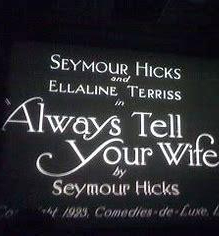 ALWAYS TELL YOUR WIFE (1923) – Hitchcock started out as a co-director of this 20-minute comedy short but had to step into the top spot when the original director quit over creative differences with the studio. Though Alfred’s previous directing effort had gone unfinished, this comedy short was completed but he was not credited since he had not directed the entire film.
The storyline involved Ricardo and Mertz-style wackiness between two families, but with the more adult theme of infidelity.
 THE PLEASURE GARDEN (1925) – The third time was almost the charm as this 75-minute movie was not only completed, but Hitchcock was credited as the director!
His bad luck lingered, however, and after one public showing, the movie was shelved and not released again until after Alfred’s film The Lodger became a hit a few years later.
The title establishment was a music hall, where chorus girl Patsy Brand gets the struggling Jill Cheyne a job as a dancer (Showgirls 1925!) and fixes her up with her fiancé’s friend. Continue reading →

 THE PHANTOM OF THE OPERA (1925) – Lon Chaney Senior’s makeup and performance as the title character were envelope-pushing for 1925 audiences. To me this is the ULTIMATE silent horror film. It may sound odd, but in my opinion this movie is the very best cinematic adaptation of the Gaston Leroux novel.
 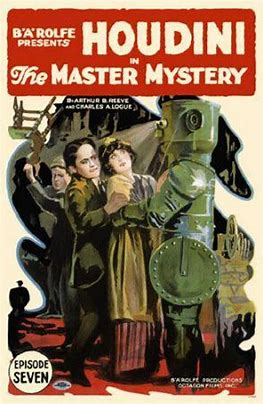 THE MASTER MYSTERY (1918-1919) – The first film footage of Harry Houdini performing his stage act dates to 1907, but it wasn’t until this 15-part serial that he hit the big screen in a series of adventures. Chapter One of The Master Mystery debuted on November 18th, 1918 and starred Houdini as a federal agent named Quentin Locke.
 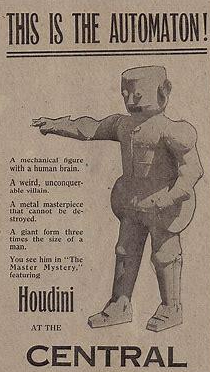 Every cliffhanger ending for the chapters of the serials involves a deathtrap which Houdini escapes from at the start of the following installment.
 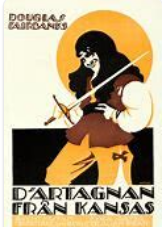 A MODERN MUSKETEER (1917) – This 68-minute film was released on December 30th, 1917, when Douglas Fairbanks was known for his comedies rather than for his later success as cinema’s first swashbuckling superstar.
 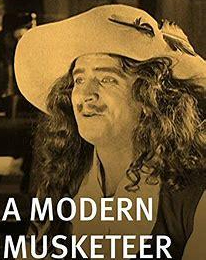 I’m not exaggerating when I say that that opening segment provides almost as many thrills and spectacular stunts as the entirety of Doug’s 1921 serious turn as D’Artagnan in
  THE MYSTERY OF THE LEAPING FISH (1916) – Regular readers of Balladeer’s Blog may remember that I’m a geek for Silent Movies. Last week’s look at
 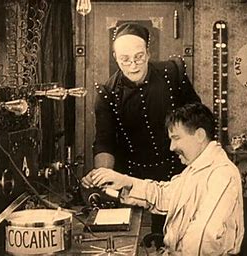 The short’s comedic approach to cocaine, opium and more demonstrates the “anything goes” attitude before film codes were implemented to ban certain content from the big screen. In the pre-internet years, The Mystery of the Leaping Fish was a film that people refused to believe existed until you had them sit down and watch it with you.
 THE MARK OF ZORRO (1920) – Douglas Fairbanks digs into his comedic AND acrobatic skills in this first screen adaptation of Johnston McCully’s masked hero of 1820s California (The Curse of Capistrano had just been published the year before and Fairbanks bought the film rights for United Artists.)
  Excellent fight choreography, heroic opposition to tyranny and the rousing, marathon chase and fight scene near the film’s finale make The Mark of Zorro an absolute must-see for anyone curious about silent movies. Nearly every frame of the film is a portrait.
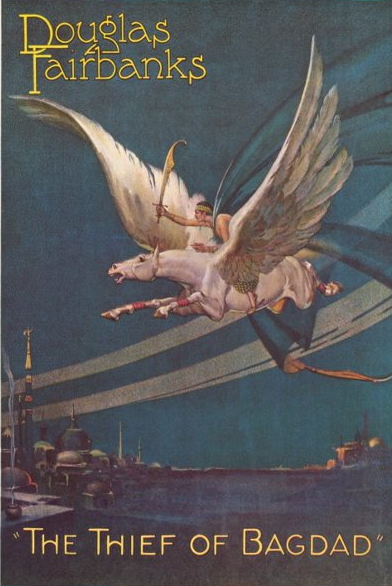 Regular readers of Balladeer’s Blog may remember that I’m a silent movie geek, and have reviewed some of them in the past. Today, I decided to post this beautiful silent era movie poster for Douglas Fairbanks’ forerunner of modern-day special effects blockbusters – his 1924 version of The Thief of Bagdad.