
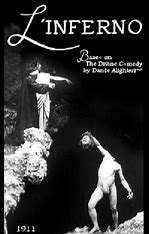
 L’INFERNO (1911) – This 71-minute movie was an adaptation of Dante’s epic poem Inferno, one-third of his Divine Comedy along with Purgatorio and Paradiso. It was also Italy’s first feature-length film, beating Cabiria to theaters by three years.
Three directors collaborated on this production – Francesco Bertolini, Giuseppe de Liguoro and Adolfo Padovan. Obviously, L’Inferno is a very condensed version of Dante’s work but the special effects are impressive for the time period.
Even if I wasn’t a silent film geek aspects of this movie would have stood out to me. First, it was made in Italy toward the end of the Belle Epoch, lending it a certain poignance as the global conflict was approaching an oblivious world.
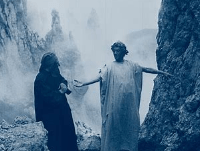 Second, L’Inferno has a certain grandeur from being filmed in Italy itself, the home of Dante Alighieri and his guide through Hell, Virgil. And third, nearly all of the footage set in the realm of the damned was filmed amid extinct and semi-extinct volcanoes in Italy, adding immeasurably to the infernal atmosphere. Continue reading
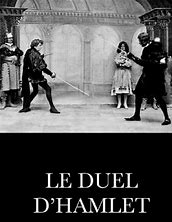 LE DUEL D’HAMLET (1900) – In this roughly 2-minute short, the 56-year-old Bernhardt gave cinema a gender-flipped Hamlet as she fenced with Pierre Magnier as Laertes in the climactic duel.
 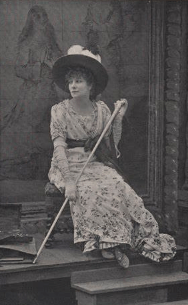 TOSCA (1908, 1912) – Bernhardt portrayed Floria Tosca in this adaptation of the Puccini opera. (Yes, it’s a silent movie version of an opera.) The entire story was condensed into just 40 minutes and Sarah was so appalled with the production that she insisted that it not be released and, in fact, wanted it destroyed!
 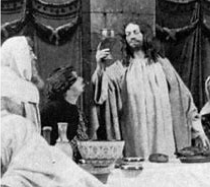 HAPPY EASTER, LADIES AND GENTLEMEN! The good response to my blog post about
 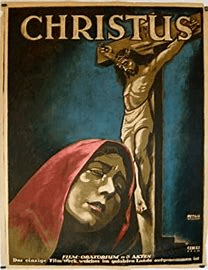 CHRISTUS (1916) – Directed by Giulio Cesare Antamoro, this is a fascinating look at Jesus, from the Angel visiting Mary through his Resurrection and subsequent visit with his Apostles. Christus runs 88 minutes and features some inventive variations on Biblical tableaux. The Star of Bethlehem is depicted as a comet; when Mary finds young Jesus preaching to his teachers His shadow appears as a cross; and Judas gets three visions of the Devil – first urging him on to betray Jesus, then taunting him when he regrets that betrayal, and finally welcoming him into Hell, which opens up under Judas’ swinging corpse.
 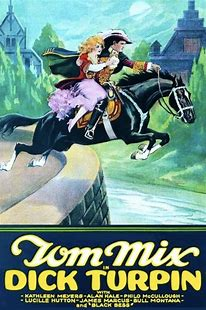 DICK TURPIN (1925) – Western star Tom Mix took a break from his Wild West movies by starring in this highly romanticized film about the real-life English thief and highway robber Dick Turpin. John G. Blystone directed the movie for Fox Film Corporation. Tom swapped his six-guns and rifles for a sword and pistols in this flick.
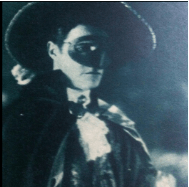 The main villain of the film is Lord Churlton (Philo McCullough), who not only resents having been robbed by Turpin, but abuses his power and influence by menacingly trying to force Lady Alice Brookfield (Kathleen Myers) to marry him.
 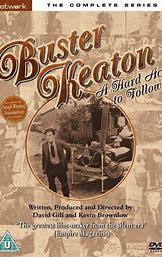 Reactions to Balladeer’s Blog’s reviews of silent movies have been positive enough that I’d like to offer a quick take on a few multi-part documentary series on the subject. Both were from British Film Historian Kevin Brownlow, who did a better job of depicting the Age of Silent Movies than any Americans ever did.
 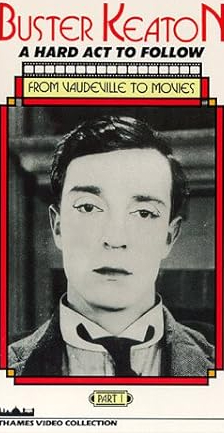 PART ONE – From Vaudeville to Movies: Brownlow and his colleagues scoured the best available footage remaining from Buster Keaton’s silent comedies. (For newbies to silent film history I’ll mention that countless movies from that period are lost forever due to decomposition prior to efforts to preserve them.)
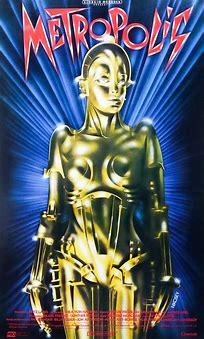 METROPOLIS – Volumes have been written about Fritz Lang’s 1927 silent movie sci-fi masterpiece. I love the film myself but rather than write the 9,899,974th glowing review of the 1927 original I will instead take a look at the 1984 re-issue, produced by Giorgio Moroder, who also did soundtracks for movies like Scarface, Midnight Express, and later Top Gun.
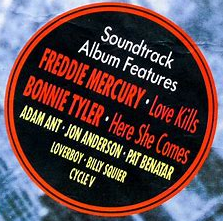 Rather than have the usual classical or similar music play as accompaniment to a silent movie, composer Giorgio Moroder wrote a rock and pop music score to attract a generation of filmgoers who might otherwise have never sat through a silent movie in their lives. Freddie Mercury, Pat Benatar, Adam Ant and Billy Squier were among those performing Moroder’s score.
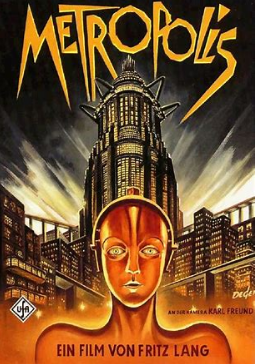 Not only 1984 audiences but all subsequent generations of viewers which were drawn to silent movies in general thanks to airings of Metropolis (1984) may never have brought the new blood and passion to the early cinematic artform if not for Moroder.
 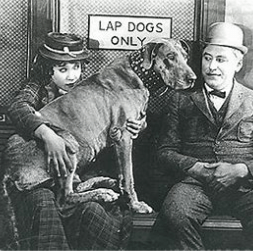 Balladeer’s Blog takes another look at the films of a silent movie star. This time I’m reviewing some of the films featuring trained animal star Teddy the Great Dane aka Teddy the Dog aka Keystone Teddy. From 1915 to 1924 Teddy starred or otherwise appeared in silent shorts as well as feature-length movies.
 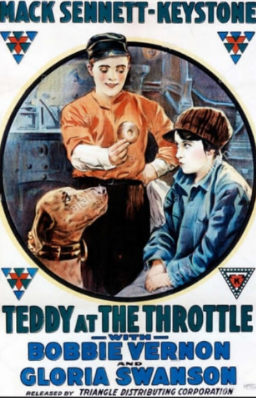 TEDDY AT THE THROTTLE (1917) – This Mack Sennett short at Keystone Studios was one of two films in which Teddy actually got his name in the title. In this light-hearted affair the Great Dane plays the pet of THE Gloria Swanson.
 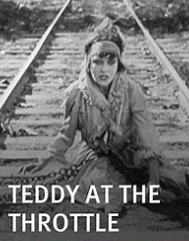 Beery’s villain character is embezzling money from the romantic leads Gloria Swanson and Bobby Vernon. Teddy, the REAL star, is cute and lively, plus he bravely saves Gloria’s life in the end when Beery ties her to railroad tracks after his villainy is exposed.
 THE PHANTOM OF THE OPERA (1925) – Lon Chaney Senior’s makeup and performance as the title character were envelope-pushing for 1925 audiences. To me this is the ULTIMATE silent horror film. It may sound odd, but in my opinion this movie is the very best cinematic adaptation of the Gaston Leroux novel.
  NUMBER THIRTEEN (1922) – This film marked the first time that Hitchcock worked as a director on a movie, but was the thirteenth film project he had worked on in some capacity, hence the title. The production went unfinished from lack of funds and the original title may have been Mrs. Peabody but even that is uncertain.
 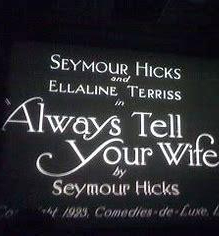 ALWAYS TELL YOUR WIFE (1923) – Hitchcock started out as a co-director of this 20-minute comedy short but had to step into the top spot when the original director quit over creative differences with the studio. Though Alfred’s previous directing effort had gone unfinished, this comedy short was completed but he was not credited since he had not directed the entire film.
  THE PLEASURE GARDEN (1925) – The third time was almost the charm as this 75-minute movie was not only completed, but Hitchcock was credited as the director!
 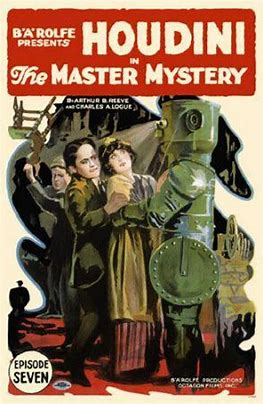 THE MASTER MYSTERY (1918-1919) – The first film footage of Harry Houdini performing his stage act dates to 1907, but it wasn’t until this 15-part serial that he hit the big screen in a series of adventures. Chapter One of The Master Mystery debuted on November 18th, 1918 and starred Houdini as a federal agent named Quentin Locke.
 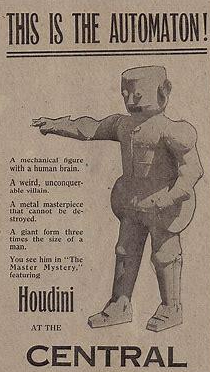 Every cliffhanger ending for the chapters of the serials involves a deathtrap which Houdini escapes from at the start of the following installment.
  Balladeer's Blog