Balladeer’s Blog’s latest look at silent films covers Cuba’s early cinematic efforts.
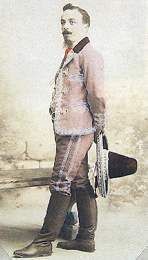 FIRE DRILL aka Simulacro de Incendio (1897) – On January 24th of this year, Gabriel Veyre (at left) held the very first exhibition of silent film shorts in Cuban history at a theater in Havana.
Veyre was the Lumiere Film Company representative to Central America, and he parlayed the popular reaction to the Havana exhibition into financial support for Fire Drill, the first movie made in Cuba. That 1-minute film short from February 1897 was a documentary look at firefighting in Havana. Actual firefighters of the Central Fire Station of the City of Havana played themselves.
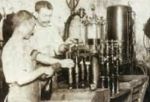 FILM COMMERCIAL FOR LA TROPICAL BEER aka the Missing Sorcerer (1898) – This was the very first film directed by a native Cuban – Jose Esteban Casasús, a noted pioneer of Cuban Cinema. Lasting just under a minute, this short advertised the brewery & product of La Tropical beer and was produced by Cinemataca de Cuba.
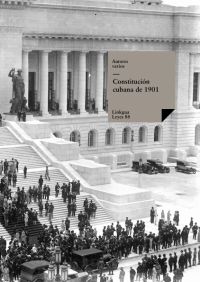 CONSTITUTIONAL ASSEMBLY (1901) – A film capturing the 1901 assembly, the equivalent of our Constitutional Convention. Following the defeat of Spain in the Spanish-American War, Cuba produced its first constitution a few years later. That document was openly based on the United States Constitution but had 115 articles instead of America’s 7.
The three branches were Executive, Legislative (bicameral) and judicial. Cuban presidents were to be elected for terms of 4 years, while Senators were elected for an initial term of 8 years, following which they could run for additional terms of 4 years each. The lower house members were elected for an initial term of 4 years, following which they could run for additional terms of 2 years each. Continue reading →

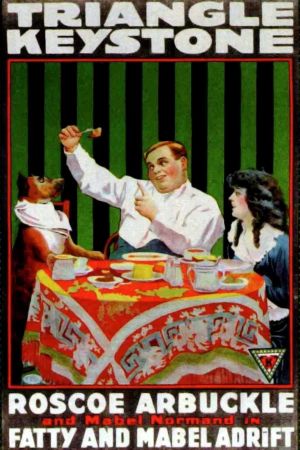 FATTY AND MABEL ADRIFT (1916) – This 34-minute film is not only one of the most popular shorts teaming Mabel with fellow comedy legend Fatty Arbuckle but it’s one of the most popular silent comedies ever. When Fatty wins Mabel’s hand in marriage his jealous rival (Al St. John) sabotages their honeymoon cottage by the sea.
 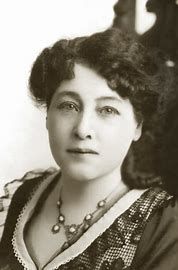 Alice Guy-Blache (1873-1968) was a French film pioneer and was also the first woman to direct movies. Alice worked for the Gaumont Film Company and from 1896 to 1906 was Gaumont’s Head of Production.
 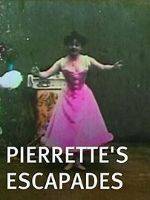 PIERRETTE’S ESCAPADES (1900) – A woman changes from a pink dress to a green dancing outfit. She proceeds to dance alone and soon finds the stock clown character Pierrot dancing with her. The clown tries kissing her but is rebuffed. Next, the stock character Harlequin dances with her, impresses her and the two share a kiss as the 2-minute production comes to a close. Some frames were hand-tinted.
 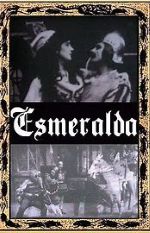 ESMERALDA (1905) – The oldest known movie version of The Hunchback of Notre Dame. Alice had been shepherding Gaumont’s movies away from mere visual spectacle and on to narrative filmmaking.
 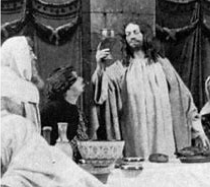 Yes, Happy Easter, ladies and gentlemen! Balladeer’s Blog helps celebrate by combining the holiday with my passion for silent films. I’m providing the following list of silent movies – both shorts and feature films – about Jesus Christ.
 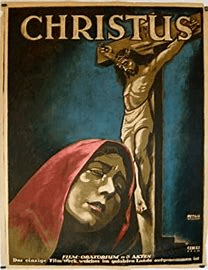 CHRISTUS (1916) – Directed by Giulio Cesare Antamoro, this is a fascinating look at Jesus, from the Angel visiting Mary through his Resurrection and subsequent visit with his Apostles. Christus runs 88 minutes and features some inventive variations on Biblical tableaux. The Star of Bethlehem is depicted as a comet; when Mary finds young Jesus preaching to his teachers His shadow appears as a cross; and Judas gets three visions of the Devil – first urging him on to betray Jesus, then taunting him when he regrets that betrayal, and finally welcoming him into Hell, which opens up under Judas’ swinging corpse.
  MARIE WALCAMP (1894-1936) – Like her fellow silent film icons
 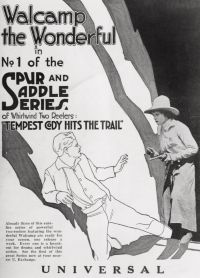 TEMPEST CODY – Marie was already getting above the title billing by the time her two-reel Tempest Cody western shorts came along in 1919. Tempest was a hard-riding, two-fisted, straight-shooting woman of the old west who was always on the side of right.
 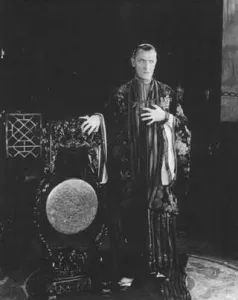 THE MYSTERY OF DR. FU MANCHU (1923) – One of the earliest, if not THE earliest, big screen adaptations of Sax Rohmer’s Fu Manchu novels, which launched in 1913. The tales depicted the brilliant Chinese figure Dr. Fu Manchu at most plotting global domination but most often uniting many Far Eastern races against White Colonial nations to drive them out of Asia.
 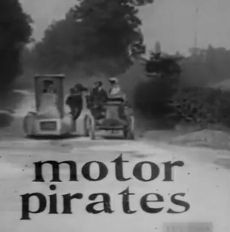 MOTOR PIRATES (1906) American release title The Modern Pirates – This British action short was directed by England’s monumentally underrated silent film director Arthur Melbourne Cooper. Motor Pirates clocks in at under 9 minutes but crams quite a bit into that runtime.
 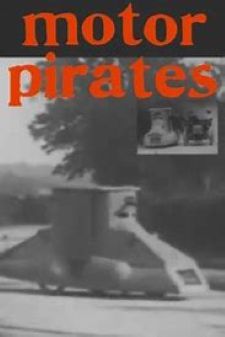 The Motor Pirates drive their vehicle on to a country estate where they employ its front-end “suction feature” to vacuum up several chickens. Four men of the estate come out with guns blazing to stop the crooks, but they shoot down their victims, leaving three dead and one barely clinging to life as they drive off.
 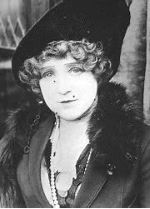 BESS THE DETECTRESS – Bess Meredyth was a silent film starlet, writer and director. This particular blog post will focus on her Bess the Detectress character at Universal Studios but in the future Balladeer’s Blog will cover other aspects of her life and career.
 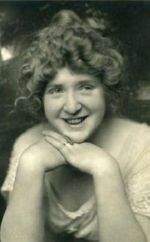 BESS THE DETECTRESS IN THE OLD MILL AT MIDNIGHT (Jun 1914) – The first short in the Bess the Detectress series. When the stage show she was performing in closes as a flop, Bess is left scrambling for her next meal. She spots a Wanted poster offering a reward of $200.00 (equal to $6,300 in 2025) for the capture of the male outlaw Honey Hall.
 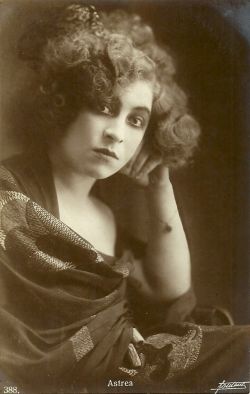 ASTREA – One of the most enigmatic figures from the Silent Film Era. No precise birth or death dates are known. Her surname was supposedly Barbieri but not even that is certain.
 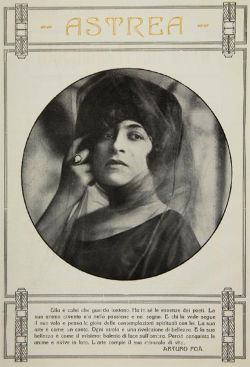 JUSTITIA (1919) – Astrea’s most well-known movie. She plays a prim, ladylike noblewoman who becomes a fiery, two-fisted champion of justice when need be.
  Balladeer's Blog