
Happy Saint Patrick’s Day! Here’s a look at an ancient Irish epic from Lebor na hUidre, The Book of the Dun Cow.
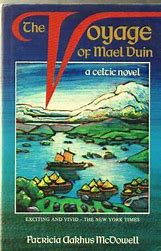 THE VOYAGE OF MAEL DUIN (Immram curaig Mail Duin) – Dated to around the late 900s A.D. or earlier, this story deals with the epic quest of Mael Duin (aka Maildun and Maeldune) and the crew of his ship as he seeks revenge on his father’s killers. This lengthy epic deserves to be as well-known as the Odyssey or the Quest for the Golden Fleece.
At any rate, exactly why the main character wants revenge for that slaying is beyond me, because Mael Duin’s father, supposedly Ailill of the Edge of Battle, raped a nun at a priory and she subsequently gave birth to him. The nun turned the infant Mael Duin over to her queen and king to raise as if he was their own child.
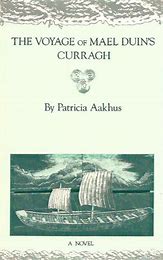 Mael Duin matured, and proved better than his presumed siblings at athletic, martial and academic competitions. Losing their temper over this, one of our hero’s foster brothers ridiculed Mael Duin for not even knowing who his real father and mother were.
The hero prevailed upon his mother the queen to tell him the truth, and she referred him to his birth mother, the nun. She revealed to Mael Duin the name of his father and the young man set out with his three foster brothers to the land of his father Ailill of the Edge of Battle. Continue reading
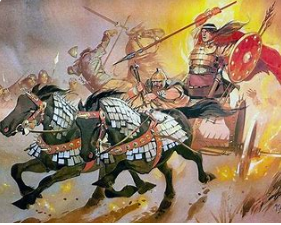 THE PHANTOM CHARIOT OF CUCHULAINN (Siaburchapat Con Culaind) – This tale is dated to around the mid-400s A.D. because of the presence of St. Patrick.
 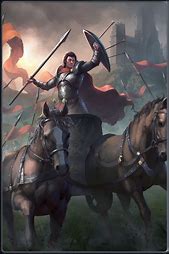 The next day, St. Patrick and King Loegaire are both on hand at the appointed place when Cuchulainn appears, riding in his chariot driven by his usual charioteer Laege. The demigod’s two horses – the Dub Sainglend (black horse of Saingliu) and the Liath Macha (gray horse of Macha) – are pulling the chariot.
 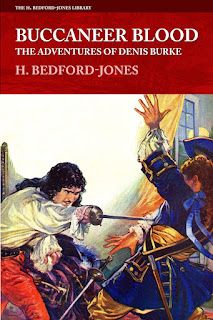 HAPPY SAINT PATRICK’S DAY! From People’s Favorite Magazine in 1916 to Argosy in the 1930s, the saga of Irish pirate and mercenary soldier Denis Burke unfolded from the pen of H. Bedford-Jones. The fictional buccaneer deserves to be remembered in the same breath
  Though purists reserve the label Wild Geese strictly for those Irish Jacobin troops who left Ireland after the Williamite War ended in 1691, romantic military tradition has tended to consider almost all Irish expatriates who served in overseas armies from the 1580s into the 1800s and beyond as part of “the flight of the Wild Geese.”
 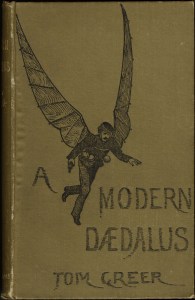 A MODERN DAEDALUS (1887) – By Tom Greer. No, the title’s not referring to James Joyce’s character Stephen Dedalus (sic) but this tale IS about Ireland. The main character is a young man named Jack O’Halloran, a recent college graduate who returns to his native Ireland.
  Balladeer's Blog