
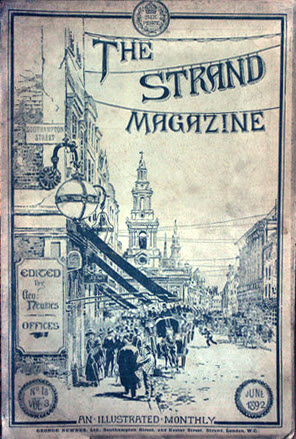
 THE QUEER SIDE OF THINGS (1890s) – Written by James Frank Sullivan. Straight from the Gay Nineties, it’s a selection of Sullivan’s contributions to the Strand magazine’s short fiction column The Queer Side of Things.
So, before we all find ourselves on Queer Street just because some Dick wants to arrest us for seeming as queer as a clockwork orange, here’s a snatch of J.F.’s work from The Queer Side of Things column.
OLD PROFESSOR WILLETT (December 1892) – Professor Willett announces to his family that his latest invention is going to make all of them rich but refuses to elaborate. Willett disappears after a few days without revealing any more details.
Foul play is suspected and the story’s narrator investigates. It turns out the Professor had devised a highly advanced explosive made from natural fibers. The explosive goes off with no sound and is so rapid its victims seem to simply vanish.
Willett was the first to go during an accident with his invention. Other family members have been perishing/ vanishing, too and the narrator is desperate to save his fiancée – one of the Professor’s daughters – from meeting the same fate.
SPOILER: He is too late and in despair lets himself die from the super-explosive, too.
THE DWINDLING HOUR (January 1893) – Pre-Einsteinian look at Relativity. A relic in the form of a water clock made from rare stone around 5000 B.C. gets passed down from civilization to civilization. Odd changes in the size of the water hole in the bowl of the water clock seem harmless at first but eventually are understood to be ominous. Continue reading
 AN INTER-PLANETARY RUPTURE (1906) – Written by Frank L Packard. This work of Science Fiction is set in the far-off year 3102 A.D. Since the year 2532 all of the Earth has been united under one single government, which is headquartered in America’s Washington, D.C. (Yet this was written by a Canadian.)
  Full Title: A NARRATIVE OF THE LIFE AND ASTONISHING ADVENTURES OF JOHN DANIEL, A SMITH AT ROYSTON IN HERTFORDSHIRE, FOR A COURSE OF SEVENTY YEARS. (1751) – Written by Ralph Morris, supposedly a pseudonym used by an unknown man.
 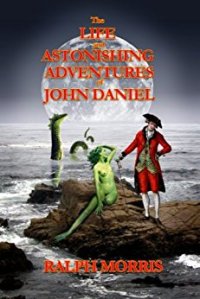 The unmarried son, Daniel (yes his name is Daniel Daniel) has a knack for inventing things and builds a flying machine. Its general shape is like one of our modern-day airplanes but the wings are leather over metal rod frames and in order to fly the wings must “flap,” which they do, powered by a pump.
 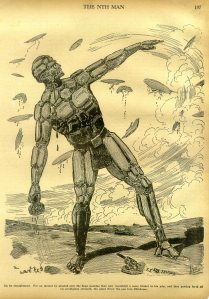 THE Nth MAN (1920 – 1924?) – Written by Homer Eon Flint, who died in 1924. Though this short novel was not published until 1928 many fans of the author argue that it was actually written in 1920.
  FUNGUS ISLE (1923) – Written by Philip M Fisher. Fungus Isle has the same proto-Creature Feature feel to it that The True Inheritors (qv) had. In the case of the previously reviewed story it was a forerunner of various giant spider flicks. In the case of Fungus Isle it seems like the inspiration for Attack of the Mushroom People, aka Matango, the Fungus of Terror.
 PSI CASSIOPEIA, or STAR: A MARVELOUS HISTORY OF WORLDS IN OUTER SPACE (1854) – Written by Dr Charlemagne Ischer Defontenay, a French M.D. and author. Long before J.R.R. Tolkien churned out obsessive amounts of fine detail about his fictional Middle Earth, Defontenay produced this volume of history, poetry and drama from his fictional planets in the star system Psi Cassiopeia.
 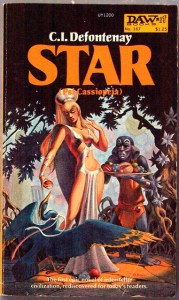 The system where that planet is located is a three-star system. Ruliel is the large, white star at the center, around which orbit the two lesser stars Altether (green) and Erragror (blue). The planet called Star is orbited by large planetoids/ moons named Tassul, Lessur, Rudar and Elier. Throwing all science to the winds the planet is also orbited by a small red star called Urrias.
  THE MAN FROM SATURN (1890) – By an unknown author. This work also appeared under the title Willmoth the Wanderer, a cutesy reference to the classic Melmoth the Wanderer. A young, unnamed American encounters Willmoth, a male humanoid who states he is from the planet Saturn and is hundreds of thousands of years old.
  THE WAR UNDER THE SEA (1892) – Written by Georges Le Faure. This sci-fi work was intended as an escapist societal salve to a French public still smarting from their loss to Germanic forces during the Franco-Prussian War just over two decades earlier.
 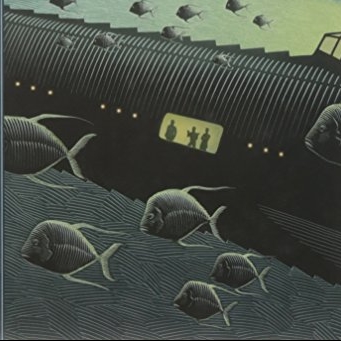 Interestingly enough, despite this threat the Germans are not depicted as being any more bloodthirsty than the alleged “heroes” of this story as we will see. Though the Count and his allies prove equally callous about large-scale killing (and worse) their attitude is romanticized and approved of by the narrative since Andre and the others are fighting France’s traditional Continental foes the Germans. Instead of Film Noir think of this novel’s approach as callous enough to be called World Noir. Or at least Politics Noir.
  THE WRECK OF A WORLD (1889) – Written by W. Grove. (No other name available) This novel is the sequel to Grove’s A Mexican Mystery, an ahead-of-its-time work about a train engine devised to have artificial intelligence. The machine – called only The Engine in that story – rebelled and took to preying on human beings in horrific fashion. For Balladeer’s Blog’s review of that novel click
 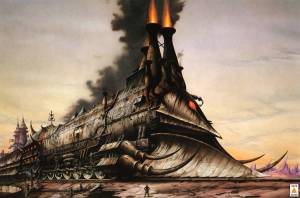 Our story begins in what was to Grove “the far future” of 1949. After a fairly superficial depiction of the world’s political and scientific situation in this imaginary future the meat of the tale begins. All in all the author did not present 1940s technology as being much more advanced than what was available in the 1880s. Grove might have done better to set his tale in 1899 or just into the 1900s to detract from his lack of vision on this particular element.
  Balladeer's Blog