
This is the fifth part of Balladeer’s Blog’s look at the swashbuckling legends that surround Francois Villon (1431-1463?), remembered as one of France’s greatest poets and a notorious outlaw.
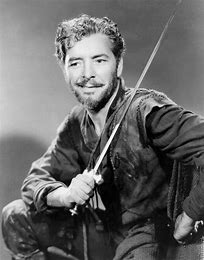 FRANCOIS VILLON PART FIVE – We left off last time with Villon on the run again, having fled Paris after the Navarre College job in which he and his fellows robbed a record amount of gold for the time period.
Formerly, despite his criminal career most of the notoriety Francois had earned was for his scandalous, irreverent poetry regarding The Powers That Be in France of his era. The December 20th, 1456 Navarre caper changed that.
 From early 1457 and for a few years more, Villon continued his outlaw existence in and around the French province of Anjou and the Loire River Valley. Depending on the source, Francois either officially became a member of the criminal fraternity called the Coquillards at this time or was already a member and deepened his ties to them.
Falling in with a gang of highwaymen, Villon helped prey on the carriage trade, which enhanced his underdog/ quasi-Robin Hood reputation because only the wealthy and the high-born traveled by carriage in that era. No one else could afford to. Continue reading
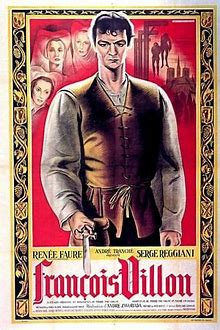 This is the fourth part of Balladeer’s Blog’s look at
  FRANCOIS VILLON PART THREE – We left off last time with Villon forced to flee Paris after killing the priest Sermoise in a duel over a woman named Isabeau. Already well-versed in the criminal underworld of the region from his career as a thief, Francois hid out just 17 miles southwest of Paris at the Abbey of Port Royal-des-Champs.
  FRANCOIS VILLON – This part picks up with one of the most infamous incidents from Villon’s career as an outlaw and iconoclast. He graduated from the Sorbonne as a Master of Arts and had acquired such a reputation for youthful rebellion and hard-drinking bad craziness that “Villonerie” had become a catch-all term for disorder and disobedience.
  FRANCOIS VILLON (1431-1463?) – The swashbuckling legends that surround this real-life French poet have sometimes been compared to tales of Robin Hood or Dick Turpin. Like Dick Turpin, Villon really did exist, but in his case he left behind an impressive body of literary work and he is still considered one of France’s greatest poets.
  Balladeer's Blog