
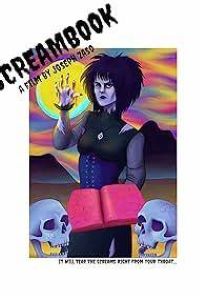
 SCREAMBOOK (1984) – Ever see a feature length horror film written, produced and directed by a 13-year-old? And with nearly all the roles – of all ages – played by fellow teenagers? Obviously, I’ll be grading this flick on a curve in this review.
This anthology movie was the very first product of the legendary “horror himbo” Joe Zaso. Not Zasa like in Godfather III, but Zaso. An enterprising teenager in the 1980s, Zaso formed his first production company at age 16 and is to this day active in the film industry.
Joe is also a bodybuilder and keeps himself in top condition which is how he acquired the “himbo” nickname over the decades. His productions are still unpretentious B-movies but this review deals with his very primitive first effort, so as I mentioned above, it’s not fair to look at it like it was a professional piece of work. Continue reading
 Balladeer’s Blog’s love of quality horror ARGs (Alternate Reality Games) has been well established. In the past I’ve examined productions like Local 58, Claridryl and Jack Torrance (NOT the character from The Shining.)
  The eerie storyline revolves around the disappearance of a beautiful young Polish woman named Ania Slowinska and the dark, seemingly supernatural forces behind it. As the tale unfolds it becomes apparent other women have fallen victim to the same forces, with one having had all her teeth removed after being murdered.
  HAPPY HALLOWEEN FROM BALLADEER’S BLOG! This year for my October 31st horror post I’m looking at my favorite stories from H.P. Lovecraft’s earliest works by year of publication.
 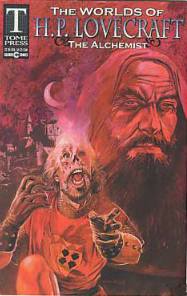 THE ALCHEMIST – Count Antoine de C- is the last of his family line. Hundreds of years earlier one of his ancestors caused the death of the sorcerer Michel Mauvais. Michel’s sorcerer son Charles cursed the Count’s family so that all male descendants would die shortly after turning 32 years of age.
  PENITENTE (Penitent)
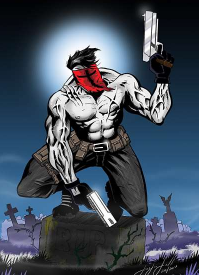
  To redeem himself in the eyes of Heaven, the Penitente had to save seventy times seven the number of innocent victims he had killed while alive. As part of this purgative servitude he would also be periodically pitted against dark forces which had escaped from Hell.
  Comment: Our hero rose from his grave and masked his decaying, scarred face behind a red cloth like those worn during Brazil’s Procession of the Penitents.
  Halloween Month at Balladeer’s Blog continues with this look at Mexican horror figures who haven’t had a truly striking movie in decades. Well, outside of La Llorona, who still gets featured every few years.
  DOCTOR M
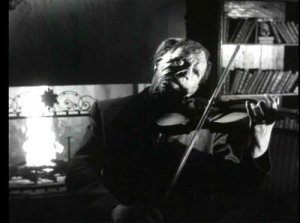 The image of the returned Dr. M in his hideous new body playing a mournful tune on a violin to prove his identity to a friend is a scene worthy of the greatest Gothic horror films. Even better would have been a scene of him later playing the same tune over his own grave.
  The Halloween Season has rolled around once again! For newcomers to Balladeer’s Blog let me point out that I post about more than just horror topics in October. I also cover my usual recurring subjects but throw in reviews of neglected, centuries old novels and short stories from around the world in a Gothic Horror equivalent of my Ancient Science Fiction blog posts. I also review horror films throughout the month.
  A NOVA CALIFORNIA (1921) – This short horror story from Brazil was written by Lima Barreto. The tale is set in a fictional Brazilian town called Tubiacango after the river along whose banks it stood. Tubiacango’s population was roughly 4,000.
  NOTE: Something I’ve been struck by as I read more and more Brazilian literature is how even the smallest towns could boast an international population. There will be native Brazilians, newly arrived Portuguese, white Europeans, and – as the literature itself points out – every shade of dark colored people from all over the world.
  LOOK WHAT’S HAPPENED TO ROSEMARY’S BABY (1976) – With The First Omen currently in theaters, its creative team’s obvious desire to make their Omen prequel seem more like Rosemary’s Baby made me decide to review the often forgotten made-for-television sequel to that horror classic.
  Balladeer’s Blog takes a look at my top horror movies of the past fifty years. It is NOT a list of my all-time favorite horror films, just the ones that fall within the round number of fifty years.
  Has it really been 31 days already? Happy Halloween from Balladeer’s Blog with this look at some more horror stories that are over 100 years old. They make for a nice Monster Rally feel since they feature a variety of supernatural beings.
