

*** * *** *** *** *** Jeremy Brett as John Maltravers in a 1966 television adaptation of The Lost Stradivarius.
THE LOST STRADIVARIUS (1895) by John Meade Falkner – More than a century before Anne Rice’s violin-oriented ghost story Violin came The Lost Stradivarius. Halloween month continues here at Balladeer’s Blog with a look at this neglected gem of horror fiction.
The main story is set in the 1840s. John Maltravers, a young man from the British gentry, is attending Magdalen College at Oxford University. Stumbling across an anonymous piece of lost music the talented Maltravers plays the piece on a violin.
This spontaneous recital summons up – among other horrors – the ghost of Adrian Temple, the violinist who composed the eerie piece of music when he was a student at Oxford in the 1750s. That ghost leads John to the hidden location of his (Temple’s) Stradivarius violin. Continue reading
 Humpty Dumpty sat on the wall. The wall was where Humpty Dumpty had decided to sit. Humpty Dumpty could be found on the wall, sitting. Sitting was the activity Humpty Dumpty was engaging in and the wall was the place he had chosen to sit. Everyone agreed that the wall was where Humpty Dumpty was sitting.
 THE BARENHAUTER
  THE MESSENGER (1897) – Balladeer’s Blog’s month-long celebration of Halloween continues with another neglected work of horror – this one penned by Robert W Chambers, author of The King in Yellow, which I reviewed
  THE OCTAVE OF CLAUDIUS (1897) – By Barry Pain. This obscure little Gothic honey is just good enough that you wish it had been better. There are so many elements that make it appealing but it falls just short of being a worthwhile read for anybody except obsessive fools like me.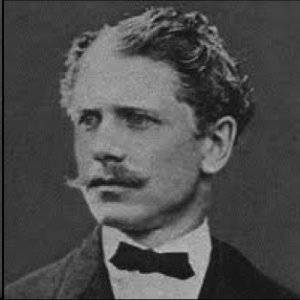
 A THOUSAND DEATHS (1899) – This story was the first published work by Jack London and it definitely shows, but it still has certain merits. The protagonist – who is never named – is the scion of a wealthy British family. Feeling stifled by his rigid upbringing he ran off in his teens to roam the world. He’s fallen into various shady professions over the years and now at age 30 he’s begun having regrets.
  He seems to feel himself going under but then wakes up after an indeterminate time on board a luxurious yacht. The man has various tubes and wires connected to his body and soon learns that he has been saved from drowning by the crew of … his estranged father. That father (who also goes unnamed – it’s early Jack London all right) fails to recognize his son because of the changes the younger man’s rough life has inflicted on him.
 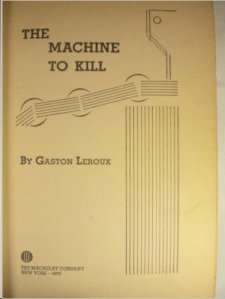 Gaston Leroux – the author of The Phantom of the Opera – wrote The Machine to Kill in NINETEEN TWENTY-FOUR. Many book sites list it as 1935, but that was just the year it was finally translated into English. It has also been published in English under the titles The Bloody Puppet and The Gory Puppet.
 Balladeer’s Blog’s month-long celebration of Halloween continues with this look at a variety of forgotten or neglected horror legends from American lore.
  THE CORPSE-SMITH OF CONNECTICUT – Also called the Cadaver Master and the Carrion Engineer this mad scientist of Eastern European descent was the cause of the many vanished graveyards from Connecticut’s past. The Corpse-Smith scandalized 1770s America with his brilliant but macabre uses for every single resource he could possibly harvest from the bodies of the recently deceased.
 Balladeer's Blog