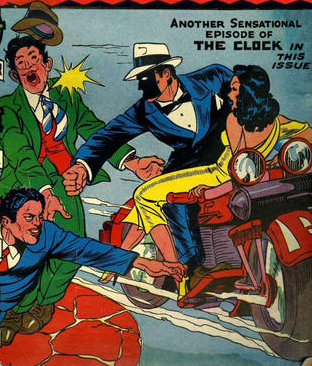
 Before Batman, before Captain America and even before Superman himself, came the Clock, written and drawn by George E Brenner. The Clock was the first masked crimefighter in comic books, debuting in 1936, while the much more popular Batman didn’t come along until 1939. I’m not pointing that out to diss Batman, but to point out what a shame it is that the Clock seems to have been forgotten by most of the world. The figure is pretty much the middle character between Pulp heroes like the Shadow and the Moon Man and comic book superheroes. The Clock’s influence on Will Eisner’s iconic character the Spirit is obvious.
 THE CLOCK
Secret Identity: Brian O’Brien
First Appearance: Funny Pages Vol 1 #6 (November 1936) His final Golden Age appearance came in 1944.
Origin: Brian O’Brien was born into the wealthy O’Brien family of New York City. The adventurous youth loved flying in early biplanes and served in World War One as a fighter pilot. After the war he went to college where he became an All-American Fullback, then moved on to Law School. Following graduation he was a fixture on the High Society polo scene while eventually becoming a District Attorney.
O’Brien gained a reputation as a crusading anti-crime figure but ultimately the extensive corruption in New York City politics and law enforcement frustrated any true attempts at reform. He retired from his D.A. career and, while seemingly returning to his carefree socialite life, secretly adopted the masked identity of the Clock to fight crime through bypassing the city’s systemic corruption. At first only his father knew about his dual identity.
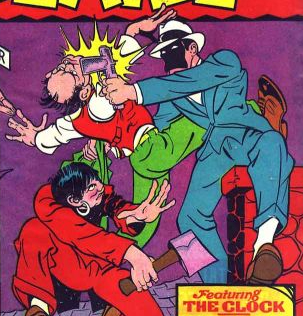 Powers: The Clock was the prototype for the countless non-powered costumed crimefighters to come. He was in peak physical condition and was a master of unarmed combat. He possessed the agility of an Olympic gymnast and was a marksman with the handgun he carried into action with him. In addition he was a master detective and investigator whose knowledge of the law helped him compile evidence against his foes.
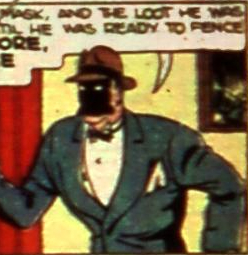
This hero’s mask had white eyeholes which allowed him to see in the dark and its fabric would filter out the effects of the knockout gas and teargas his tie-pin could shoot at opponents. The Clock’s cane was a durable weapon in combat plus it featured a few gadgets, like being able to fire its round top at opponents with the force of a bullet. His hat sported a metal lining to help minimize damage from blows to the head and he sometimes wore body armor under his suit and tie. Clock time-bombs which filled entire rooms with knockout gas or tear gas were on occasion employed by this figure.
O’Brien called himself the Clock just to fit his Pulp-style calling cards which said “The CLOCK has struck” and similar phrases. In later years he would have sidekicks like Pug, an ex-boxer and Butch, a tomboyish teenage girl.
 1. FUNNY PAGES Vol 1 #6 (November 1936) – #9 (March 1937)
Title: The Clock Strikes
Villains: The Slick Martin Gang
Synopsis: The Clock handles his first case, tracking down a gang of three bank robbers, outfighting and capturing them all and leaving his calling card identifying himself as the Clock. He also phones Police Captain Kane and tells him where to find the bound and unconscious Slick Martin and Butch.
In the edgy ending, our hero turns Killer Katz, the gang member who shot a man dead during the gang’s most recent robbery, over to a vengeful mob led by the brother of the slain man. They beat him to death and the newspapers are all speculating on who the Clock may be. We get our first glimpse of our hero’s fairly plush secret office as he writes down the details of this case. Continue reading →

 With the big 4th of July holiday coming up, this weekend’s light-hearted bit of superhero escapism will combine some Revolutionary War nostalgia with some World War Two nostalgia. Balladeer’s Blog takes a look at the early adventures of the Nedor Comics hero called the Fighting Yank.
 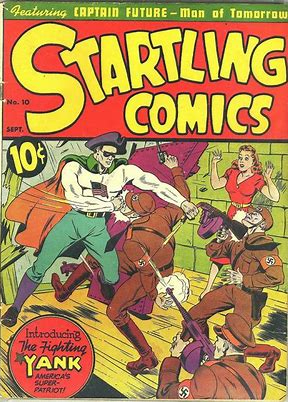 STARTLING COMICS #10 (September 1941)
 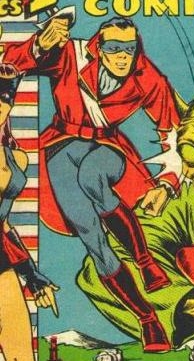 THE SPIRIT OF ’76
 POCKET COMICS #1 (August 1941)
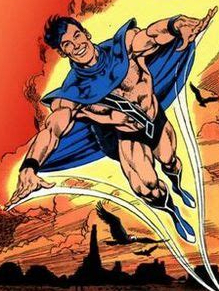 BLACK CONDOR
 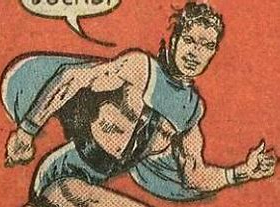 CRACK COMICS #1 (May 1940)
  CRACK COMICS #2 (June 1940)
 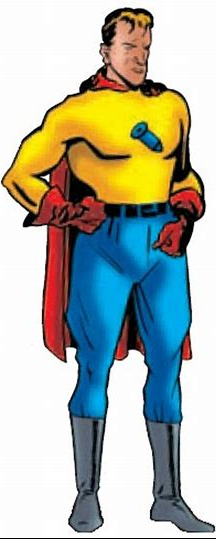 PHANTOM BULLET
  THE THIN MAN
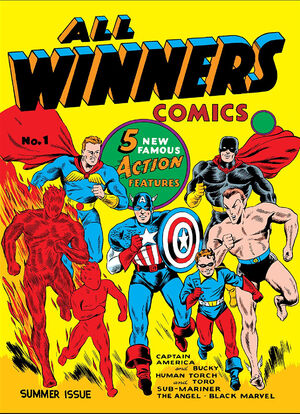 ALL WINNERS COMICS #1 (June 1941)
 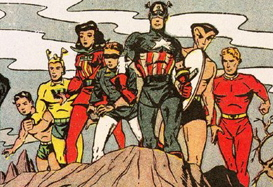 Balladeer’s Blog takes a look at those often forgotten Marvel Comics characters from the Golden Age, when the company was known as Timely Comics. Unlike Captain America, Bucky, Sub-Mariner, etc these figures never became big hits in the Silver or Bronze Ages. But Marvel did try retconning some of them to fit in with the modern day.
 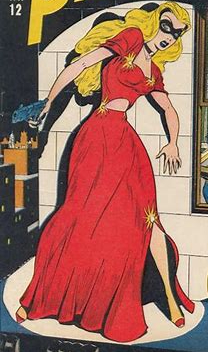 BLONDE PHANTOM
 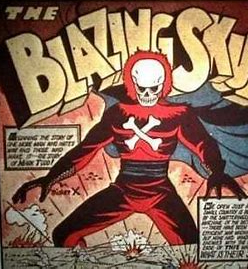 THE BLAZING SKULL
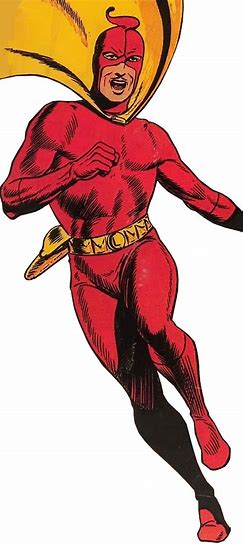 MISTER SCARLET
  MARY MARVEL
  THE SHIELD
 Powers: The chemical formula that the Shield rubbed onto his skin followed by bombardment with flouroscopic rays endowed him with massive super-strength plus invulnerability and the ability to leap enormous distances. His name came from an acronym for the areas of the human anatomy affected by his chemical formula: S – Sacrum H – Heart I – Innervation E – Eyes L – Lungs D – Derma. The Shield also wore an indestructible costume which encased his torso like a shield.
 PEP COMICS #1 (January 1940)
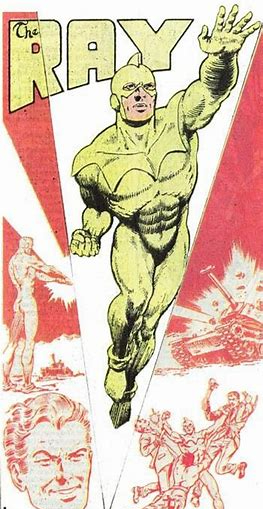 THE RAY
 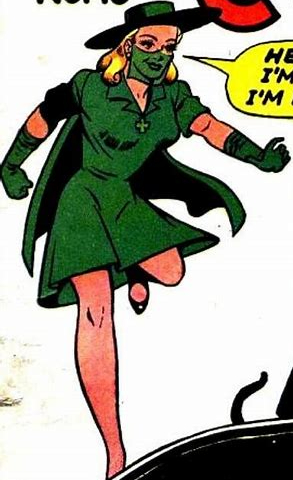 LADY LUCK
  Balladeer's Blog