
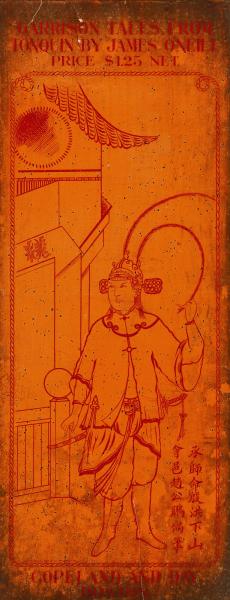
 Previously Balladeer’s Blog has examined Garrison Tales From Tonquin (Tonkin), the 1895 collection of short stories by James O’Neill, an American who served in the French Foreign Legion in Algeria and Vietnam during the 1880s and 1890s. I’ve also covered the Legion at Camerone and during the Great Syrian Revolt of the 1920s.
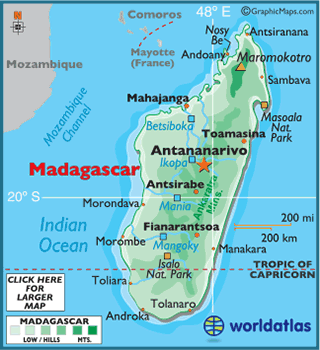
SECOND MADAGASCAR AFFAIR – This time around I’ll take a look at the French Foreign Legion during the 2nd Madagascar Conflict/ Expedition. The fighting went on from December 11th of 1894 to September 30th of 1895. This entire affair was so mishandled by French politicians in Reunion, by the War Minister and by General Jacques Duchesne that they basically killed thousands more of their own troops than were killed by the opposing forces.
TAKING IT FROM THE TOP – Typically for my French Foreign Legion posts, I’m not on their side in the war that the French government sent them to fight. It was the usual colonial nonsense, in this case exploiting unrest in the targeted country to use as an excuse for intervening and making Madagascar a French Protectorate. Regular readers know I don’t write sentiments like that to please politically correct fools, it’s just how I sincerely feel. If I felt any other way I wouldn’t hesitate to say so.
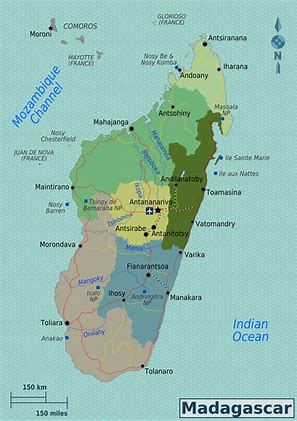 DECEMBER 1894 – On December 11th France declared war on Madagascar after its rulers refused to willingly become a French Protectorate. Though the French Army would be running this military campaign, the French Navy and their Marines kicked off the action by bombarding and then seizing Toamasina/ Tamatave on the eastern coast of Madagascar.
Though that location would have been ideal for a fairly quick march on the capital city of Tananarive/ Antananarivo, the French Army had beat out the French Navy for control of this war by UNDERCUTTING THEIR BID. (!) To stay within the lower costs the War Ministry had allocated, the army’s General Duchesne instead insisted on starting their campaign at Majunga/ Mahajanga on the northwestern coast of Madagascar, nearly doubling the amount of territory to be fought through.
JANUARY 1895 – In a relative feeling of “Team Spirit” the French Navy cooperated by now taking the area designated by the army for their landing site. On January 15th Majunga/ Mahajanga was bombarded and seized, fortress and all. Soon, however, the cosmic unsuitability of this location became apparent. Continue reading
 WITH THE FRENCH FOREIGN LEGION IN SYRIA (1928) – Written by a British former member of the French Foreign Legion using the alias John Harvey. Previously, Balladeer’s Blog examined the excellent 1895 short story collection titled
  John Harvey’s With The French Foreign Legion In Syria instead wallows in the tawdry and brutal side of the Legion. Instead of James O’Neill’s poetic, astonishingly prescient tales, this volume presents an ugly and sensationalistic take on the FFL. It would have stood in stark contrast to stories romanticizing the Legion as written by P.C. Wren and others. No movies of the time would have touched these violent, vulgar Peckinpah-style antics. Get ready for a look at some Legionnaires who would make The Wild Bunch look genteel.
  CAMERONE DAY – A month ago Balladeer’s Blog examined the 1895 collection of short stories
  THE BATTLE OF CAMERONE (Camaron in Spanish) – Getting back to the topic of this blog post, it’s sort of the French Foreign Legion’s central Alamo event. And I say central because many of the most famous battles of the Legion are like a long series of Alamos. Camerone set the standard, though. As usual, the Legion’s cause was not a virtuous one by our standards. The execrable Napoleon the Third was using the FFL and other French forces to try to prop up his Austrian ally Maximilian, the so-called “Emperor of Mexico.”
  GARRISON TALES FROM TONQUIN (Tonkin): AN AMERICAN’S STORIES OF THE FRENCH FOREIGN LEGION IN VIETNAM IN THE 1890s (1895) – Written by James O’Neill. Seven years ago here at Balladeer’s Blog I examined Washington Irving’s 1809 work
  In a similar spirit, I am now examining Garrison Tales From Tonquin, published in 1895 and written by American James O’Neill, who had served in the French Foreign Legion during the 1880s and early 1890s. Just as Washington Irving was ahead of his time with his sentiments in The Men of the Moon, James O’Neill was ahead of his time in regard to his observations on the French occupation of Vietnam during and after the Sino-French War. Readers in 1895 who were expecting Kipling would have found O’Neill to be virtually his polar opposite.
 I found it staggering to read 1890s accounts written by an American fighting man in Vietnam reflecting on the ugliness and ultimate futility of the military situation. So much of O’Neill’s fictionalized accounts of his real-life experiences in Vietnam read like something from an author in the late 1960s or later using such a tableau as an allegory for America’s involvement in Indochina.
  Nearly 200 American men served in the French Foreign Legion during World War One. Some were expatriates already living in Europe while others joined up to fight the Germans, Austro-Hungarians and Ottoman Muslim Turks. They had to join the French Foreign Legion because – though the war started in August of 1914 – the United States did not enter the conflict until April of 1917.
  Balladeer's Blog