
For Balladeer’s Blog’s review of the first episode of this 1971-1973 series about non-Holmes detectives of the Victorian and Edwardian Ages click HERE
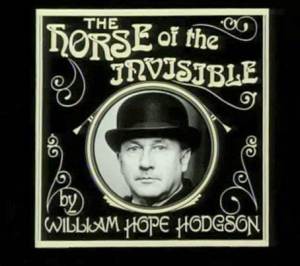 Episode: THE HORSE OF THE INVISIBLE (October 18th, 1971)
Detective: Thomas Carnacki, created by William Hope Hodgson. The first Carnacki story was published in 1910.
Review: Thomas Carnacki was an Edwardian detective who investigated the paranormal in 9 stories written by William Hope Hodgson, famous for the horror tale The House on the Borderlands. The fun of the Carnacki mysteries came from the way that sometimes the supernatural elements were being faked by human malefactors. The hero would solve the case either way.
In a fortuitous bit of casting which helps make this episode timeless, Donald Pleasence starred as Thomas Carnacki. Pleasence’s role of Doctor Loomis in the Halloween series of slasher films makes him a familiar face even to viewers unfamiliar with his loooong body of work.
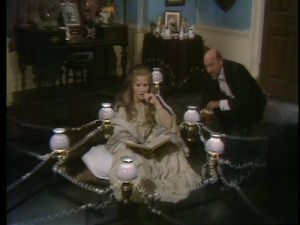 Given that this program is titled The Rivals of Sherlock Holmes the best way to describe The Horse of the Invisible would be as a hybrid of The Hound of the Baskervilles and The Speckled Band crossed with the John Silence series of occult mysteries.
Renowned “Ghost Detective” Thomas Carnacki is hired by the patriarch of the Hisgins family to safeguard his soon-to-be-wed daughter Mary from a spectre which has haunted the family for centuries. That spectre is the titular horse, a ghostly mare which has murdered the first-born child of each successive lord of Hisgins Hall … when that first-born child has been female. Continue reading
 From 1971 to 1973 The Rivals of Sherlock Holmes was a British television series which dramatized non-Holmes mystery stories by Victorian and Edwardian authors. For Balladeer’s Blog’s review of the first episode click
 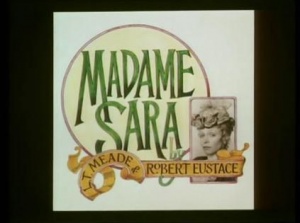 Episode: MADAME SARA (November 1st, 1971)
 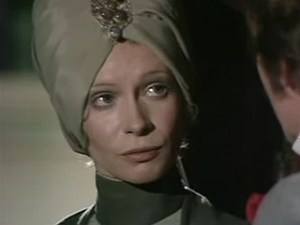 Review: Years before the insidious Doctor Fu Manchu and his dogged adversary Sir Denis Nayland-Smith came this detective and the female criminal genius he clashed with. In the case of Dixon Druce and Madame Sara, there was always an air of attraction and sexual tension between them.
 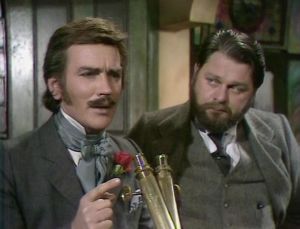 As the episode opens, Druce is in his laboratory engaging in a game of forensic one-upmanship with his Scotland Yard friend Inspector Vandeleur (George Murcell). Their verbal fencing over poisons is interrupted by Dixon’s old school friend Jack Selby (William Corderoy).
  Their fortune of 2 million Pounds will be left to whichever of their children is ultimately left alive among Beatrice, her unmarried sister Edith (Caroline John of Doctor Who fame) and their elusive, enigmatic half-brother Henry Joachim Silva (THE Roger Delgado for another Doctor Who connection).
  The Rivals of Sherlock Holmes was a 1971-1973 television series which dramatized contemporary non-Holmes detective stories from the Victorian and Edwardian Eras in England. For Balladeer’s Blog’s review of the first episode click
  Episode: THE RIPENING RUBIES (December 2nd, 1971)
 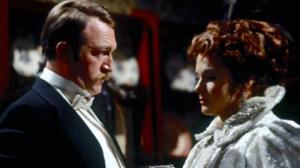 Bernard (Robert Lang) is capably assisted by Abel, the young clerk at his high-end jewelry shoppe. Abel is a reformed criminal whose old underworld contacts prove valuable in Sutton’s investigations.
 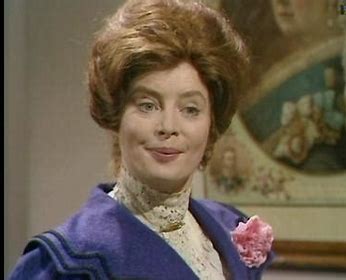 Episode: THE WOMAN IN THE BIG HAT (November 15th, 1971)
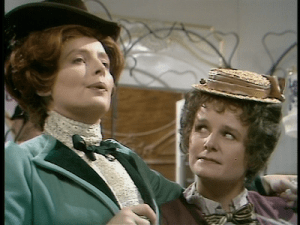 Rest assured this will tie back into the main story, but for now it’s back to Scotland Yard for Lady Molly and Mary Granard (Ann Beach, right), her Watson-style sidekick/ biographer. Elsewhere in London, a distinguished gentleman drops dead from poison at a cafe shortly after his female companion leaves the table.
 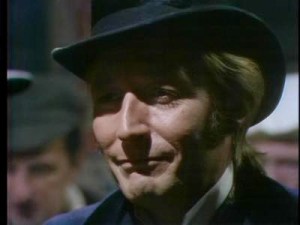 Episode One: A MESSAGE FROM THE DEEP SEA (September 20th, 1971)
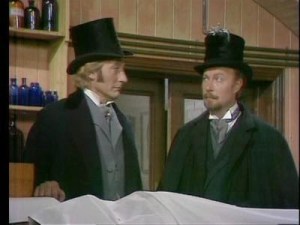 The episode introduces us to Dr John Evelyn Thorndyke (John Neville), a forensic physician/ Police Surgeon of the era, as he is teaching a classroom of students. (Kind of a Quincy opening feel.) He is assisted by Dr Jervis (James Cossins), Thorndyke’s version of Dr Watson.
  THE INVISIBLE MAN (1984) – This was a British television miniseries version of the H.G. Wells science fiction story and was originally aired in 6 episodes of 27 minutes each. It was later edited and repackaged as 3 episodes running 50 minutes each.
  Pip Donaghy shines as the madman Griffin and conveys a true sense of danger behind his envelope-pushing scientific brilliance. Much of his performance rests on his terrific voice-acting, naturally, but he is always convincing.
 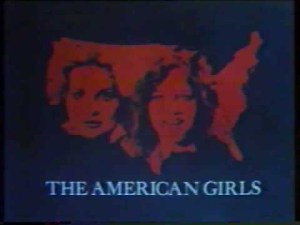 THE AMERICAN GIRLS – If you’ve ever wondered what Charlie’s Angels might have been like if it had tried doing slightly (very slightly) more serious stories, The American Girls is your answer. Priscilla Barnes in her pre-Three’s Company days co-starred with Debra Clinger in her post-Clinger Sisters days in this series about two sexy female reporters for a television news program.
  Barnes played Rebecca Tomkins and Clinger portrayed Amy Waddell, two field journalists for The American Report, a fictional 60 Minutes or 20/20 style television news magazine. They traveled the country in a van which served as a mobile studio with plenty of up to date equipment. David Spielberg played their producer Francis X Casey, making him a combination Charlie AND Bosley for the show.
 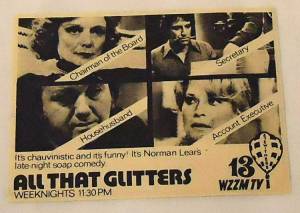 ALL THAT GLITTERS (1977) – With the syndicated late-night soap opera satire Mary Hartman, Mary Hartman becoming a cultural phenomenon in the 1970s, Norman Lear launched this oddball, self-consciously “adult” program which added a touch of parallel world sci-fi stories to the soapiness.
 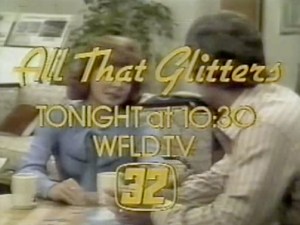 Want to see women running the business world and men serving as secretaries while getting ogled and sexually harassed? This show’s got it! Want to see a tuxedo-clad groom carrying flowers and walking down the aisle toward his intended bride? This show’s got it! Want to see some fairly kinky quasi-FemDom scenarios as the premise is taken to its logical conclusions? This show’s got it!
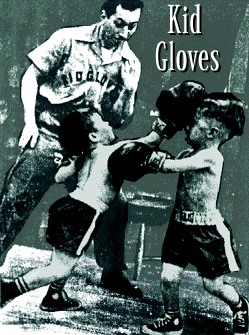 KID GLOVES (1951) – This joyously tasteless program from the early years of television featured children AGE THREE TO TWELVE beating each other’s brains out in boxing matches. No, I’m not joking.
 Balladeer's Blog