
 For Balladeer’s Blog’s review of the first episode of this 1971-1973 series about non-Holmes detectives of the Victorian and Edwardian Ages click HERE
*** This review will cover the three Martin Hewitt mysteries that were dramatized in the first season of The Rivals of Sherlock Holmes.
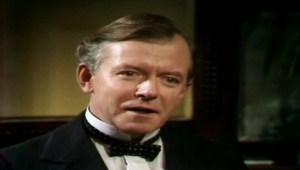 Episode: THE AFFAIR OF THE TORTOISE (November 22nd, 1971)
Detective: Martin Hewitt, created by Arthur Morrison. The first Martin Hewitt story was published in 1894.
Review: Martin Hewitt was created by the same author who created Horace Dorrington, covered in a previous review of The Rivals of Sherlock Holmes. Unlike Dorrington, Hewitt is honest and looks out for his clients’ interests more than his own. Unfortunately, as portrayed by Peter Barkworth, he’s also more than a little bland.
Well, “bland” might be uncharitable. “Professional” may be more fitting. Barkworth’s Hewitt is serene and reassuring, putting his clients at ease no matter what crisis they’re going through.
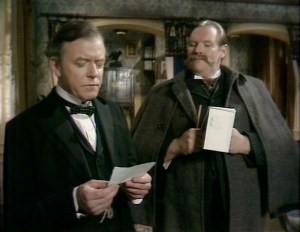 In The Affair of the Tortoise Martin Hewitt is hired by Miss Chapman (Cyd Hayman), a former governess that he has just located so she could receive an inheritance from a distant relative. Miss Chapman wants Hewitt to clear one of her neighbors, Goujon (Timothy Bateson), of murder charges.
Goujon is suspected of killing Rameau (Stefan Kalifa), a rowdy, hard-partying Haitian official residing in London. The drunken Rameau often played practical jokes on Goujon and recently went too far, causing the death of the Frenchman’s pet tortoise. Continue reading
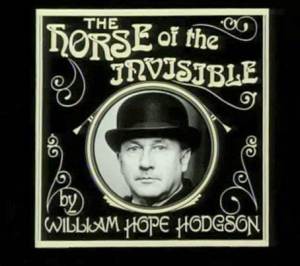 Episode: THE HORSE OF THE INVISIBLE (October 18th, 1971)
 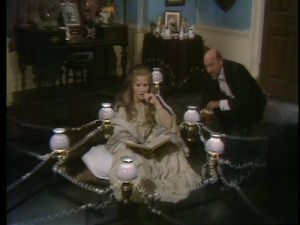 Given that this program is titled The Rivals of Sherlock Holmes the best way to describe The Horse of the Invisible would be as a hybrid of The Hound of the Baskervilles and The Speckled Band crossed with the John Silence series of occult mysteries.
  Episode: MADAME SARA (November 1st, 1971)
 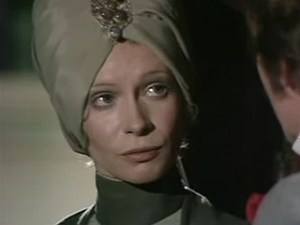 Review: Years before the insidious Doctor Fu Manchu and his dogged adversary Sir Denis Nayland-Smith came this detective and the female criminal genius he clashed with. In the case of Dixon Druce and Madame Sara, there was always an air of attraction and sexual tension between them.
 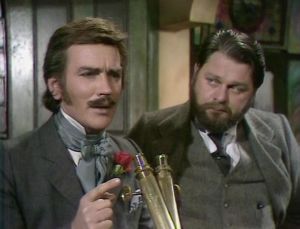 As the episode opens, Druce is in his laboratory engaging in a game of forensic one-upmanship with his Scotland Yard friend Inspector Vandeleur (George Murcell). Their verbal fencing over poisons is interrupted by Dixon’s old school friend Jack Selby (William Corderoy).
 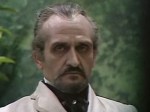 Their fortune of 2 million Pounds will be left to whichever of their children is ultimately left alive among Beatrice, her unmarried sister Edith (Caroline John of Doctor Who fame) and their elusive, enigmatic half-brother Henry Joachim Silva (THE Roger Delgado for another Doctor Who connection).
  The Rivals of Sherlock Holmes was a 1971-1973 television series which dramatized contemporary non-Holmes detective stories from the Victorian and Edwardian Eras in England. For Balladeer’s Blog’s review of the first episode click
  Episode: THE RIPENING RUBIES (December 2nd, 1971)
 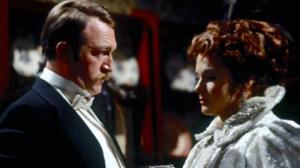 Bernard (Robert Lang) is capably assisted by Abel, the young clerk at his high-end jewelry shoppe. Abel is a reformed criminal whose old underworld contacts prove valuable in Sutton’s investigations.
  Episode: THE WOMAN IN THE BIG HAT (November 15th, 1971)
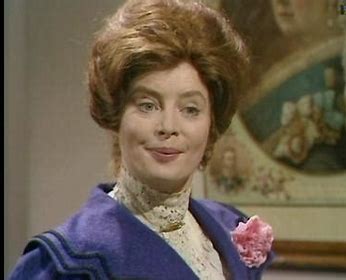
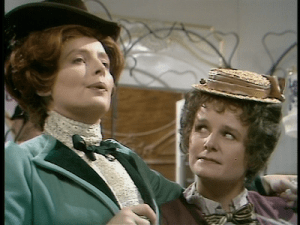 Rest assured this will tie back into the main story, but for now it’s back to Scotland Yard for Lady Molly and Mary Granard (Ann Beach, right), her Watson-style sidekick/ biographer. Elsewhere in London, a distinguished gentleman drops dead from poison at a cafe shortly after his female companion leaves the table.
 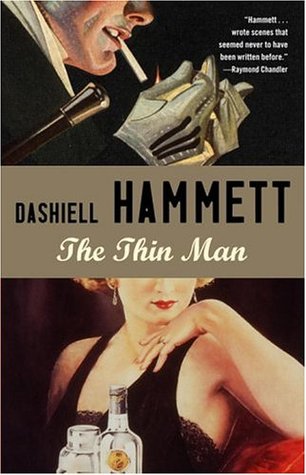 THE THIN MAN (1934) – Mystery writer Dashiell Hammett’s final novel, The Thin Man, introduced former private detective Nick Charles and his wealthy socialite wife Nora. After marrying Nora, Nick left detective work in order to manage her business interests.
 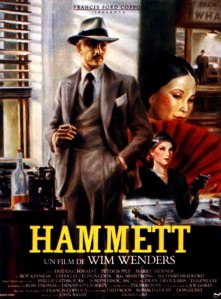 HAMMETT (1982) – Directed by Wim Wenders and produced by Francis Ford Coppola’s Zoetrope Studios, Hammett is a criminally neglected valentine to Hard-Boiled Detective Stories and Film Noir. The flick is based on the novel by Joe Gores.
 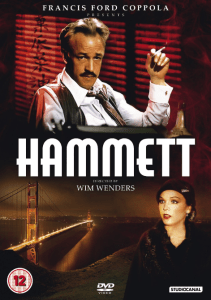 Booze and coughing fits figure prominently in the movie, as you would expect given a protagonist who was an alcoholic with tuberculosis. For the sake of convenience the story that Hammett just finished before blacking out was one featuring his character the Continental Op (as in an operative for the fictional Continental Detective Agency).
  Balladeer's Blog