
For background info on ancient Greek comedies see my original post on the topic: https://glitternight.com/2011/09/22/at-long-last-my-ancient-greek-comedy-posts-begin/
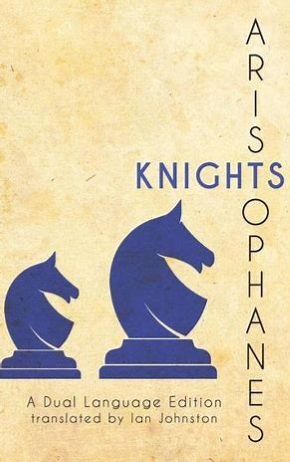 THE KNIGHTS – In The Knights Aristophanes pioneered a new sub-genre of Attic Old Comedy: the Demagogue Comedy. The villain of this masterpiece of political satire was a figure called the Paphlagonian, who was patterned on Cleon, a notorious Athenian politician of the time period.
I’ll have more on the long political feud between Aristophanes and Cleon in the commentary after my synopsis of the play. The “Knights” of the title were the comedy’s chorus and were the landed, wealthy “chevalier” class of Athens and their role will be explained in the commentary as well.
SYNOPSIS
In the time of the Athenian Democracy political leaders, as they do today, liked to depict themselves as “servants of the people”. Taking his cue from this less-than- sincere (yet enduring) claim, Aristophanes metaphorically depicted the Paphlagonian/ Cleon and his rival politicians as literal servants of a kindly and naive estate owner named Demos or, in other words, “The People”.
Though technically in a subordinate position, the Paphlagonian and the other servants constantly con and deceive Demos, robbing the household blind and otherwise attending to their own interests to the detriment of the figure they supposedly serve.
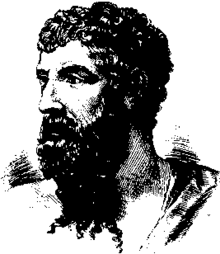
Aristophanes
Once again we see how 2,400 years later the political situation in the Athenian forerunner of modern democracies is very similar to our own and their political satires still resonate.
The Paphlagonian, like Cleon in real life at the time, is proving so masterful at the arts of deception and self-aggrandizement that he is developing a monopolistic hold over the benighted Demos, who mistakenly thinks the Paphlagonian is his most devoted servant. Continue reading
 Balladeer's Blog