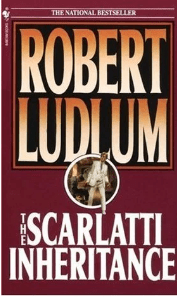
 THE SCARLATTI INHERITANCE (1971)
TIME PERIOD: Pre-World War One Era on up through the start of the Great Depression with an epilogue set during World War Two.
This was Robert Ludlum’s very first novel and it’s a shame that the planned movie starring Ingrid Bergman never panned out. In my opinion there has never been a very good screen adaptation of a Ludlum novel. Or at least not when it comes to adaptations that are actually like their source material.
The successful Jason Bourne movies bear virtually no resemblance to the trilogy of novels that inspired them. Other films or mini-series’ adapted from Ludlum’s writings have tended to be so far off the mark that some of them qualify as classically bad, for instance The Osterman Weekend.
HEROINE: (This novel has a female and a male protagonist) Elizabeth Wyckham Scarlatti, an 1890s adventuress from American Old Money who – in her youth – spurned plenty of bloated rich pigs for not being as high-spirited and daring as she was.
 Her heart and loins are finally stolen away by Italian-American Giovanni Scarlatti, a laborer in her father’s factory. Though he speaks broken English, Scarlatti’s mechanical genius is first-rate. The rebellious Elizabeth combines her own business acumen with Giovanni’s aptitude for inventions and before long the two lovers are married and have taken over the companies run by her father and plenty of his friends.
The Scarlattis continue to thrive financially through the expected hardball methods and after having three children they change the family name to Scarlett. Eventually Giovanni dies of natural causes and eldest son Roland is killed during World War One.
Making her own version of Sophie’s Choice, Elizabeth allows her brawling, bullying wastrel of a son Ulster to enlist in the Army to romantically take Roland’s place in the World War while keeping third son Chancellor in America with her to prep him to take over Scarlett Industries when she dies.
HERO: Matthew Canfield, an accountant and investigative agent for the American government – specifically Group Twenty, Ludlum’s fictional agency. Group Twenty was operative during the 1920s, when the bulk of this story takes place. Their agents specialized in uncovering financial hanky-panky in that gray area where dishonest business practices and outright criminality mingle. Continue reading →

 For this weekend’s light-hearted, escapist blog post about superheroes, Balladeer’s Blog goes back to the Justice Society of America, this country’s very first superteam. Years ago, I covered the early years of the JSA, from their first appearance in December 1940 up to their December 1945 issue, which wrapped up their World War Two tales with a look at disabled veterans. On to 1946.
 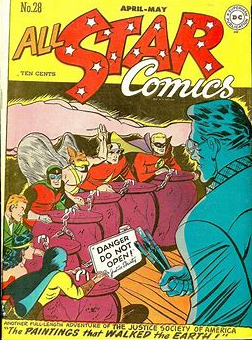 ALL-STAR COMICS Vol 1 #28 (April 1946)
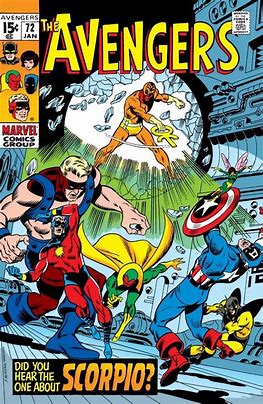 AVENGERS Vol 1 #72 (January 1970)
 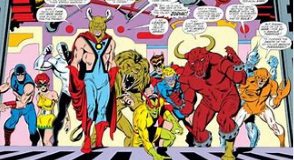 This leads to the Avengers learning that Scorpio is not alone – he is a member of
  JACK LONG or The Shot in the Eye (1844) – With the Frontierado Holiday coming up in early August, Balladeer’s Blog takes a look at this Charles Wilkins Webber short story from 1844.
  In 1853, the author added his original, official version of the story to his collection Tales of the Southern Border. It may be impossible to overstate the legacy of Jack Long. This Texas-set story presented virtually Biblical levels of violence during the Shelby County War (1839-1844) and set the standard for tales of gunslinging revenge quests down to the present day.
 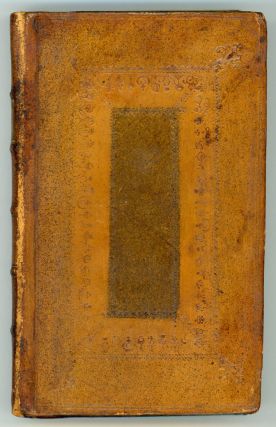 A VOYAGE TO THE WORLD IN THE CENTRE OF THE EARTH (1755) – This intriguing work was published in London anonymously and no author has yet been decisively identified. The novel’s narrator – who remains as anonymous as the book’s author – parties away his inheritance and then ships out for Italy.
 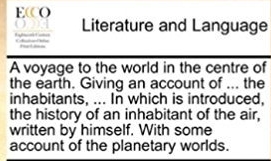 Periodically a King is elected for a lifetime term. Common-sense morality prevails, and ingratitude is especially frowned upon. All of the inhabitants are strict vegetarians, as are the animals so the humans and the beasts interact peacefully.
 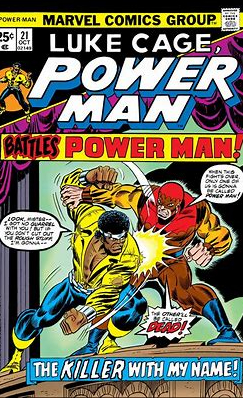 POWER MAN Vol 1 #21 (October 1974)
 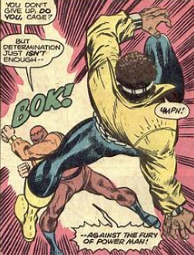 The hurt and angry Power Man returns to his Hero for Hire office above the Gem Theater. Luke gets attacked there by the original Power Man, a former operative of Baron Zemo who was given his super-strength by the Avengers foe the Enchantress.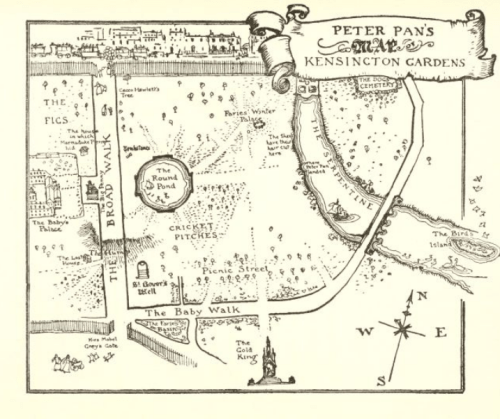
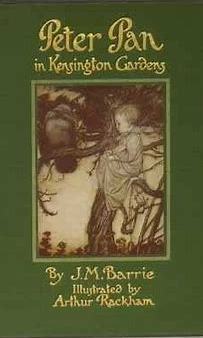 PETER PAN IN KENSINGTON GARDENS – Here at Balladeer’s Blog I like to cover neglected items, even when it comes to popular subjects like Peter Pan. Before the figure became established in the public consciousness as the leader of the Lost Boys in Neverland, J.M. Barrie presented Peter in a very different form.
 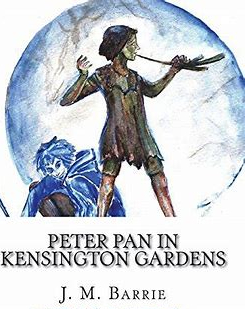 This was followed by the 1904 stage play about Peter Pan, which established the more well-known lore regarding the character. In 1906, the six chapters from The Little White Bird were published in a separate book as Peter Pan in Kensington Gardens. That was followed by the 1911 novelized version of the 1904 play, with the novel adding some finishing touches to Peter Pan lore.
  AN INTER-PLANETARY RUPTURE (1906) – Written by Frank L Packard. This work of Science Fiction is set in the far-off year 3102 A.D. Since the year 2532 all of the Earth has been united under one single government, which is headquartered in America’s Washington, D.C. (Yet this was written by a Canadian.)
 FANTASTIC FOUR Vol 1 #129 (December 1972)
  Crystal, Johnny Storm’s longtime girlfriend and former member of the Fantastic Four, was forced to move back to the Inhumans’ hidden city of Attilan due to her body’s negative reaction to air pollution in the human world.
  Balladeer's Blog