
This weekend’s light-hearted and escapist superhero blog post here at Balladeer’s Blog will examine the milestone Bronze Age attempt to revive DC’s Golden Age hero Manhunter.
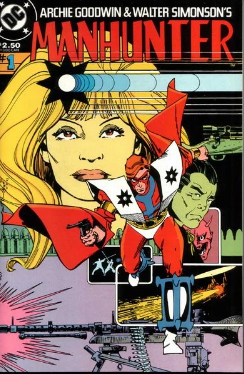 DETECTIVE COMICS Vol 1 #437 (November 1973) Later reprinted multiple times in Trade Paperback collections of the entire new Manhunter saga.
Title: The Himalayan Incident
Villains: The Council
Synopsis: Interpol Agent Christine St. Clair is assigned to locate the former Big Game Hunter Paul Kirk, who, decades earlier, had secretly become the costumed crimefighter called Manhunter. A new Manhunter has been reported around the world and Christine’s superior at Interpol wants the figure found due to his involvement with multiple assassinations.
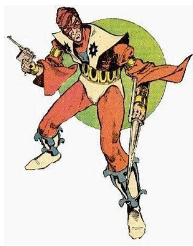 Christine travels to Nepal to investigate this new Manhunter’s recent actions which saved the life of a wealthy philanthropist. Via flashbacks from her informant, she learns that the new Manhunter has been battling an organization which made several clones of Paul Kirk and has been using them to carry out the assassinations that Manhunter is blamed for because the clones wear blue costumes like his red one.
The lone “good” Manhunter clone is the one thwarting the evil clones whenever he can. Recently in Nepal, the good Manhunter saved the above-mentioned philanthropist in the tale told in flashback this issue. Continue reading
 Regular readers of Balladeer’s Blog will remember my review of three neglected swashbuckler novels by Alexandre Dumas. (For those three – Georges, Captain Pamphile and La Dame de Monsoreau click
  When I was a little boy thrilled with the Musketeers, Monte Cristo and Iron Mask I excitedly grabbed The Black Tulip to read, assuming it, too would feature derring-do and swordplay. Much to my disappointment the novel instead dealt with attempts to cultivate a black tulip, the mob-slaying of Netherlands politicians Johann and Cornelius de Witt, romance and the redemption of personal honor.
  This weekend’s light-hearted, escapist superhero post from Balladeer’s Blog looks at some of the early stories during the time when Daredevil and the Black Widow were a team, like
  DAREDEVIL & THE BLACK WIDOW Vol 1 #92 (October 1972)
 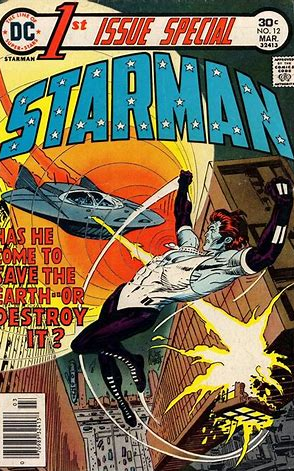 FIRST ISSUE SPECIAL Vol 1 #12 (March 1976)
 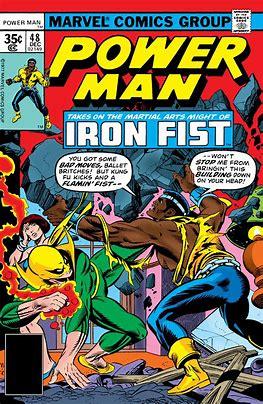 POWER MAN Vol 1 #48 (December 1977)
  Shades (at right) and Comanche, escaped cons who served time at Seagate Prison with Luke Cage back when he went by his real name Carl Lucas, were sent by Bushmaster to abduct Power Man’s girlfriend Dr. Claire Temple and her colleague Dr. Noah Burstein. They have done so and, per Bushmaster’s orders, they give Luke Cage/ Carl Lucas their boss’s ultimatum.
 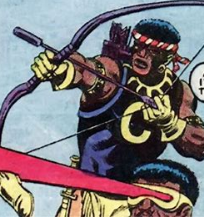 They make it clear to Power Man that to gain the release of those two doctors he has been close to for years, he must capture and deliver to Bushmaster one of his foes, private investigator Misty Knight. The villain doesn’t just send Shades and Comanche (at left) to abduct her because Misty’s associates, her investigative partner Colleen Wing and the superhero Iron Fist, stand beside her.
 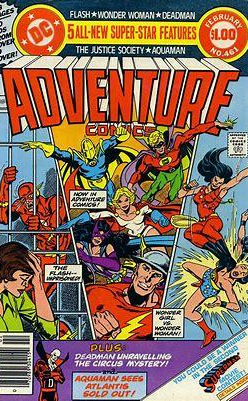 ADVENTURE COMICS Vol 1 #461 (February 1979)
  Synopsis: Bill Jensen, a corrupt former D.A. just released from prison, has been gifted with superpowers like the ability to shoot mystic energy blasts, conjure up unearthly fire, walk up walls, produce a force field and more. He refuses to reveal how he has gained these powers.
 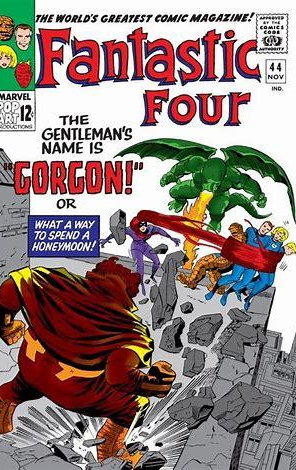 FANTASTIC FOUR Vol 1 #44 (November 1965)
 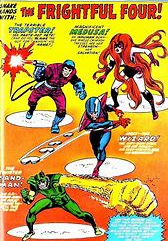 Through a comic book coincidence, the Human Torch gets caught in the middle of a fight between the super villainess called Medusa and her fellow Inhuman called Gorgon.
 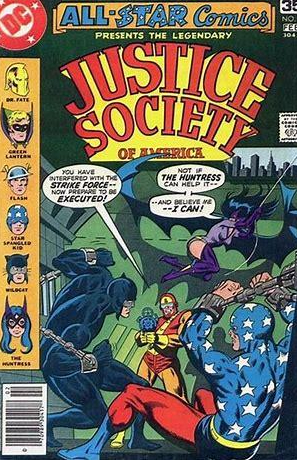 ALL STAR COMICS Vol 1 #70 (February 1978)
  Those villains are helmeted criminals known by numbers instead of names and led by the mysterious Number 1. Strike Force has over a score of members, and they wield high-tech weaponry and equipment.
  VOYAGE TO THE CENTER OF THE EARTH aka Planet at the Center of the Earth aka “Journey to the Centre of the Earth, or Various Adventures of Clairancy and His Companions, to Spitsbergen, to the North Pole, and to Unknown Countries, translated from the English of Hormidas Peath by M. Jacques Saint-Albin”.
 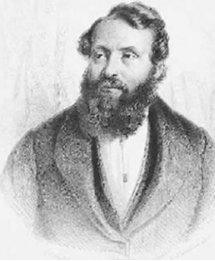 This particular story centers around the fictional seaman Hormidas Peath and his crew who became shipwrecked in the icy Arctic Sea in 1806. They were shocked to discover that temperatures got warmer the further north they went, so they kept following the warmer air until they reached the Iron Mountains.
 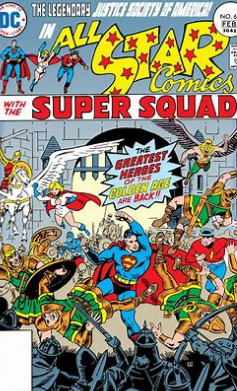 ALL STAR COMICS Vol 1 #64 (February 1977)
  Balladeer's Blog