This weekend’s light-hearted and escapist superhero post here at Balladeer’s Blog takes a look at the first twelve adventures of Superman. Previously I looked at Batman stories from 1939-1940 HERE, but these early Superman tales are often hilariously weird.
 ACTION COMICS Vol 1 #1 (June 1938)
NOTE: Though many regard this as the start of the Golden Age for superhero comics I personally go with November 1936 when the Clock debuted. Click HERE.
Title: Superman, Champion of the Oppressed
Villains: Assorted criminals
Synopsis: Just before a far-off planet (not yet called Krypton) is destroyed by “old age” (the story actually says that) an unnamed scientist and his wife send their infant son in a small spaceship to planet Earth. The space vessel lands in an unnamed state, where a passing motorist (no names for Ma and Pa Kent for a while) takes the baby to an orphanage.
As he grows, the alien realizes that he has super-strength, super-speed and invulnerability. He picks up the name Clark Kent and becomes a reporter in Cleveland (yes, Cleveland) working for the Daily Star (yes) newspaper. He begins a double life as Superman, battling the forces of evil.
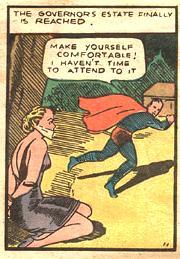 Superman takes down a wife-beater, saves Lois Lane from horny gangsters and clears a woman falsely convicted of murder by tying up the real killer – and even smashing his way into the governor’s mansion to make him call off her imminent execution.
Setting up a cliffhanger ending, Clark Kent is assigned to cover a war in the fictional South American country of San Monte. On his way there, Clark becomes Superman and abducts Alex Greer, a Washington D.C. lobbyist who is trying to get the U.S. into a war. Hilariously, Supes takes Greer to the top of a high building and threatens to throw him to his death unless he reveals the name of his employer. Continue reading →

 THE VIOLET FLAME (1899) – Here is another of the science fiction works written by THE Frederick Thomas Jane, of Jane’s Guides fame. Previously, Balladeer’s Blog reviewed Jane’s works The Incubated Girl and Guesses at Futurity.
 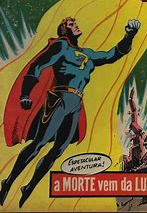 CAPITAO SETE (Captain Seven)
  Recently, a Balladeer’s Blog reader asked if I would compile a list of my “Best of” stories of the 1930s and 1940s pulp hero G-8 and his Battle Aces. That idea makes perfect sense considering I reviewed all 110 book-length stories of this World War One flying ace who should be as big culturally as Doc Savage, Zorro, and so many other pulp icons.
 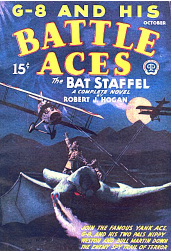 THE BAT STAFFEL (October 1933) – The very first G-8 pulp novel is at the top of my list. Not only does it nicely capture the tone and nature of the series, but it introduces the villainous mad scientist Doktor Krueger. That Teutonic terror would become the archenemy of G-8, Bull Martin and Nippy Weston as the series of novels rolled along.
 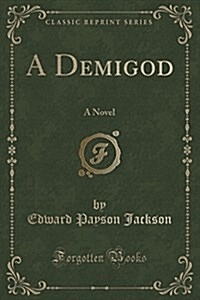 A DEMIGOD (1886) – Written by American author Edward Payson Jackson, this work preceded Philip Wylie’s Gladiator by more than 4 decades.
  AMAZING FANTASY Vol 1 #15 (August 1962)
  THE MILLTILLIONAIRE (1895) – This novel was written by American author Albert Waldo Howard under the pen name M. Auburre Hovorre. A second edition came out in 1898.
 THE FANTASTIC FOUR – There can be no over-stating the importance of the Fantastic Four to Marvel Comics and by extension to much of pop culture the last several years regarding superhero movies and television programs. Though the Fantastic Four are now considered as dull as any b&w sitcom family of long ago, the team’s success convinced Marvel the market was right to recommit to superhero comic books.
 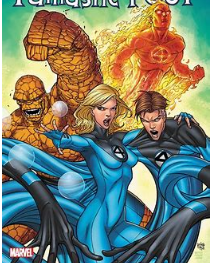 As Marvel Comics in 1961 the company decided to dabble in superhero comic books again, with Stan Lee and Jack Kirby, two veteran comic book hands since the 1940s, putting together a brand-new team of superheroes. That team was, of course, the Fantastic Four.
  HULK Vol 1 #150 (April 1972)
  NOTE: Thanks to sorcerers on Jarella’s home planet in the Microverse, Hulk was able to retain Bruce Banner’s mind there even when he was the Hulk, so she technically loved both his personae.
 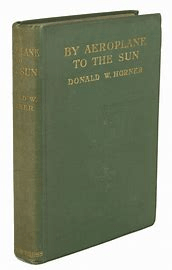 BY AEROPLANE TO THE SUN (1910) – Written by Donald W. Horner. This British novel features ideas that wouldn’t have been out of place decades earlier but in 1910 it’s astounding to encounter concepts like an alleged scientist believing that the sun is inhabited.
