
Here is Part Six of Balladeer’s Blog’s look at the various mythological works in Ireland’s Lebor na hUidre, The Book of the Dun Cow. For Part One click HERE.
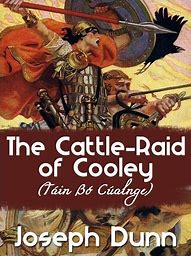 THE CATTLE RAID OF COOLEY (Tain Bo Cuailgne) – Because this is easily the most well-known tale from Irish Mythology I will be brief and I will also include another section of the Book of the Dun Cow in this same blog post.
I. In Connacht, as we saw in earlier installments, Queen Maeve lived with King Ailill in Cruachan. A bedroom squabble between the pair involved a comparison of each of their belongings. King Ailill edged out Queen Maeve by his possession of an incredibly fertile (and in some versions immortal) bull called Finnbhennach (white-horned).
Queen Maeve didn’t like that at all, and resolved to acquire the Donn Cuailnge (brown bull) of the Ulstermen, which creature was said to match Ailill’s bull in magnificence and fertility.
II. Maeve sent envoys to negotiate with her people’s enemies the Ulstermen in the north, because the owner of the Donn Cuailnge lived among them. Negotiations broke down, so the queen resolved to take the brown bull by force of arms.
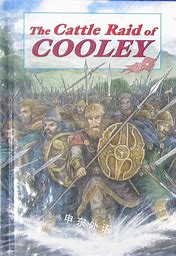 III. As Queen Maeve and her army approached Ulster, most of the Ulstermen were incapacitated by labor pains, a curse from the goddess Macha that they would be thus afflicted for nine generations whenever Ulster faced peril. The only man of Ulster not affected by the curse was the demigod Cuchulainn, familiar to us from previous installments.
IV. Cuchulainn and his charioteer Laege waged guerilla warfare on the advancing army, slowing them down as best they could. At length, when Cuchulainn intercepted Maeve’s army as they were fording a river, he invoked the Right of Single Combat at Fords. (No, not the Right of Dual Combat at Isthmuses, the Right of Single Combat at Fords.) Continue reading
 THE BIG EASY (1986) – An unjustly neglected film starring the one and only Dennis Quaid, who should have been made the new Indiana Jones after The Last Crusade in 1989. The Big Easy is easily one of the most underrated films of the 1980s.
 YELLOWJACKET
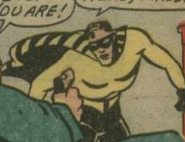 Powers: Yellowjacket was a probable mutant with the power of mentally controlling bees. He used his armies of those insects to sting, distract or harass opponents in battle. In addition, this hero was in peak physical condition and excelled at unarmed combat.
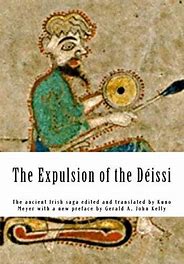 THE EXPULSION OF THE DEISSI (Tucait innarba na nDessi i mMumain ocus aided Chormaic) – Once believed to be a genuine historical narrative, The Expulsion of the Deissi has long been recognized as yet another case of mere quasi-historical myth-making.
 ARK II (1976) – In the postapocalyptic 25th Century, the year 2476 to be precise, Earth has been left devastated and transformed by warfare and pollution. Surviving scientists send out a team of explorers in a discount Damnation Alley vehicle and wearing Logan’s Run clothing. The crew of Ark II are to learn what pockets of humanity have survived and help them begin rebuilding civilization.
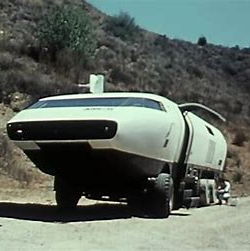 The crew of the “futuristic” vehicle were Jonah (Terry Lester), Samuel (Jose Flores), Ruth (Jean Marie Hon) and the intelligent chimp Moochie (Adam), voiced by Lou Scheimer. Ark II was outfitted with elaborate equipment that was perfect for experiments, medical emergencies and for everyday survival, like the ability to produce whatever kind of food was desired.
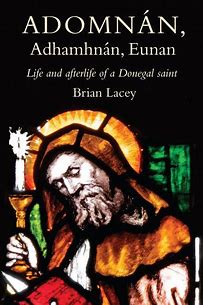 THE VISION OF ADOMNAN (Fis Adomnain) – This was a tale of the vision that Saint Adomnan supposedly had during his lifetime (c 679-704 A.D.). Several centuries before Dante’s Divine Comedy (Inferno, Purgatorio, and Paradiso), The Vision of Adomnan depicted the future saint being conducted through Heaven, Purgatory, and Hell so that he could share this “vision” with others.
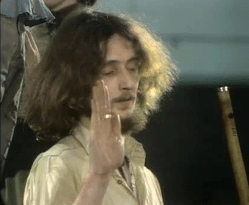 JESUS: A PASSION PLAY FOR AMERICANS (1969) – Happy Easter! Here’s a look at an experimental take on the story of Jesus Christ’s crucifixion and resurrection, all accompanied by music.
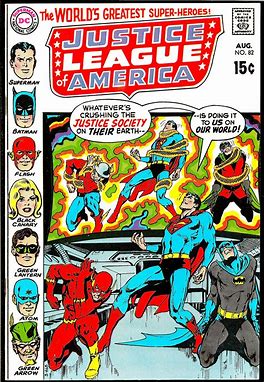 JUSTICE LEAGUE OF AMERICA Vol 1 #82 (August 1970)
 School: HESSTON COLLEGE
 PATHFINDERS IN SPACE (1960) – Balladeer’s Blog’s recurring segment Forgotten Television examines the half-hour per episode British television miniseries Pathfinders in Space. Fans of early British sci-fi will likely remember that in the 1950s and 1960s the BBC aired several episodic serials of 6 or more parts, like the original Quatermass tales,
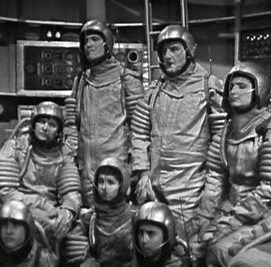 Buchan Island looked as comically unconvincing as the set from Captain Z-Ro, but in my opinion that adds to the charm of these primitive attempts at televised science fiction. Target Luna introduced viewers to Professor Wedgwood and his children, some of whom would appear in the following serials as well. That 6-episode item centered around the Buchan Island personnel testing manned orbital vessels, setting up the 7-part Pathfinders in Space, in which the Wedgwoods and others flew to the moon.

