
 ARK II (1976) – In the postapocalyptic 25th Century, the year 2476 to be precise, Earth has been left devastated and transformed by warfare and pollution. Surviving scientists send out a team of explorers in a discount Damnation Alley vehicle and wearing Logan’s Run clothing. The crew of Ark II are to learn what pockets of humanity have survived and help them begin rebuilding civilization.
This half-hour, 15-episode science fiction series was targeted at young audiences, but it’s tolerable for adults, too, if the whole family wants to watch it. Very often the Ark II staff must liberate settlements from tyranny or stop them from repeating humanity’s mistakes of the past.
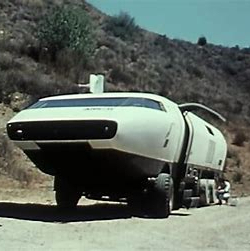 The crew of the “futuristic” vehicle were Jonah (Terry Lester), Samuel (Jose Flores), Ruth (Jean Marie Hon) and the intelligent chimp Moochie (Adam), voiced by Lou Scheimer. Ark II was outfitted with elaborate equipment that was perfect for experiments, medical emergencies and for everyday survival, like the ability to produce whatever kind of food was desired.
The larger Ark II vehicle also came with a smaller vehicle – the Ark Roamer – for shorter jaunts. Think of the Moon Buggies used by a few of the Apollo missions. Another piece of equipment was the Jet Jumper, a personal flying device depicted by the same stock footage over and over again. Continue reading
 THE VISION OF ADOMNAN (Fis Adomnain) – This was a tale of the vision that Saint Adomnan supposedly had during his lifetime (c 679-704 A.D.). Several centuries before Dante’s Divine Comedy (Inferno, Purgatorio, and Paradiso), The Vision of Adomnan depicted the future saint being conducted through Heaven, Purgatory, and Hell so that he could share this “vision” with others.
  JESUS: A PASSION PLAY FOR AMERICANS (1969) – Happy Easter! Here’s a look at an experimental take on the story of Jesus Christ’s crucifixion and resurrection, all accompanied by music.
 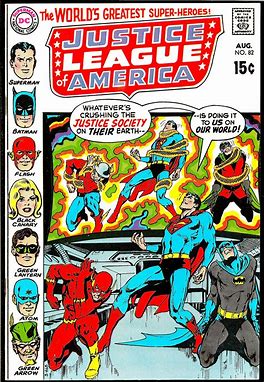 JUSTICE LEAGUE OF AMERICA Vol 1 #82 (August 1970)
  School: HESSTON COLLEGE
  PATHFINDERS IN SPACE (1960) – Balladeer’s Blog’s recurring segment Forgotten Television examines the half-hour per episode British television miniseries Pathfinders in Space. Fans of early British sci-fi will likely remember that in the 1950s and 1960s the BBC aired several episodic serials of 6 or more parts, like the original Quatermass tales,
 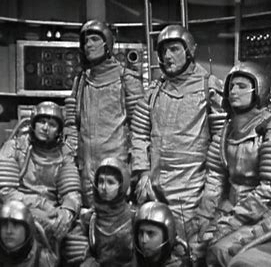 Buchan Island looked as comically unconvincing as the set from Captain Z-Ro, but in my opinion that adds to the charm of these primitive attempts at televised science fiction. Target Luna introduced viewers to Professor Wedgwood and his children, some of whom would appear in the following serials as well. That 6-episode item centered around the Buchan Island personnel testing manned orbital vessels, setting up the 7-part Pathfinders in Space, in which the Wedgwoods and others flew to the moon.
  THE VOYAGE OF MAEL DUIN (Immram curaig Mail Duin) – Dated to around the late 900s A.D. or earlier, this story deals with the epic quest of Mael Duin (aka Maildun and Maeldune) and the crew of his ship as he seeks revenge on his father’s killers. This lengthy epic deserves to be as well-known as the Odyssey or the Quest for the Golden Fleece.
 Mael Duin matured, and proved better than his presumed siblings at athletic, martial and academic competitions. Losing their temper over this, one of our hero’s foster brothers ridiculed Mael Duin for not even knowing who his real father and mother were.
 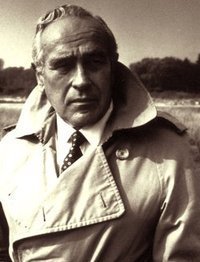 Yesterday’s blog post about the dystopian film Golem (1980) called to mind a pair of Robert Ludlum’s espionage novels from the 1970s. Both of them are spy thrillers but reflected Ludlum’s distrust of both left-wing and right-wing fanatics. Sadly, they also predicted a lot of what citizens around the world face right here in 2023. It’s not just science fiction that can prove virtually prophetic.
 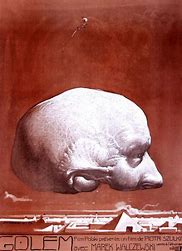 GOLEM (1980) – This science fiction film set in a post-World War Three dictatorship was made in Poland by director Piotr Szulkin and starred Marek Walczewski & Krystyna Janda. It uses the concept of a Golem as an allegory for the creation of artificial humans and examines the motives of those who would do the creating.
 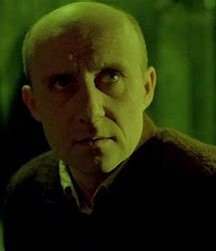 When we first meet Pernat, who has a kind of “Phil Collins in Buster” look, he is being interrogated about a murder committed in his apartment block. We observe how easily subdued and fairly lacking in intelligence he is, but ultimately the authorities release him because they don’t have enough evidence and he is just one of the suspects.
 Balladeer's Blog