
Balladeer’s Blog takes another look at the surviving fragments of an ancient Greek comedian, in this case Crates.
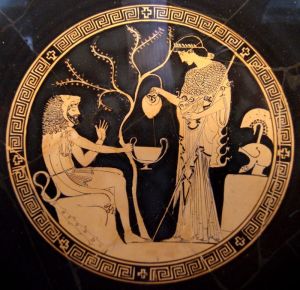 CRATES – Crates’ career spanned from approximately the 450s B.C. to the 430s B.C. We have fragments from nine or ten comedies from an unknown total output. From other sources we know that comedies as stage productions began sometime around 500 B.C. or earlier so Crates came fairly early to the artform.
Crates was credited with being the first Athenian comic poet (the comedies were written in verse and included songs) to introduce drunken characters, still a comic staple over 2,400 years later. Aristotle himself credited Crates as being the first to abandon the “glorified comic monologues” approach of the oldest comedies and introducing fleshed-out plots and storylines.
Be that as it may, there is still a great deal of academic arguing over whether or not Crates’ work simply reflected the influence of Epicharmus, who may well have been the TRUE innovator.
Crates was supposedly an actor before he began writing comedies (But I’m sure he really wanted to direct. – rimshot -) and his brother was Epilycus, one of the Epic Poets. Eusebius’ Chronicles stated that Crates was a well-known comedian by 451 B.C. and Demetrius Lacon in his work On Poetry indicates that Crates may have acted in some of Aeschylus’ tragedies before switching genres.
KNOWN WORKS
 NEIGHBORS – We do not have even a hypothetical year for this work, unfortunately. Since titles sometimes referred to the all-important Chorus of a Greek comedy there is speculation that the chorus members were “Neighbors” of some sort (Duh!) but nothing is known about the plot.
Athenaeus argued that Crates’ use of a drunken character in this comedy PRE-DATED Epicharmus’ use of stage drunks, so apparently even back in ancient times this was being debated. Continue reading
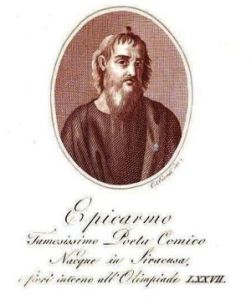 Balladeer’s Blog takes another look at an ancient Greek comedy. Most of my previous examinations of these verse plays dealt with Attic Old Comedy or on what little is known about Susarion, a revered pioneer of stage comedy.
 The chorus, so important to Attic Old Comedy, was not yet present on stage in Epicharmus’ time, but musical accompaniment was. Like so many other ancient Greek comedies, the plays of Epicharmus have survived only in very fragmentary form.
  Once again, Balladeer’s Blog looks at the fragmentary remains of one of the lesser-known ancient Greek comedy playwrights, in this case Philyllius. This comic poet’s career seems to have spanned approximately from the 410s BC to 390 BC. One of his comedies won 1st prize at a Lenaea festival in the 390s and he won 1st prize at an unknown Dionysia. His fellow comedian Strattis credited him with being the first Attic Old Comic to use real torches on stage.
 For this installment of my examinations of Greek comedies I will focus on one of the ancient Greek comedians whose entire corpus is very, very, VERY fragmentary, touching briefly on all of their known works. For background info on ancient Greek comedy plus my previous reviews click here:
 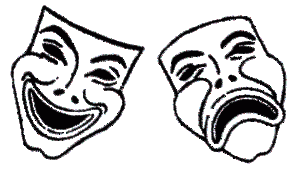 1. TRAGI-COMEDY – This play gave comedic treatment to the traditional rivalry between comedy and tragedy on the ancient Athenian stage. The comedy had fun with the inherent tensions between the two dramatic forms, including the fact that tragedy took pains to preserve the audience’s suspension of disbelief while comedy reveled in bursting the dramatic illusion via constant meta-theatrical breaking of the fourth wall.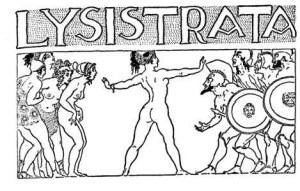
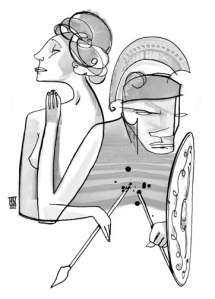 By 411 BC the Peloponnesian War between Athens (and its allied city-states) and Sparta (and its allied city-states) had been raging for roughly 20 years. The war provides the backdrop for many of Aristophanes’ surviving comedies and is especially relevant where Lysistrata is concerned. Weary of the long, drawn-out conflict the women of Athens, led by the title character Lysistrata (supposedly based on Lysimache, the Priestess of Athena in Athens at the time), join forces with the women of Sparta and decide to withhold sex from the men until they agree to bring an end to the war.
 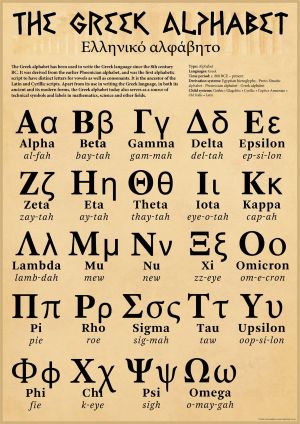 THE PAGEANT OF LETTERS (c 402 B.C.) – Here is another examination of an ancient Greek comedy. This one deals with a subject that still affects a very large part of the world to this very day – our alphabet.
  The addition of the four new letters (eta, xi, psi and omega) was causing a certain amount of confusion, as could be expected. Imagine if we suddenly added four new letters to the alphabet now, say, possibly single characters to express sounds formerly covered by two letters together, like “th” or “ph”.
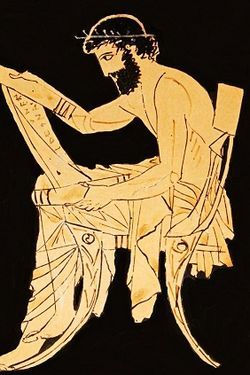 The title Baptae came from the fact that the worshippers of Cotyto would immerse or “baptize” their garments in blue, green or purple dye, an expensive and very ostentatious indulgence for the time period. And yes, Baptae and baptizing are from the same root word, since it originally referred to immersion in any liquid, not just water.
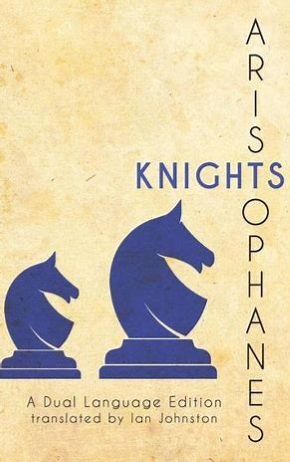 THE KNIGHTS – In The Knights Aristophanes pioneered a new sub-genre of Attic Old Comedy: the Demagogue Comedy. The villain of this masterpiece of political satire was a figure called the Paphlagonian, who was patterned on Cleon, a notorious Athenian politician of the time period.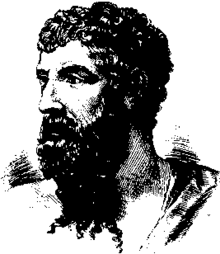
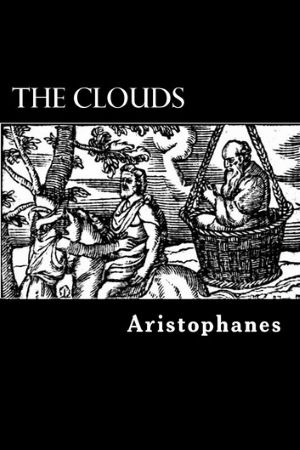 The Clouds was written by Aristophanes around 423 BC and next to Lysistrata is the Big A’s most- discussed satire, mostly because of its lampooning of the philosopher Socrates, a contemporary of Aristophanes.
 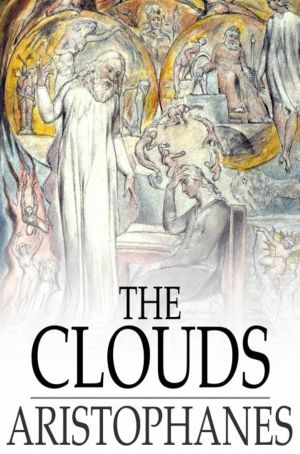 In the ancient Greek democracy Athenian citizens were expected to represent themselves in court in both criminal and civil proceedings.
 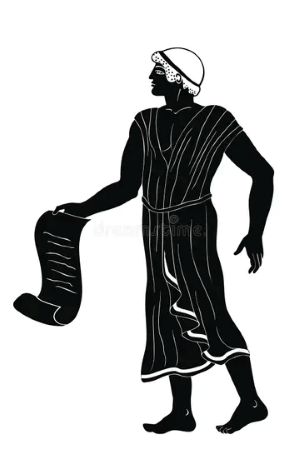 Cratinus was one of the Big 3 in Attic Old Comedy along with Aristophanes and Eupolis, both of whom were much younger than he was. From the fragmentary evidence available on Dionysalexandros, it appears to be a possibly unique hybrid of Attic Old Comedy and traditional Satyr Plays.
  Balladeer's Blog