
This weekend’s escapist, light-hearted superhero post from Balladeer’s Blog will look at a superteam from the Philippines – Sanduguan (Blood Oath), created by Gener Pedriña.
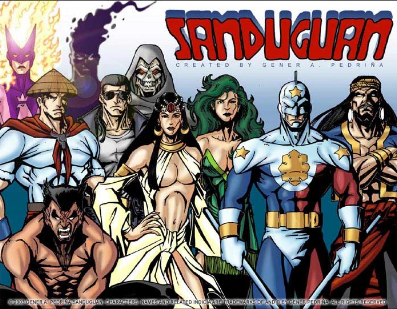
Before I examine the individual members of this team, here are some quick facts:
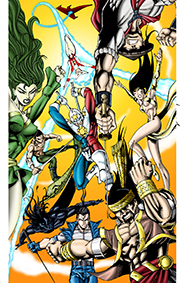 The team name Sanduguan dates to the era of Filipino resistance to the Spanish colonial forces. Rebels would take an oath of blood to the cause. Sanduguan, the term for the oath ritual, has also been translated as One Blood and Blood Pact.
Sanduguan first appeared in February of 1999. The emergency which caused the gathering of individual superheroes who would found the team was the freeing of Siginarugan – a vile entity from Philippine mythology. The heroes defeated the menace and formed their team.
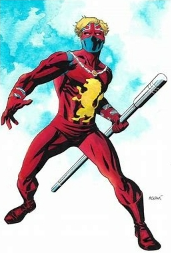
 SANDATA (Weapon)
Secret Identity: Jae Ener Pedriña
Debut Year: 1999
Origin: From a very young age, Jae’s grandfather educated him in Arnis, the Filipino martial arts discipline. As an adult he was declared so proficient that his grandfather gave him a pair of mystic bastons used in Arnis. After thwarting a robbery with the bastons Jae adopted the costumed identity of Sandata to fight crime.
Powers: This hero is the foremost master of Arnis techniques of fighting. His mystic bastons are virtually indestructible and occasionally manifest other aspects as needed. Sandata is the leader of Sanduguan. Continue reading
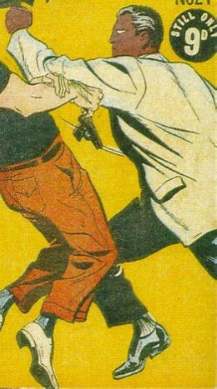 THE SHADOW
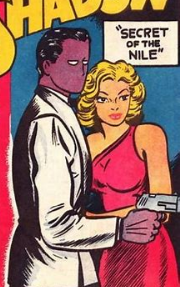 Comment: Many of this hero’s villains were femmes fatale along the line of
 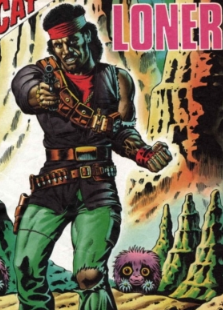 LONER – In 1988 the U.K. comic book Wildcat introduced a sci-fi character called Loner. This figure was, shall we say, reminiscent of America’s
 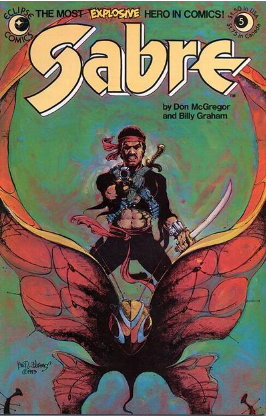 In the year 2492 a huge spaceship called Wildcat searches the universe for a planet fit for the human race to settle on as Earth faces destruction from a meteor storm. Loner was the world’s highest-paid mercenary warrior and bought his way onto the Wildcat by chipping in twenty million in financing.
 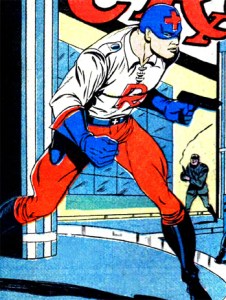 THE RED CROSS
 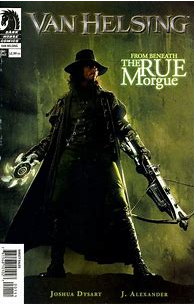 FROM BENEATH THE RUE MORGUE (2004) – This Dark Horse comic book companion to the Van Helsing film is set in between scenes in the movie. After the death of Mr. Hyde in Paris, we see that Van Helsing winds up arrested for murder.
  That lab is the lair of THE Dr. Moreau in his younger years. The mad scientist has created a number of beastly man-monsters that are barely controllable, unlike his later experimental creations.
 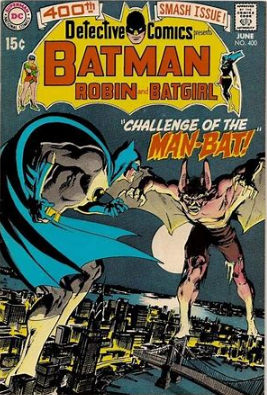 DETECTIVE COMICS Vol 1 #400 (June 1970)
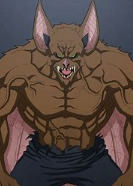 The anguished Langstrom realizes he must go into seclusion until he can devise a cure for his condition. That night he happens by as Batman interrupts the Blackout Gang’s attempt to rob a Gotham museum.
 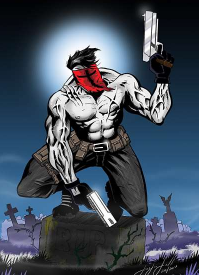 PENITENTE (Penitent)
  To redeem himself in the eyes of Heaven, the Penitente had to save seventy times seven the number of innocent victims he had killed while alive. As part of this purgative servitude he would also be periodically pitted against dark forces which had escaped from Hell.
 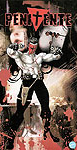 Comment: Our hero rose from his grave and masked his decaying, scarred face behind a red cloth like those worn during Brazil’s Procession of the Penitents.
 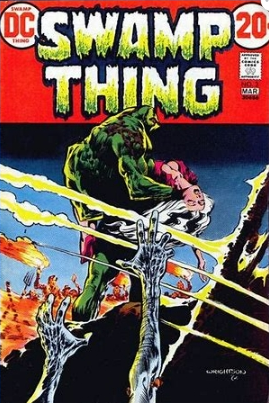 SWAMP THING Vol 1 #3 (March 1973)
 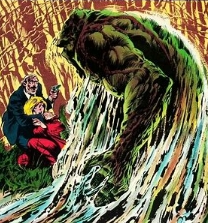 Alec’s body was dumped in the swamp, where the bio-restorative chemicals his body had been soaked in interacted with his own anatomy, the mud and the plant life in the swamp, letting him rise from the dead as a murk-monster. The Swamp Thing retained Alec Holland’s intelligence but could not speak for the first several issues.
 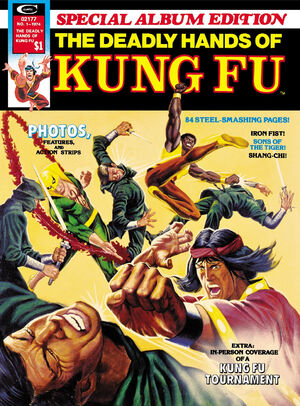 THE DEADLY HANDS OF KUNG FU SPECIAL Vol 1 #1 (June 1974)
 Synopsis: Storywise, this tale features three separate sections as Iron Fist, the Sons of the Tiger and Shang-Chi the Master of Kung Fu go up against Fu Manchu in three separate stages of his “master plan.”
 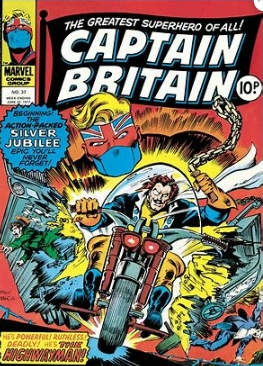 CAPTAIN BRITAIN Vol 1 #37 (June 22nd, 1977)
  The event is crashed by a new supervillain called the Highwayman, who rides a high-tech motorcycle which uses laser cannons and other weaponry. The villain also wears a monocle that shoots energy blasts and wields a battle chain.
  Balladeer's Blog