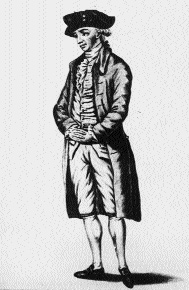
 The 4th of July is fast approaching, so Balladeer’s Blog will be squeezing in a few more holiday-themed posts up til then. In the past I’ve examined Revolutionary War privateers like John Haraden and Silas Talbot. This time around I’ll take a look at the controversial Luke Ryan.
Ryan was born in 1750 in Rush, Ireland and by the late 1770s he was an established smuggler. Captaining his ship the Friendship, Luke got commissioned in February of 1778 as a privateer for the British but would later switch to the American side.
The Friendship, with its 14 cannon and 60-man crew, sailed as a privateer vessel for King George III until April of 1779. Captain Ryan couldn’t resist pulling a side hustle against his ostensible employer England by smuggling some goods from Dunkirk, France to Rush, Ireland.
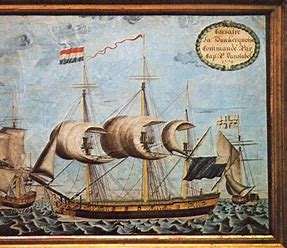 Some of Ryan’s crew didn’t like the way the spoils were divided from this extracurricular activity and informed the authorities about Luke’s smuggling offense. The Friendship was seized and hauled to Poolbeg and all crew members on board were arrested, then thrown into Black Dog Gaol. This happened on the night of April 11th into 12th.
Luke was not among those men on board at the time, so he organized a raid to bust his men free from Black Dog. The raid succeeded, following which the freed men and their liberators went to Poolbeg where they stole aboard the impounded Friendship and overpowered the guards.
The recovered vessel sailed to Rush before daybreak and with 18 additional men signing on, it was on to Dunkirk. Captain Ryan and his crew had committed a hanging offense by taking back the Friendship, so they decided to switch sides and become privateers for England’s enemies. Continue reading →

 Balladeer’s Blog wishes a happy birthday to the USA! What happened in early July of 1776 certainly needs no rehashing so in keeping with my blog’s theme of addressing more out of the way subjects this post will examine various events that took place on other July 4ths throughout American history.
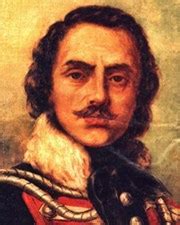 CASIMIR PULASKI (1747-1779) -Obviously from my last name I’m Polish-American and therefore grew up immersed in the role played by Casimir Pulaski and Tadeusz Kosciuszko in America’s War of Independence. I’m often surprised by how comparatively unknown they are to the public at large, so in keeping with Balladeer’s Blog’s theme here’s a look at Pulaski. I’ll cover Kosciuszko separately.
 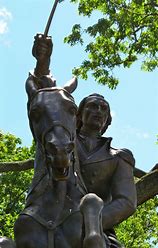 The war never became as romanticized as the later Greek War of Independence from the Ottoman Turks, but the conflict drew attention to Russian totalitarianism and to the abilities of Polish officers like Casimir Pulaski. In fact, it took an invasion by Russian-allied Austria and Prussia to help Russia put down the rebellion in 1772.
 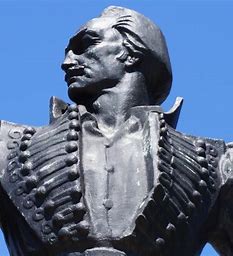 Franklin was impressed with what he could learn about Pulaski and sent him on to America with a letter of introduction to George Washington. Franklin described the Pole as “an officer famous throughout Europe for his bravery and conduct in defence of the liberties of his country against the three great invading powers of Russia, Austria and Prussia … may be highly useful to our service.”
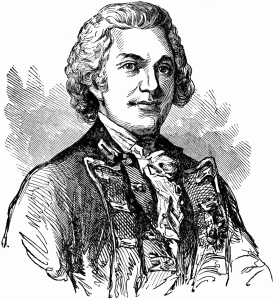 CAPTAIN SILAS TALBOT – Even if he had never gone on to a career in Privateering, Talbot would still have been a fascinating figure from Revolutionary War history. On June 28th, 1775 Silas was commissioned as a Captain in a Rhode Island regiment and served in the military operations which ended with the British surrender of Boston in March of 1776.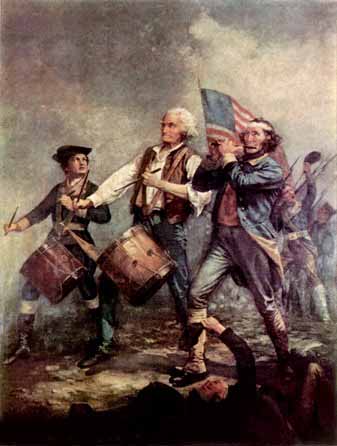
 Ethan Allen and his Green Mountain Boys and Daniel Morgan’s Kentucky Rifles, a unit that will see impressive action throughout the entire war, from Canada to the Deep South.
  It may be my fondness for mythology that makes me love to watch particular movies around particular holidays. I say that because many of the well- known myths were recited on ancient holidays when their subject matter was relevant to those holidays. The stories helped accentuate the meaning of the special events and that’s the way I use various movies.
 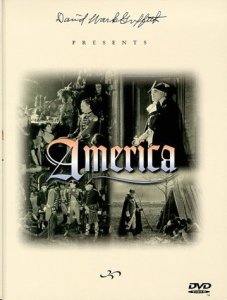 Regular readers of Balladeer’s Blog are familiar with my fondness for old Silent Movies. America was D.W. Griffith’s 1924 production about the Revolutionary War. The movie is pleasant enough for the July 4th holiday season, but don’t expect a classic like The Phantom of the Opera, The Mark of Zorro or many other masterpieces of the silent era.
 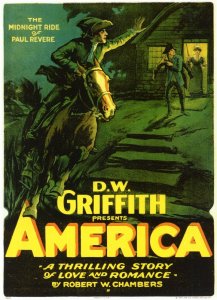 The Holdens can’t stand the snobbish Montagues and the Montagues pompously look down on the Holdens and the rest of the rebels. Nancy’s father would rather see Nancy married off to the prominent British military officer Captain Walter Butler, played with aristocratic and sadistic flair by THE Lionel Barrymore.
  Balladeer's Blog