Balladeer’s Blog continues its examination of the many facets of Fool Killer lore. FOR PART ONE, INCLUDING THE HISTORICAL CONTEXT, CLICK HERE
 PART TWENTY: In a surprising development Balladeer’s Blog was contacted by THE actual Fool Killer. Using Jimmy Neutron-level science I determined that this correspondent was indeed the actual supernatural figure who had been at large in America since the 1830s.
After some introductory email exchanges the Fool Killer confirmed for me that Jesse Holmes was not his real name but he often used it as his alias going back to Charles Napoleon Bonaparte Evans’ original publication of The Fool Killer Letters from roughly 1850 to around 1880.
The roaming vigilante stated that since there was absolutely nothing that I or any other mortals could do to stop him from slaying whenever and wherever he pleased he was happy to answer assorted questions for me. He did so in the following email:
 Coming to you as I wander in search of fools to kill, as usual a murder of crows following in my wake to feast upon the ample corpses I leave behind me in my travels.
Eddie, or Mr. Wozniak or Balladeer or however you prefer to be addressed, I noticed from your queries that you have that modern-day obsession with wanting definitive answers. I’m not able to provide them regarding my exact nature nor would I if I WAS able.
Your tracing of my origins to the Tennessee Hills of the 1830s was part of the reason I contacted you. I figured your perseverance and your perceptive comments about the Hill Portughee or Melungeons importing tales of Longstaff from Portugal showed you deserved to be my new correspondent. You’re no Charles Evans or James L Pearson but I’ve been a mighty long time without a confidant so you’ll do.
My birth around 1830 was roughly as recounted in Mountain Legends. I can correct the record on one particular item, though. My Daddy, whatever he really was, was not THE Devil. Not even I could have overcome Satan himself like I did and driven him from the Tennessee Hills. He may have been “A” devil or demon or maybe something from another world. Maybe he was just a relic from Earth’s distant past or some unknown thing that walked up from the very bottom of the ocean. Continue reading →

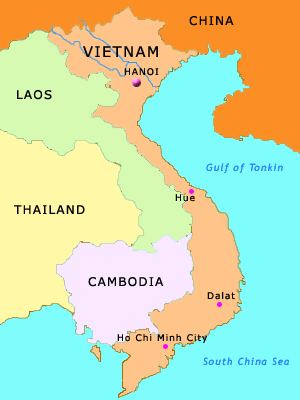 CANTO ONE – The jungle and mountain god Tan Vien was accompanying the semi-divine Emperor Hung Vuong XVIII on a Royal Hunt. A turn of fate puts them in a position to save the imperiled son of Long Vuong, the chief sea god. CLICK HERE
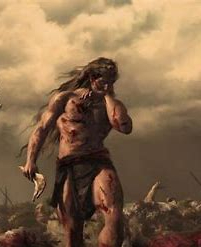 Happy Labor Day! And yes, I know it’s traditionally the Labors of Hercules, but last week’s blog post about
 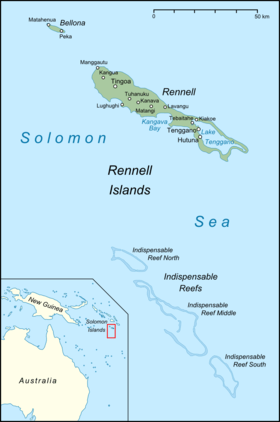 In the style of Balladeer’s Blog’s separate examinations of Hawaiian and Samoan myths as a subset of Polynesian Mythology comes this look at the deities worshipped on the Polynesian outliers Bellona Island and Rennell Island. Despite its much smaller size Bellona had a larger population for much of their history.
 MAHUIKE – The earthquake god of Bellona and Rennell Islands (henceforth Bel-Ren). Like his counterparts in Hawaii and Samoa, Mahuike lived far underground and caused earthquakes by pushing at the earth with both of his arms.
 In the past Balladeer’s Blog has examined epic myths from around the world and from many belief systems. Examples include
  AUGUST 1919 RETURN – From January of 1910 to July of 1917, James Larkin Pearson’s monthly Fool-Killer had been published, with his revival of the violent folk figure doing his ages-old job of bashing political and societal fools. In April 1917 America entered World War One and by July Pearson felt that a unified front for wartime was appropriate.
 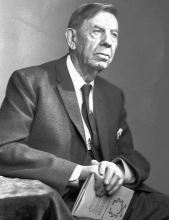 In August of 1919, nine months after the end of the war, Pearson changed the name back to The Fool-Killer and resumed the hard-hitting political satire. That month’s targeted fools included:
  PART FIVE – Horn recounted an incredible event he attended in Angola, which was not yet the name of the country, just a populated region. He and his subordinate Trade Agents were guests at a conjo – a performance of traveling entertainers called the Akowas.
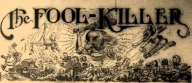 JANUARY 1910 – James Larkin Pearson, poet and newspaper man, carried on the Fool Killer tradition from 1910 to 1917, then again from 1919 into the 1920s. Pearson’s fellow North Carolinian Charles Napoleon Bonaparte Evans had written the Fool Killer Letters of the 19th Century so it’s appropriate that another Tar Heel continue the lore for so many years of the 20th Century.
 Pearson’s Fool-Killer was the mascot of the entire publication, which was merely 4-6 pages anyway, not simply the supposed author of letters regarding his body count of “fools.” Think of this Fool Killer (I prefer no hyphen) as the written word equivalent of Puck (1876-1918), the political cartoon mascot of the humor magazine of the same name.
 *** Frederick Cook, who, the previous December, had seen his claim to have reached the North Pole ruled invalid and possibly fraudulent by the University of Copenhagen. (The Fool Killer was unable to locate Cook, however.)
 PART FOUR – We pick up this time with Trader Horn’s reflection on how the British and German firms in Africa dominated the European trade in ivory and rubber, while France was a distant third. There were whispers that the French (whom Horn referred to far more insultingly than he ever referred to the indigenous Africans) were strategizing about using their Colonial Governments to limit the success of Great Britain and the German Empire wherever they could.
  Previously I examined Joel Chandler Harris’ 1902 story Flingin’ Jim And His Fool-Killer, set in Georgia in October of 1872, plus Ridgway Hill’s Facts for the Fool-Killer, set in and around Buffalo, NY in 1909.
