
Here is the tenth and FINAL part of Balladeer’s Blog’s look at the various mythological works in Ireland’s Lebor na hUidre, The Book of the Dun Cow. For Part One click HERE.
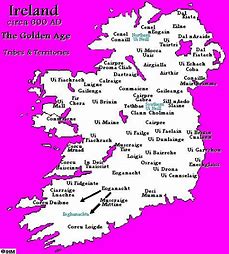 THE STORY IMPLYING THAT MONGAN WAS FIONN MAC CUMHAILL REBORN AND HOW HE AND HIS NEPHEW KILLED FOTHAD AIRGTHECH (Scel asa mberar combad hé Find mac Cumaill Mongáin ocus aní día fil aided Fothaid Airgdig) – Ireland’s Prince Mongan, whom we met in a few previous installments, was a historical figure but his life has been so smothered in embellishments and legends that facts can be hard to come by. He supposedly died around 625 A.D.
This particular item presented Mongan arguing with the poet Forgoll when that poet claimed to know the circumstances of the death of Irish High King Fothad Airgthech, who ruled around what we would call the early 270s A.D. A heated argument breaks out.
 Eventually Forgoll insists his knowledge has been insulted by Mongan’s contrary claim and threatens to curse and ridicule Mongan unless Mongan gives him his wife by way of reparations. An elderly, decrepit stranger arrives on the scene.
The stranger says he is Cailte mac Ronain, nephew of Fionn mac Cumhaill (better known as Finn MacCool). Cailte is one of the last surviving members of Fionn’s troops and has lived this long through enchanted means. Like Oisin, his fellow survivor of the Battle of Gabhra, Cailte is destined to live long enough to convey tales of ancient Ireland to the prophesied Saint Patrick. Continue reading
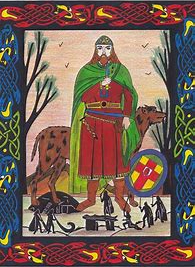 THE CONCEPTION OF CUCHULAINN (Compert Con Culainn) – One of the versions of the birth of the demigod Cuchulainn. This version begins as Ulster’s King Conchobar mac Nessa (at left) goes on a hunt for magical birds with several nobles of Ulster and his daughter Deichtine, his charioteer. (In the later and more popular versions Deichtine is King Conchobar’s sister, not his daughter, and most of the Cuchulainn myths refer to him as Conchobar’s nephew, not grandson.)
 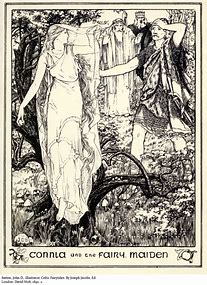 THE ADVENTURE OF CONNLA THE BEAUTIFUL, SON OF CONN OF THE HUNDRED BATTLES (Echtra Condla Chaim meic Cuind Chetchathaig) – Amid the monuments and landmarks on the Hill of Uisnech in central Ireland, Connla and his father Conn, a High King of Ireland, are relaxing with several of their troops around them.
 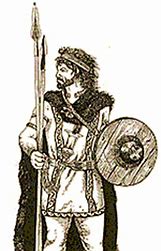 King Conn and others nearby ask Connla who he is speaking to, because only he is able to see her. As the smitten Connla continues “chatting her up” his father and others hear the woman speaking but still cannot see her. She makes it clear that she is inviting Connla to come with her to Mag Mell forever, prompting the panicked Conn to call for his Druid Corann.
  THE FEAST OF BRICRIU (Fled Bricrenn) – The Book of the Dun Cow version of this tale is dated to around the 700s A.D. and is considered the forerunner of the story of Sir Gawain and the Green Knight in British legends.
  THE CATTLE RAID OF COOLEY (Tain Bo Cuailgne) – Because this is easily the most well-known tale from Irish Mythology I will be brief and I will also include another section of the Book of the Dun Cow in this same blog post.
 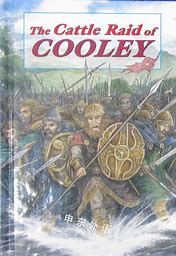 III. As Queen Maeve and her army approached Ulster, most of the Ulstermen were incapacitated by labor pains, a curse from the goddess Macha that they would be thus afflicted for nine generations whenever Ulster faced peril. The only man of Ulster not affected by the curse was the demigod Cuchulainn,
 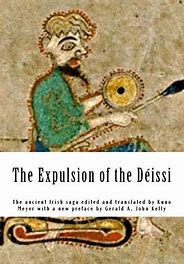 THE EXPULSION OF THE DEISSI (Tucait innarba na nDessi i mMumain ocus aided Chormaic) – Once believed to be a genuine historical narrative, The Expulsion of the Deissi has long been recognized as yet another case of mere quasi-historical myth-making.
 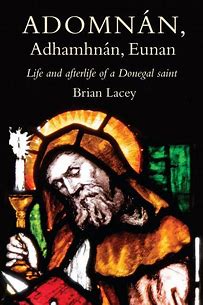 THE VISION OF ADOMNAN (Fis Adomnain) – This was a tale of the vision that Saint Adomnan supposedly had during his lifetime (c 679-704 A.D.). Several centuries before Dante’s Divine Comedy (Inferno, Purgatorio, and Paradiso), The Vision of Adomnan depicted the future saint being conducted through Heaven, Purgatory, and Hell so that he could share this “vision” with others.
 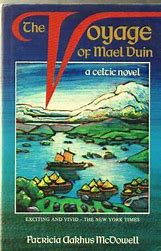 THE VOYAGE OF MAEL DUIN (Immram curaig Mail Duin) – Dated to around the late 900s A.D. or earlier, this story deals with the epic quest of Mael Duin (aka Maildun and Maeldune) and the crew of his ship as he seeks revenge on his father’s killers. This lengthy epic deserves to be as well-known as the Odyssey or the Quest for the Golden Fleece.
 Mael Duin matured, and proved better than his presumed siblings at athletic, martial and academic competitions. Losing their temper over this, one of our hero’s foster brothers ridiculed Mael Duin for not even knowing who his real father and mother were.
 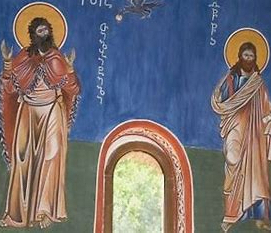 TWO SORROWS OF THE KINGDOM OF HEAVEN (Dá brón flatha nime) – This is a variation of the tales about Elijah and Enoch, who asked to be risen physically to Heaven while still alive. Because of their virtuous lives, their desire was fulfilled, but their “sorrows” centered around the limitations of their physical forms amid the wonders of Heaven. For just one example, they cannot fly like the angels and souls around them.
  Next, he reads to them about Christ returning for the Final Judgment accompanied by the Hosts of Heaven. Each human who appears before him is accompanied by a personal angel and a personal devil. The angel speaks of the person’s good deeds and the devil about their bad deeds. Jesus then assigns souls to Heaven or Hell.
 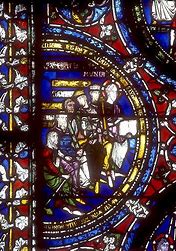 SIX AGES OF THE WORLD (Sex aetates mundi) – This was one of the many texts from many Christian-influenced cultures that viewed the world from Creation through Jesus Christ as being Six Ages. In this fictional context each age was roughly 1,000 years.
  Balladeer's Blog