
 Happy Memorial Day from Balladeer’s Blog! What could be more appropriate on this holiday weekend than to examine a few of the forgotten conflicts from America’s past? The soldiers who fell in those wars are no less dead just because they served in actions that are neglected in the history books and/or were never formally declared by Congress. (details, details)
And in keeping with my blog’s overall theme I won’t be bringing any of that weak Korean War, World War One or War of 1812 crap. When Balladeer says forgotten I mean forgotten with a capital (or at least italicized) “F”. As forgotten as The Montefuscos and Hizzoner. As forgotten as a Polish memoir or a promise from a presidential candidate.
4. THE FORGOTTEN YEAR OF THE REVOLUTIONARY WAR (1781 – 1782) – My fellow Revolutionary War geeks and I are forever rolling our eyes at documentaries that act like Cornwallis’ surrender at Yorktown marked the end of that conflict. True, it was the last MAJOR battle of the war, but there were 13 more months of open bloodshed and another year after that before the peace treaty was signed.
October 1781 to November 1782 saw General “Mad” Anthony Wayne’s campaign to fully recover Georgia from British Loyalists and their Native American allies and saw incessant guerilla warfare in the Ohio Country periodically flare up into larger- scale actions , with George Washington’s associate Colonel William Crawford being killed in one such battle. In addition, British Loyalists and their Native American allies parlayed military successes in Ohio into repeated excursions eastward and southward, with larger- scale actions at Blue Lick, KY and elsewhere before being driven back.
Joseph Brant, the British-educated Mohawk Chief, set out with a combined force from British-held Detroit on a campaign through Pennsylvania, Virginia and Kentucky, a campaign which saw the complete destruction of Hannastown, PA.
The Battle of the Combahee River in South Carolina was the last battle between American and British regulars in the war. Guerilla warfare still raged in the New Jersey No-Man’s Land and American privateers continued raiding British ships at sea. George Rogers Clark’s forces defeated a combined unit of British Loyalists and their Shawnee allies in the REAL final battle of the Revolutionary War at Chillicothe, OH on November 10th, 1782.
 3. THE MEXICAN WAR (1846 – 1848) – A decade after winning its independence from Mexico the Republic of Texas joined the United States. This served as one of the handful of reasons for the outbreak of this war which gave the first field experience to countless future Civil War figures including Ulysses S Grant and the man he defeated, Robert E Lee.
Future president Zachary Taylor won the initial battles around the disputed Texas/ Mexico border and pushed deeper into Mexico itself. Despite being acclaimed as a war hero all Taylor’s ill-considered advance did was seize a lot of real estate that was strategically useless and difficult to secure. Taylor’s forces wound up fighting to hold this ultimately meaningless area and serving as targets for guerilla warfare for the rest of the war, but his glowing headlines assured Taylor’s electoral victory in 1848.
Meanwhile, General Winfield Scott set about actually winning the war. He oversaw the first-ever large-scale American amphibious operation by taking Vera Cruz in 1847 and overcame obstacle after obstacle to advance all the way to Mexico City.
Elsewhere, U.S. forces moved westward occupying what is now Arizona, New Mexico, California and parts of other western states. Later in the war some of these areas would witness small-scale Mexican uprisings that were quickly put down. Some view this as American imperialism but actually Mexico had no more right to that land than the U.S. did and the Native Americans of the region were the only ones who had a legitimate claim to it in my view. And after the war the U.S. PAID Mexico for the territory, so it’s a non-issue.
Still, even at the time public opinion was divided on the war and figures like Congressman Abraham Lincoln, former president John Quincy Adams, Henry David Thoreau and others spoke out against the conflict. Even young Ulysses S Grant, who served in the war, wasn’t happy about it.
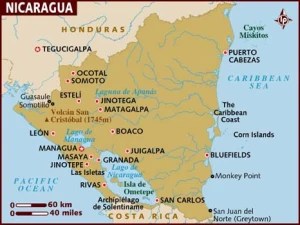 2. NICARAUGUA CONFLICT (1926 – 1928) Decades before the murky mess that the Reagan administration would make of the Nicaraguan situation the United States was involved in an earlier conflict there. In 1925 Carlos Solorzano was inaugurated as president of a coalition government in Nicaragua. The losing candidate, Emilio Chamorro Vargas, launched a coup d’etat in October, overturning the legally elected government and reducing the country to chaos, with many nations refusing to recognize the coup- installed government.
To distinguish this from the much later conflict, the United States forces were INVITED IN by ALL the feuding parties to maintain order and deal with the many rogue military leaders scattered throughout Nicaragua. This was necessary because even the political leaders of each faction had lost contact with and/or control over, their officers in the field. New elections were held in 1926 with Adolfo Diaz the winner this time. Cesar Augusto Sandino and others rebelled against this elected government and the small-scale skirmishes of 1926 morphed into much larger military clashes in 1927.
U.S. Marines, making use of the relatively new procedures of coordinated air reconnaissance and air evacuation of the wounded, fought at Ocotal, El Chipote, Quilali and in uncharted jungle regions of the country. Operating simultaneously from bases on the Pacific and Caribbean coasts American forces saw almost daily firefights as they slowly maneuvered Sandino’s forces toward the Honduran border on the north.
In 1928 action spread to Chihili, then when El Chipote was retaken by U.S. forces Sandino fled to Mexico. Final battles were waged against the remaining rebel forces in battles ranging from Puerto Cabezas along the Coco River all the way to Poteca and Garrabo. New elections were held in November 1928, ending large-scale American involvement for a time.
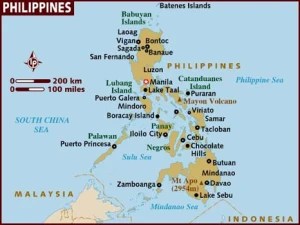 1. THE PHILIPPINE WAR (1899 – 1902) – Coming hot on the heels of the Spanish- American War of 1898, this conflict raged for 3 years and 5 months, making it the longest conflict on this list. To me this fascinating war could serve as the perfect backdrop for CALM examinations and discussions about the whens, wheres and hows of using military force abroad. I have four main reasons for saying that:
*** 1. It was long enough ago that passions will not be as uncontrollable as they are when more recent conflicts are discussed.
2. The fact that the U.S. won the war negates the usual Conservative flag-wavers’ argument that you’re “rooting against our own apple-cheeked armed forces” if you think America was wrong in the conflict.
3. The strong public opposition to the war by politicians and military men who later went on to serve in World War One should show the bizarre 1960s generation of leftists that just because you oppose one war your country is involved in it does NOT mean you have to spend eternity pretending that in all subsequent wars your country is automatically wrong and that the forces opposing your country are automatically right.
4. The fact that the U.S. presence in the Philippines has been over for nearly two decades means heated arguments over whether or not to “pull out the troops” can be avoided.
The first battle of the Philippine War took place in and around Manila on February 4th, 1899 and the conflict ended on July 4th, 1902 when President Theodore Roosevelt literally “declared victory” because of the comparative calm that had been restored. In between, countless memorable military and political dramas were played out that almost eerily foreshadowed similar situations America would face in Korea, Vietnam, Central America and the Balkans.
It would take a minimum of 3 or 4 thousand words to do justice to all the elements of this war with Philippine Nationalists who wanted the U.S. out ( and I’m 100% with them on that in this war’s case). The military players on the American side ranged from old and creeky Civil War officers to a generation of fighting men who would go on to make bigger names for themselves in World War One. Arthur MacArthur, the father of Douglas MacArthur, served in the war and on the Philippine side the Aguinaldo and Aquino families would be well- represented.
Throw in the presence of silent film journalists covering the war and staging reenactments of battles, often with African American troops pressed into service to pose as Philippine forces in those newsreel reenactments. You can see why I consider the Philippine War’s amalgamation of political, military, social, media and racial elements to provide a virtual microcosm of issues that the nation continues to deal with. But the virtue of its historical distance to us in 2012 could hopefully make it an arena for a more dispassionate deliberation of those issues.
ENJOY THIS ARTICLE? HERE’S MY QUICK TAKES ON ALL 44 U.S. PRESIDENTS – https://glitternight.com/2012/02/19/balladeers-blogs-presidential-pros-and-cons/
HERE’S MY ARTICLE ON CHOCTAW INDIAN GODS AND GODDESSES – https://glitternight.com/2012/06/03/the-top-twelve-deities-in-choctaw-mythology/
© Edward Wozniak and Balladeer’s Blog 2012. Unauthorized use and/or duplication of this material without express and written permission from this blog’s author and/or owner is strictly prohibited. Excerpts and links may be used, provided that full and clear credit is given to Edward Wozniak and Balladeer’s Blog with appropriate and specific direction to the original content.
 Balladeer's Blog
And again my education in these matters continues thanks to you Ed.
Thank you very much! That’s nice of you to say that, Jo!
Wonderful and informative! As always you evenly handle both liberal fools and conservative fools. Those poor people in Pennsylvania whose town was wiped out!
Thank you very much! I agree about Hannastown, PA. I guess the now-homeless residents gathered around and said “Relax! Let’s just keep reminding ourselves that the war ended when Cornwallis surrendered!”
I know! Total high jack!!!
But… some of use snarky folk over here in China in regards to the current situation in the South China Sea… “Chinese joke: take a laptop to Spratly Islands, if you can access Facebook/Twitter/YouTube they belong to Philippines, otherwise Chinese.”
I know! High jack! Your post was about American history, and I’m giving you current events!!! Sorry!! I thought you could use the chuckle!!!
Hilarious! I always love bits like that!
I’m sorry, list needs http://en.wikipedia.org/wiki/King_Philip's_War to be complete.
I’m saving that one for a future list since it was pre-Revolutionary War. Thanks for dropping by and commenting!
Why does the PI map look like a ET skeleton?
It wants to phone home I guess.
Excellent article! I love reading articles that are not the usual liberal vs conservative garbage. I bought a book about the Philipine War since you made it sound so interesting!
Thank you very much! ! I hope you like the book!
It is always so nice to read ur takes on stuff! We all know you’re not a politically correct wimp so when u say something it is sincere and from the heart.
Thanks! I appreciate it! I think we’ve all had enough of religious nut conservatives and groveling, politically correct liberals.
Informative and way off the beaten path! Those forgotten battles of the Revolution were my favorite!
Thanks! I like to know which ones are people’s favorites!
Enjoyed raeding about all these wars. Nice to get a fresh perspective and not the usual tired liberal vs conservative arguments.
I appreciate it! I hear that more and more! I think all of us are disgusted with the left and the right. Their worldview needs to evolve.
U r always a pleasure to read because u don’t cling to the old cliched views of liberals and conservatives and u alwys have ur own unique perspecive!
Thanks! Thaat is very nice of you!
Good choices! And its refreshing to read someone whose not a liberal moron or a conservative moron.
Thank you very much! Spread the word!!!!!!
Never heard of that Phillippinne War until now. Cool as shit to read this stuff.
Thanks! I’m glad you encountered something you weren’t familiar with before.
Really intriguing shit about that war in Nicaragua!
Thanks a lot! I have a taste for the obscure!
Great and informative. Love the Philippine war part.
Thank you! There are plenty of great books about it if you’re interested.
Why do you feel that way about the Mexican War?
Because, since Mexico had as little right to that land as the U.S. did it wasn’t a case of the big bad United States vs “good guys” from Mexico. It was case of “bad guys” vs “bad guys” with the only people I can sympathize with being the Native Americans who were treated like they should have no say in the situation. I tell this to “Aztlan” wackos all the time.
Most Mexicans are of Indian blood, Spain used its Mexican Indian allies to colonize various parts of Northern Mexico and the Southwest. Plus Native Americans are not innocent victims either. What about the Comanche and Kiowas who raided Mexican towns and villages for cattle and horses? They killed thousands of Mexican people, just read about the Great raid of Durango by the Comanches. Yes I will agree that the Mexican government has little claim and its history now. The only thing that makes Native Americans “Native Americans”; and not Native Canadian or Mexican is what side of the border they are born on. So as a Mexican American of native descent, I have no say in the border situation? Why because my people wear sombreros and not a feathered war bonnets?
Interesting points (except for the notion that “most” Mexicans are of Indian blood. Try telling that to many Mexicans and they will insist they are Hispanic (as in descendants of the Spanish Colonialists) but since we are all ruled by governements NONE of us have a say in the border situation. I don’t have any more say in national borders than you. Your issue would be with the Mexican government who agreed to accept money for the sale of the land AND with your ancestors who did not decide to move back to Mexico. All of those who stayed after the conflict were aware that they would be in the United States from that point on, not Mexico.
Yes good points as well. I am also of Spanish descent; I am Mestizo like many Mexicans and Hispanics. We are mixed blood and come from a mixed culture. I don’t know why America has a hard time grasping that a person can be from 2 worlds or have mixed back round and walk both paths. Even Canada recognizes the mix of European and native ancestry; just look up the Metis people of Canada.
At no point did I say anything about not recognizing mixed ancestry. I see now you’re just playing the trollish game that too many people like to play.You don’t want to discuss, you want to accuse. You said absolutely NOTHING to address my actual comment. I don’t play the silly game of answering accusations with no merit. You need to grow up and listen to what people actually say and not what you want to PRETEND they said just so you can try to get self-righteous.
A history of mixed races or a defense of how your Spanish ancestors oppressed the native inhabitants of the Americas have no bearing on what I said. If you respond in a similar way again I will assume you are just a troll and spam all your future comments. You need to learn to address people as individuals and stop being so bigoted.
u shoud do a hole book on that Phillipine war.
Thank you! There are already several out there if you want to read more!
Excellent writing and I enjoy your unique point of view. I don’t agree with you about the 1920’s Nicaraguan battles but you still have fresh viewpoints, not the usual liberal vs conservative garbage.
Thank you very much!I am glad you noticed!!!
Fascinating look at these forgotten wars. I admire you for the way you evaluate each conflict individually and don’t just adopt the liberal mindset of automatically condemning America or the conservative mindset of automatically defending America.
Thanks! I think that’s the only way to approach the subject! Liberals and Conservatives are both so outdated in their thinking!
Very thought provoking look at these conflicts.
Thank you very much for saying so…..
I want 2 read more a bout the Phillippinne war now
Glad to pique your interest!
I want looking at and I believe this website got some really useful stuff on it! .
Great Post,Keep Writing
Thanks.
SJW = SOCIOPATHIC JOYLESS WEIRDOS
I enjoyed this! Relly great forgotten history!
Thank you!
That one in Nicaragua is new to me. Same with the Philippines one.
I’m always glad to spread the word!
These were enjoyable reads. I never knew about the Nicaragua and Philippine ones.
Thank you very much. I’m always happy to spread the word.
Very detailed article and very challenging to both sides of the aisle.
Thank you! That’s my whole shtick!