
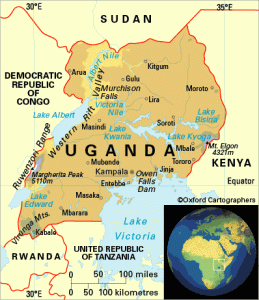
 THE NEW HUMANS (1909) – Written by B Vallance. No other name has come to light for the author of this thought-provoking work. Explorer Montgomery Merrick is roaming around the wilds of 1909 Uganda when he falls down a mountainside and into a concealed valley.
Merrick’s injuries are such that he does not expect to survive but he wakes up on an operating table in fine condition. Looking down at him are amoeboid humans who don barrel-shaped exo-skeletons whenever they need to keep their forms stable, as in during the surgery they were performing on Merrick.
One of the beings speaks English and introduces himself to the recovering patient as the Chief Adaptor, who takes credit for “repairing” our hero. Merrick gradually becomes aware that his ultimate fate is still being debated by his odd saviors. Continue reading
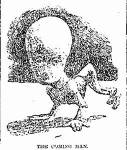 THE ARTIFICIAL MAN: A SEMI-SCIENTIFIC STORY (1884) – Written by an unknown figure under the pseudonym Don Quichotte.
 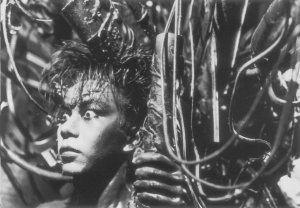 Director Shinya Tsukamoto hails from Japan and is noted for his surreal, nightmarish excursions into the darker side of transformative industrial technology … especially any technology that impacts the human anatomy.
 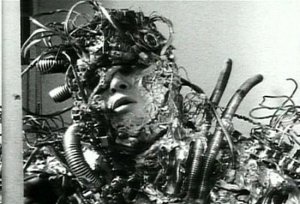 Tetsuo: The Iron Man (1989) – From the early shots of a man removing one of his own bones and replacing it with a piece of metal viewers knew this was a work of true genius. Tetsuo becomes more and more relevant by the year, especially with the advent of nanotechnology and its potentially invasive effect on the human mind and body.
  Balladeer's Blog