 Over five years ago Balladeer’s Blog began a detailed look at the neglected folklore surrounding the Fool Killer figure. It’s been a while since I left off and I’m about to dive back in. There are so many new readers here that I’m posting a recap of the very first Fool Killer item from the 1850s. Next time I’ll resume where I left off – in 1913.
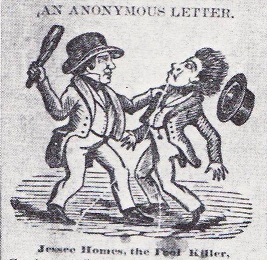 Balladeer’s Blog kicks off a multi-part examination of the neglected 1800s folk figure called the Fool Killer. I will cover the various stories featuring the Fool Killer and the different ways the character was used by the authors. If I ever examine the related character called the Rascal Whaler it will be in a separate series of blog posts.
NOTE: FOOL KILLER LORE IS STRICTLY FOR ADULTS. IT IS NOT FOR THOSE WHO ARE SIMPLE-MINDEDLY OFFENDED BY ANYTHING AND EVERYTHING.
The Fool Killer stories began in 1850s North Carolina. Charles Napoleon Bonaparte Evans, editor of the newspaper called The Milton Chronicle, introduced the character around 1851 (some sources say as early as the late 1840s). If Evans had been a political cartoonist he might have used the Fool Killer as his mascot, like the figure Punch over in England or Puck here in the U.S.
 However, since Evans was all about the written word, he used the Fool Killer as a much more active figure. Evans’ Fool Killer – claiming Jesse Holmes as his real name – roamed North Carolina and Virginia (which at the time still consisted of what would become West Virginia) looking for fools to kill with a club/ walking stick he always carried with him. The character would then send letters to Editor Evans explaining why he had chosen victims, defending his actions with puckish commentary.
I’ve always been struck by the similarity with the way real-life serial killers would correspond with newspapers, explaining and/or defending their deeds. In the case of Charles Evans’ Fool Killer, it was Evans himself writing the letters as if they were pieces of correspondence that “Jesse Holmes” sent to him.
The killings never happened, of course, and were simply Evans’ way of using political commentary in an entertaining way. Instead of high-brow social criticism, the Fool Killer Letters were very dark satire in which the mock author of the letters bashed the life out of corrupt politicians and other malefactors. Continue reading →

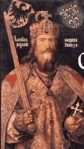 These are the legends about Charlemagne and his Paladins, not the actual history, so there will be dragons, monsters and magic.
 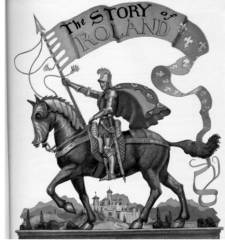 ROLAND BATTLES MOROCCAN CORSAIRS – The Paladins recently freed by Astolpho from the prison of the sorcerer Atlantes all hastened to rejoin Emperor Charlemagne’s army. The war against the Muslim invaders from colonized Spain and North Africa was still raging.
  These are the legends about Charlemagne and his Paladins, not the actual history, so there will be dragons, monsters and magic.
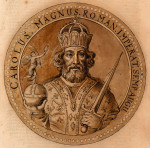 These are the legends about Charlemagne and his Paladins, not the actual history, so there will be dragons, monsters and magic.
 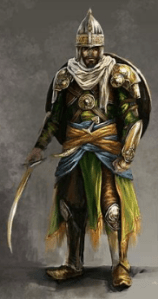 RUGGIERO MEETS PRINCESS ANGELICA – When we last saw Bradamante, the Paladin in White Armor, she was continuing her quest to find her beloved Ruggiero. He was a Muslim warrior who was allied with the Saracens who had invaded the realm of Emperor Charlemagne from colonized Spain.
  PART FIVE – Horn recounted an incredible event he attended in Angola, which was not yet the name of the country, just a populated region. He and his subordinate Trade Agents were guests at a conjo – a performance of traveling entertainers called the Akowas.
 Here is my usual post-completion collection of chapter links, in this case for The Villon Legend.
  MELUNGEON VARIATIONS PART ONE
 If he had, one possible source would be the Fool Killer figure from Melungeon folklore in East Tennessee and other Appalachian areas. Or, since we have no way of checking exact dates, Evans’ darkly satirical tales may have influenced the existing Melungeon lore since Melungeons at the time were scattered from Tennessee to North Carolina, Kentucky and Virginia.
  Balladeer's Blog