
This weekend’s light-hearted, escapist superhero post from Balladeer’s Blog will look at the short-lived revival of the Captain America series during the 1950s.
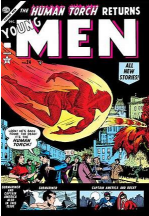
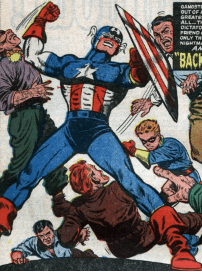 YOUNG MEN Vol 1 #24 (December 1953)
NOTE: For people unfamiliar with these topics, the initial boom of superhero comic books which thrived beginning in the late 1930s started to sag after World War Two ended and by 1949 many series – and even comic book companies – were gone completely.
Marvel Comics was called Timely Comics in the 1940s but was going by Atlas Comics by this point in the 1950s. They briefly experimented with reviving their Captain America, Human Torch and Sub-Mariner series.
Title: Back from the Dead
Villain: The Red Skull
 Synopsis: Steve Rogers aka Captain America is now teaching at a prep school called the Lee School in a New York suburb. James Buchanan Barnes aka Bucky is one of his students. In old school comic book disregard for the passage of time, Bucky is still that young despite having been a teen in 1941.
At any rate, Cap and Bucky discuss having retired from superheroing years earlier and are dismayed that the students at the Lee School consider Captain America and his sidekick to be mythic figures, not real. The pair ponder returning to action, a decision clinched by news reports of the Red Skull raiding the U.N. with an army and holding all the delegates hostage. Continue reading
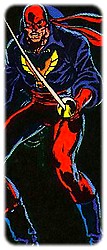 This weekend’s light-hearted and escapist superhero post from Balladeer’s Blog is a Double Feature. The main event is a look at the early adventures of Marvel’s neglected hero El Aguila (the Eagle).
 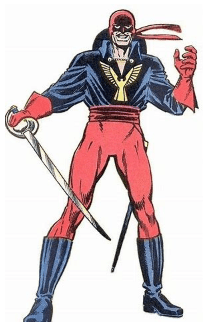 EL AGUILA
  Through trial and error, Alejandro found that long, slender metal objects were the best conductors for his bioelectricity and gave him the most accuracy with his energy blasts. He began using a sword through which to shoot his rays but to conceal his mutant nature publicly pretended his swords contained micro-generators that accounted for the rays he projected.
  AMAZING FANTASY Vol 1 #15 (August 1962)
 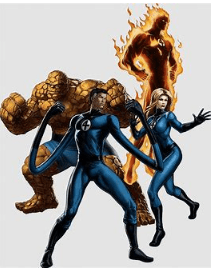 THE FANTASTIC FOUR – There can be no over-stating the importance of the Fantastic Four to Marvel Comics and by extension to much of pop culture the last several years regarding superhero movies and television programs. Though the Fantastic Four are now considered as dull as any b&w sitcom family of long ago, the team’s success convinced Marvel the market was right to recommit to superhero comic books.
 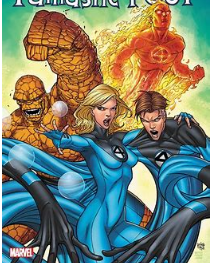 As Marvel Comics in 1961 the company decided to dabble in superhero comic books again, with Stan Lee and Jack Kirby, two veteran comic book hands since the 1940s, putting together a brand-new team of superheroes. That team was, of course, the Fantastic Four.
  HULK Vol 1 #150 (April 1972)
  NOTE: Thanks to sorcerers on Jarella’s home planet in the Microverse, Hulk was able to retain Bruce Banner’s mind there even when he was the Hulk, so she technically loved both his personae.
  This weekend’s light-hearted and escapist superhero post from Balladeer’s Blog looks at the Marvel Comics run in which Hercules and Thor fought side by side against assorted menaces.
  THOR Vol 1 #221 (March 1974)
 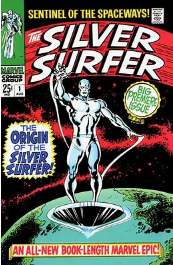 SILVER SURFER Vol 1 #1 (August 1968)
 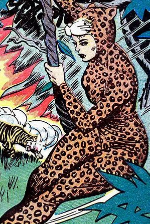 LEOPARD GIRL
  Powers: Leopard Girl employed her supernatural “cry of the leopards” to use a small army of leopards to help her fight the forces of evil in Africa. She could interact with the Dark Continent’s ghosts, who saw her as an ally.
  Comment: In her secret identity as “Gwen”, Leopard Girl worked with research scientist Dr. Hans Kreitzer. Her fellow assistant was named Peter, whom she once carried with one arm while swinging through the jungle.
 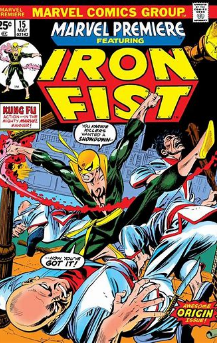 MARVEL PREMIERE Vol 1 15 (May 1974)
 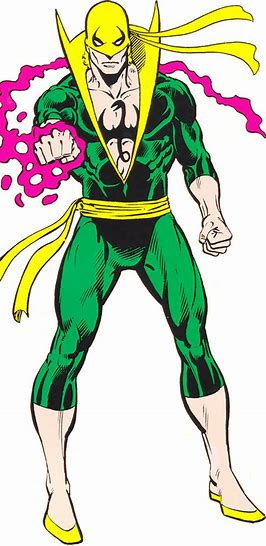 NOTE: This K’un-Lun is not THE K’un-Lun from Chinese mythology but it uses the same name and many of the inhabitants go by names corresponding to Chinese gods. Yu-Ti is one of them, Lei Kung the Thunderer is another. This K’un-Lun is an enchanted city that appears on Earth only once every ten years before returning to its pocket dimension home for another ten.
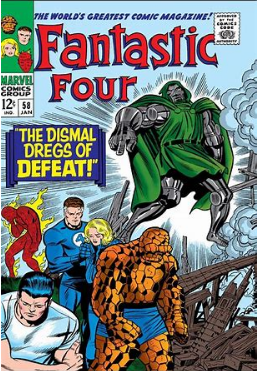 FANTASTIC FOUR Vol 1 #58 (January 1967)
  Balladeer's Blog