
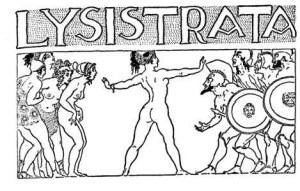
Lysistrata
LYSISTRATA (c 411 B.C.) – When I first started examining ancient Greek comedies here at Balladeer’s Blog I jokingly stated that surely readers would want me to start with Aristophanes’ most notorious and bawdiest satire.
Lysistrata was written by the Big A himself, Aristophanes, and this comedy always makes a perfect introductory play for newcomers to Ancient Greek Comedy. Part of its accessibility to modern audiences obviously comes from the risqué premise of the play, of course. For me the notion that we can understand and laugh at the same simplistic but brilliant story that Athenian audiences from over 2,400 years ago laughed at and appreciated embodies the value of these ancient works.
THE PREMISE
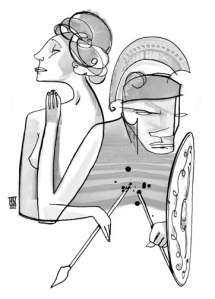 By 411 BC the Peloponnesian War between Athens (and its allied city-states) and Sparta (and its allied city-states) had been raging for roughly 20 years. The war provides the backdrop for many of Aristophanes’ surviving comedies and is especially relevant where Lysistrata is concerned. Weary of the long, drawn-out conflict the women of Athens, led by the title character Lysistrata (supposedly based on Lysimache, the Priestess of Athena in Athens at the time), join forces with the women of Sparta and decide to withhold sex from the men until they agree to bring an end to the war.
THE PLAY Continue reading
 Many of you have been kind enough to let me know that the new movie Chi-Raq, about black-on- black violence in Chicago, can be added to the long list of adaptations of Lysistrata by Aristophanes.
 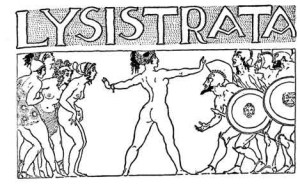 By 411 BCE the Peloponnesian War between Athens (and its allied city-states) and Sparta (and its allied city-states) had been raging for roughly 20 years. The war provides the backdrop for many of Aristophanes’ surviving comedies and is especially apt where Lysistrata is concerned.
  Balladeer's Blog