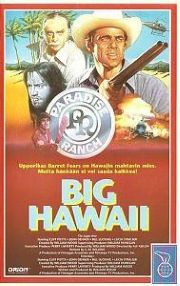
 BIG HAWAII (1977) – From a promising pilot movie to “poof” it’s canceled – that’s the story of and that’s the glory of Big Hawaii. I’ve rarely seen such a pronounced overhaul from a pilot movie to the resulting series.
We’re not just talking about a change in some cast members here, this thing changed genres between its pilot film and its first episode and was definitely worse off for it.
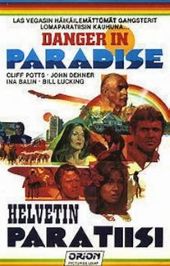 BIG HAWAII: DANGER IN PARADISE (May 12th, 1977) – The creative team came so close to changing the future of 1970s prime time programming by getting the jump on Dallas, which did not come out until 1978. The network suits or somebody chickened out after this powerhouse pilot movie.
The Paradise Ranch in Hawaii is the setting for enough family intrigue, corporate power struggles and romantic subplots to fuel what might have been the biggest prime time soap opera since Peyton Place.
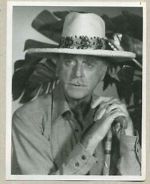 JOHN DEHNER, forever remembered as the voice of Paladin on the Have Gun Will Travel radio western, played Barrett Fears, patriarch of the Fears family and a veteran power player in what would soon become Jock Ewing fashion.
Barrett rules through fear and a “divide and conquer” mentality when it comes to those around him. A stroke temporarily slows him down.
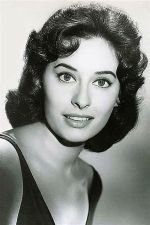 INA BALIN as Barrett’s second wife Marla embodied the older-but-still-hot female character that would soon define a genre. Think Joan Collins and Linda Evans on Dynasty, Abby Dalton, Susan Sullivan and many more on Falcon Crest, Barbara Rush and Stella Stevens on Flamingo Road, Katharine Ross on The Colbys plus a few others I’m probably forgetting.
The sultry Marla Fears misled the much older Barrett into thinking she was a devoted wife but all the while she and her son plus every other man she could manipulate tried helping her steal sole control of Paradise Ranch – especially the priceless land on which it stood.
In just this telefilm she subtly sabotages her recovering husband’s medical care, works with organized crime in a land-stealing venture, sleeps with her hunky flunky and even tries to seduce her stepson into an alliance against his father. Continue reading →

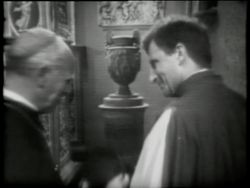 THE SUCCESSOR (1965) – This made for British television drama was as deep as a 1965 production was going to go in depicting the deliberations and the behind the scenes maneuvering as the College of Cardinals chooses the next Pope. All the characters are fictional, but it’s acknowledged that the events are slightly based on the election of Pope John XXIII in October of 1958.
 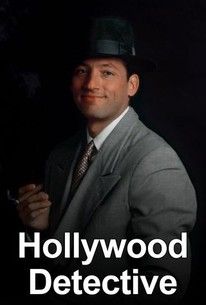 HOLLYWOOD DETECTIVE (1991) – I want to be very clear – this review covers the six-episode Arts & Entertainment Network original program Hollywood Detective, NOT the 1989 Telly Savalas made for TV movie The Hollywood Detective.
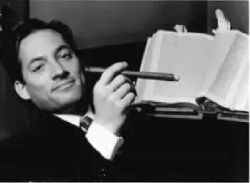 The stories are played straight but there’s always a tongue-in-cheek air about the proceedings because the nostalgia and quasi-historical events are more than half the appeal. Some critics complained about the less than trail-blazing mystery writing in the series but that’s like complaining about how the shows Columbo or Monk didn’t reflect authentic police work. Or how the Moses Wine novels had the detective interacting with pastiches of recognizable 1960s and 1970s public figures.
 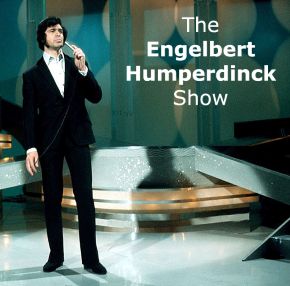 THE ENGELBERT HUMPERDINCK SHOW (1969-1970) – No, it wasn’t a Meeting of Minds type of educational program depicting the long-ago German composer Engelbert Humperdinck interacting with other historical figures. Although I would have watched a show like that! (But I’m kind of weird.)
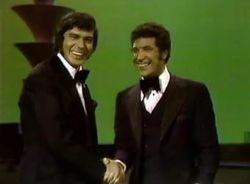 PILOT (Dec 2nd, 1969) – The Dinckster shared the stage with Barbara Eden, Jose Feliciano, Dionne Warwick and his entertainment doppelganger Tom Jones. The Mike Sammes Singers, the Jack Parnell Orchestra and the Paddy Stone Dancers were on hand as well. This episode was rebroadcast on December 26th.
 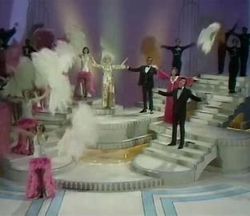 EPISODE ONE (Jan 21st, 1970) – E-Bert’s guests this time were Tony Bennett, Leslie Uggams, Donald O’Connor and Ed Bishop from UFO. The Irving Davies Dancers joined the Mike Sammes Singers and the Jack Parnell Orchestra as the figurative house entertainers.
  DAS BLAUE PALAIS (1972-1974) – This German science fiction series is criminally neglected. The title building is where scientists led by Louis Palm (Silvano Tranquilli) conduct interdisciplinary research and investigate unusual phenomena.
 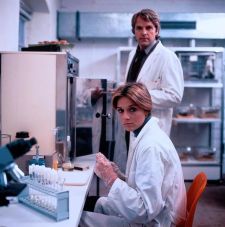 Additional regulars included Lyne Chardonnet as Yvonne Boucher, Jean-Henri Chambois as Professor Manzini, Luminata Iacobescu as Sibilla Jacopescu and Dieter Laser as Enrico Polazzo. Rainer Erler wrote and directed every installment.
  ONE: THE GENIUS (October 15th, 1974) – The international group of scientists at the Blue Palace are pursuing their usual boundary-pushing research while periodically debating the ethics of various projects.
 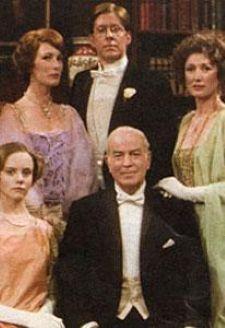 BEACON HILL (1975) – An attempt at an American version of Great Britain’s Upstairs, Downstairs, this short-lived series was set in Boston following World War One. As opposed to the British program’s “rich pigs upstairs” and “servants downstairs” dichotomy, Beacon Hill presented the wealthy Irish-American family the Lassiters and their servants, who live in a cheaper neighborhood.
 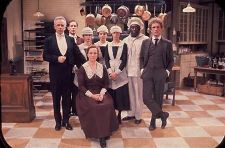 George Rose co-starred as Arthur Hacker, head butler and quasi-patriarch of the servants. Beatrice Straight played his wife Emmeline, the head housekeeper. Arthur’s nephew Brian Mallory (Paul Ryan Rudd) was the Lassiter chauffer who was having an affair with one of the Lassiter women, and his niece Maureen Mahaffey (Susan Blanchard) worked as one of the maids.
 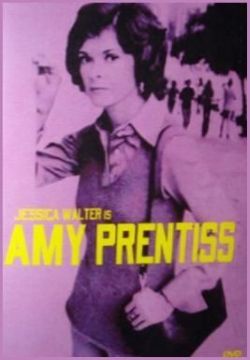 AMY PRENTISS – Long before she was known as Archer’s mother, the talented Jessica Walter had churned out powerful performances of all kinds in movies and television. Jessica’s short-lived run as the sleuth Amy Prentiss is a reminder that a program can be a bit too far ahead of its time to thrive.
 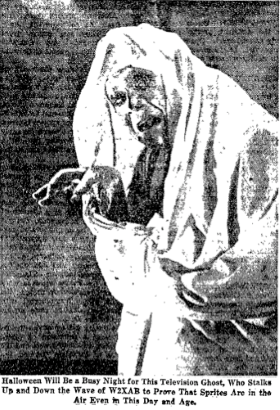 THE TELEVISION GHOST (1931-1933) – As astonishing at it may seem, there were actually some regularly televised programs on pioneering channels like W2XAB beginning in 1931. Comparatively few people actually had the mechanical television sets of that period when the whole enterprise was highly experimental. Newspaper listings offer most of what little information survives about the broadcasts.
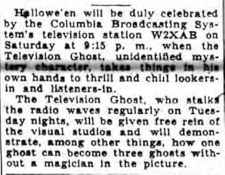 The Television Ghost ran 15 minutes and starred George Kelting as the Ghost with Bill Schudt as an announcer and narrator. The show’s Halloween Episode of 1931 was nicely hyped with a reference to some primitive television special effects magic.
  PROFILES IN COURAGE (1964-1965) – This television series took its name from the late President John F. Kennedy’s non-fiction book of that title. Some of the episodes dramatized specific sections of JFK’s book while others depicted what the producers felt were similar instances of political figures facing tough choices.
  Those choices were between following their conscience or following what was best for their political career at the time.
 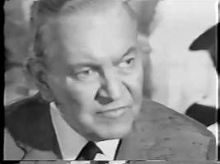 OSCAR W. UNDERWOOD (Nov 8th, 1964) – Senator Underwood was a top contender for the Democrat presidential nomination in 1924. However, he obeyed his conscience by speaking out against the Ku Klux Klan, one of the Democrat Party’s most powerful forces.
 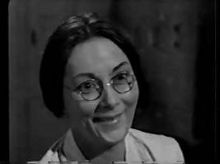 MARY S. MCDOWELL (Nov 15th, 1964) – Mary McDowell was a New York teacher during World War One. She refused to support the war effort via War Bonds rallies or sign a loyalty oath due to her religious principles as a Quaker.
  LUCKY SEVEN (1978) – Years before the hacker calling himself Captain Midnight hijacked HBO airtime to protest their high prices and years before the weird Max Headroom parody hack in Chicago came this forgotten incident in the annals of pirate broadcasting.
  The host for Lucky 7 was a memorable man wearing a gas mask on his face like he was some kind of late-night Horror Host. This figure would introduce the programs and movies being shown on the channel and would also editorialize about the way corporations and the government held a monopoly on the airwaves.
  Balladeer's Blog