
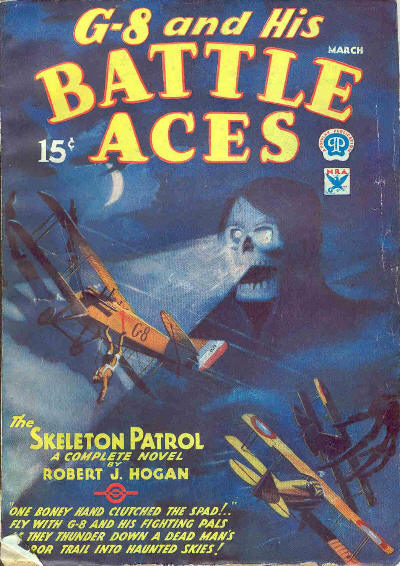
 Balladeer’s Blog continues its examination of the neglected Pulp Hero G-8. This continues a story-by- story look at the adventures of this World War One American fighter pilot who – along with his two wingmen the Battle Aces – took on various supernatural and super- scientific menaces thrown at the Allied Powers by the Central Powers of Germany, Austria- Hungary and the Ottoman Muslim Turks.
G-8 was created by Robert J Hogan in 1933 when World War One was still being called simply the World War or the Great War. Over the next eleven years Hogan wrote 110 stories featuring the adventures of G-8, the street-smart pug Nippy Weston and the brawny giant Bull Martin. The regular cast was rounded out by our hero’s archenemy Doktor Krueger, Battle, G-8’s British manservant and by our hero’s girlfriend R-1: an American nurse/ spy whose real name, like G-8’s was never revealed.
 4. THE MIDNIGHT EAGLE (January 1934) – After an absence of one story G-8’s archenemy Doktor Krueger is back! A gigantic Eagle flies the skies over No Man’s Land and is wreaking havoc with Allied pilots, clawing them out of the skies with its enormous talons. Even our hero and his Battle Aces barely survive their first encounter with the airborne menace. Continue reading
 ARTHUR R.”RAY” BROOKS – Captain Ray Brooks graduated from MIT in 1917 and immediately volunteered to serve in the World War that the U.S. had just entered. Brooks got his first 3 kills with the 139th Squadron and 6 more after transferring to the 22nd Aero Squadron. FOUR of Captain Brooks’ kills came in one dogfight as he tackled a squadron of 8 Fokker planes single-handedly. Seriously.
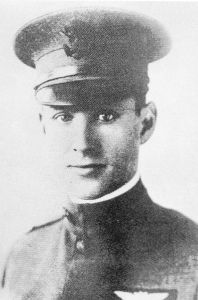 J.M. SWAAB – Jacques Michael Swaab didn’t even take to the air with the 22nd Aero Squadron until August 27th of 1918 but before the war ended on November 11th he managed 10 confirmed kills and SEVEN more possible. At that rate Swaab could have challenged Eddie Rickenbacker’s total of 26 kills if he had started earlier in the war.
 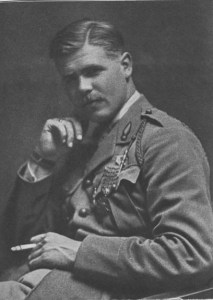 FRANK LEAMAN BAYLIES – For the first eleven days of November Balladeer’s Blog takes a look at neglected figures of World War One, ending on Veterans Day. Frank Leaman Baylies tried to serve as a pilot in the U.S. Army but was rejected for supposedly poor vision, so in May 1917 he enlisted in the French flying corps instead.
  Balladeer’s Blog had proceeded from the assumption that most readers were familiar with flying ace Eddie Rickenbacker but comments and emails indicate otherwise. Here’s a look at him as we lead up to another November 11th, now called Veterans Day but formerly known as Armistice Day since November 11th, 1918 marked the end of World War One.
 THE IACCACI BROTHERS – In the 1960s young American men would head to Canada to avoid serving in the Vietnam War. During World War One a number of young American men headed to Canada to serve in British Military Units because the U.S. had not yet entered the conflict.
  With Veterans Day fast approaching Balladeer’s Blog takes a look at some more World War One history since that conflict gets much less attention than World War Two.
  FRANK LUKE – This 21 year old copper miner from Arizona managed 18 kills in 17 days before meeting his own end. In addition to shooting down enemy planes Frank Luke specialized in bringing down the much tougher targets: lighter than air craft. Pilots had to thread their way through relentless anti-aircraft fire AND rockets to accomplish a kill on such craft, making it sort of the fighter pilot equivalent of stealing bases in baseball.
  Balladeer's Blog