
This weekend’s light-hearted, escapist superhero post from Balladeer’s Blog looks at some of Mexico’s homemade superheroes (non-wrestling division).
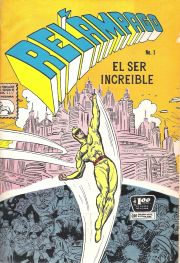 RELAMPAGO (Lightning)
Secret Identity: Rod Harrelson
Debuted: 1964
Origin: When Rod Harrelson was killed he was figuratively brought back to life by Professor Hacket with his mind inhabiting an android version of himself. He adopted the costumed identity Relampago.
Powers: This hero could fly, shoot electrical blasts from his hands and deliver electric-powered punches.
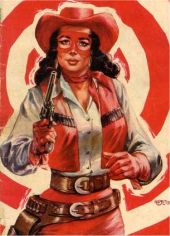 LLANERA VENGADORA (Plains Avenger)
Secret Identity: Flor Silvestre
Debuted: 1950
Origin: Singer and actress Flor Silvestre adopted the costumed identity of la Llanera Vengadora to fight crime and supernatural menaces without endangering her family and friends.
Powers: This heroine was in peak physical condition, was a skilled fighter and had mastered pistols, whips and lariats. In addition, la Llanera Vengadora could stunt-drive her 1950s motorcycle. Continue reading
 LAS SERGAS DE ESPLANDIAN AKA The Adventures of Esplandian (1510) – There were many subsequent editions of this Spanish novel by Garci Rodriguez de Montalvo but 1510 is the year of the oldest known version. Part fantasy, part proto-science fiction and part chivalric romance saga, The Adventures of Esplandian is best remembered today for its supposed role in naming California.
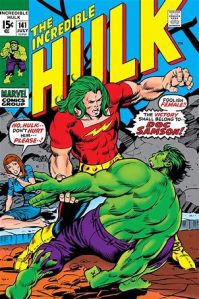 DOC SAMSON – Leonard Samson, MD and PhD, used tightly focused Gamma Radiation drained from the Hulk himself to gain superpowers.
 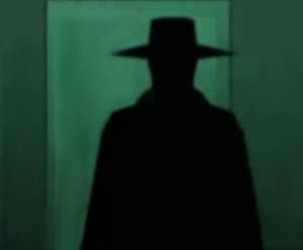 THE MAN IN THE BLACK CLOAK (1886) by P.T. Raymond (Francis W Doughty). Before Batman there was the Shadow. Before the Shadow there was Judex. And before Judex there was the Man in the Black Cloak, or simply the Black Cloak as I’ll call him for short. And ironically, four years before The Man in the Black Cloak was published there was simply The Man in Black, a story I will examine another time.
  FAULADI (Ironclad)
  KANGA
KANGA 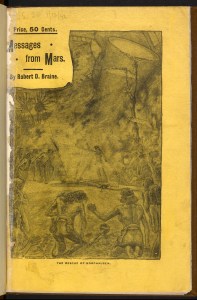 MESSAGES FROM MARS BY THE AID OF THE TELESCOPE PLANT (1892) – Written by Robert D Braine. I shortened the title for the blog post headline. The main character of this novel is a sailor named Nordhausen. After leaving Madagascar our hero winds up shipwrecked on an uncharted island.
 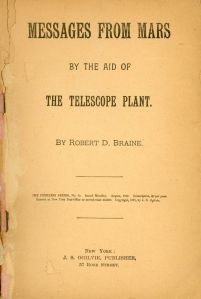 The natives take him through a cave entrance to their hidden village which is a blend of the primitive and the futuristic. For the “sacrilege” of damaging one of the telescope plants Nordhausen is to be executed. The means? A device formed from several of the lens-like leaves which magnify the sunlight into a makeshift heat-ray, like holding a magnifying glass over a piece of paper to catch it on fire.
 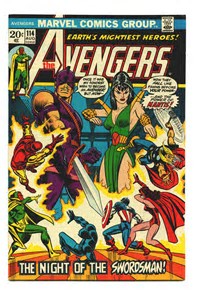 AVENGERS Vol 1 #114 (August 1973)
 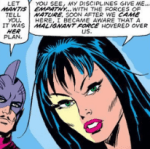 Synopsis: The villainous Swordsman rejoins the Avengers with a pardon and alongside his mysterious romantic partner Mantis, making her very first full appearance. Mantis is part Vietnamese and part unknown at this point.
  These are the legends about Charlemagne and his Paladins, not the actual history, so there will be dragons, monsters and magic.
 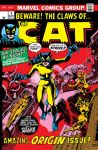 THE CAT – Greer Nelson caught on to a conspiracy to take over the world via armies of women clad in superpower-granting costumes. She donned the prototype and called herself the Cat before taking down the entire sinister organization.
 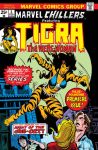 TIGRA THE WERE-WOMAN – After the Cat’s series got canceled from low sales Marvel added Greer Nelson to their 1970s horror characters as Tigra. The Cat was mortally wounded in a battle with Hydra, but Marvel’s race of cat-people saved her life by granting her an amulet that turned her into Tigra the Were-Woman.
